


TLDR
- A critical vulnerability in Zcash’s Orchard shielded pool, dormant since May 2022, sparked massive sell-pressure following its discovery in late May 2026
- Emergency protocol updates included a soft fork on June 2 and the NU6.2 hard fork deployment on June 3
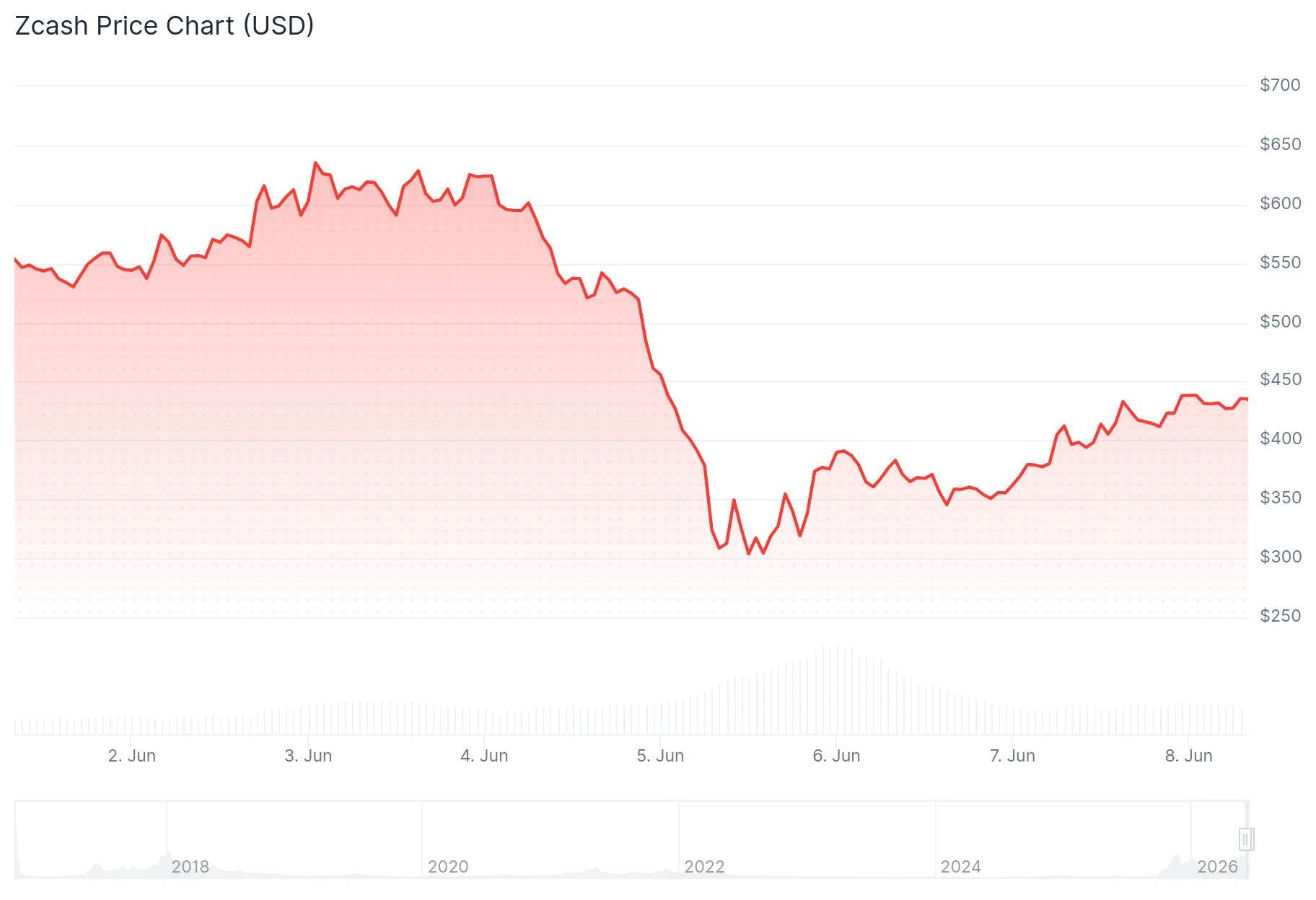
- ZEC plunged from approximately $629 down to sub-$270 levels before climbing back toward $420
- Open Interest collapsed from roughly $800M to approximately $418M, indicating widespread leverage liquidation instead of organic trend shift
- Trader Vuori Trading maintains bullish outlook — critical resistance zones between $450–$500, with support holding at $390–$400
Zcash has staged an approximately 16% recovery to the $420 region following one of its most severe corrections in recent history. The dramatic decline erased the majority of ZEC’s multi-month gains within days.
The turbulence originated from the discovery of a counterfeiting exploit within Zcash’s Orchard shielded transaction pool. This vulnerability had existed undetected since May 2022, only surfacing during a comprehensive security audit conducted by Shielded Labs in late May 2026.
The implications were severe. Had malicious actors exploited this weakness, they could have generated counterfeit ZEC tokens completely untraceably, undermining the fundamental privacy and security guarantees Zcash offers its users.
Developers responded with urgency. An emergency soft fork was implemented on June 2 to deactivate the Orchard pool while ZEC traded around $587. The following day brought the NU6.2 hard fork, delivering comprehensive remediation.

Market Movement: The Journey from $629 to $270
During the network upgrade period, ZEC briefly touched just below $629. What followed was a precipitous decline. The cryptocurrency crashed through multiple support structures, reaching a nadir near $270 on June 5.
Technical analysis reveals a classic breakdown pattern. ZEC developed a head-and-shoulders formation near the $700 peak, breached the $500 neckline support, and cascaded into the $300 territory before demand materialized.
Trader Vuori Trading shared a defiant assessment during the decline: “$ZEC plan has not changed despite this recent dump. They want you out!” The commentary suggested conviction that ZEC’s longer-term trajectory remains constructive despite short-term chaos.
The futures market experienced significant carnage. Open Interest plummeted from nearly $800 million to roughly $418 million, reflecting massive forced liquidations and position exits throughout the selloff.
Critical Price Zones Ahead
Funding rates maintained relative equilibrium with slight positive bias throughout the volatility. This indicates traders haven’t adopted an overwhelmingly pessimistic outlook, despite the severe drawdown.
Analyst Ardi observed that ZEC retraced to the April breakout zone around $250 and characterized the current movement as a technical relief bounce. He anticipates price action testing the $430–$480 resistance cluster.
Nevertheless, Ardi cautioned that failure to maintain $350 could trigger another downward impulse.
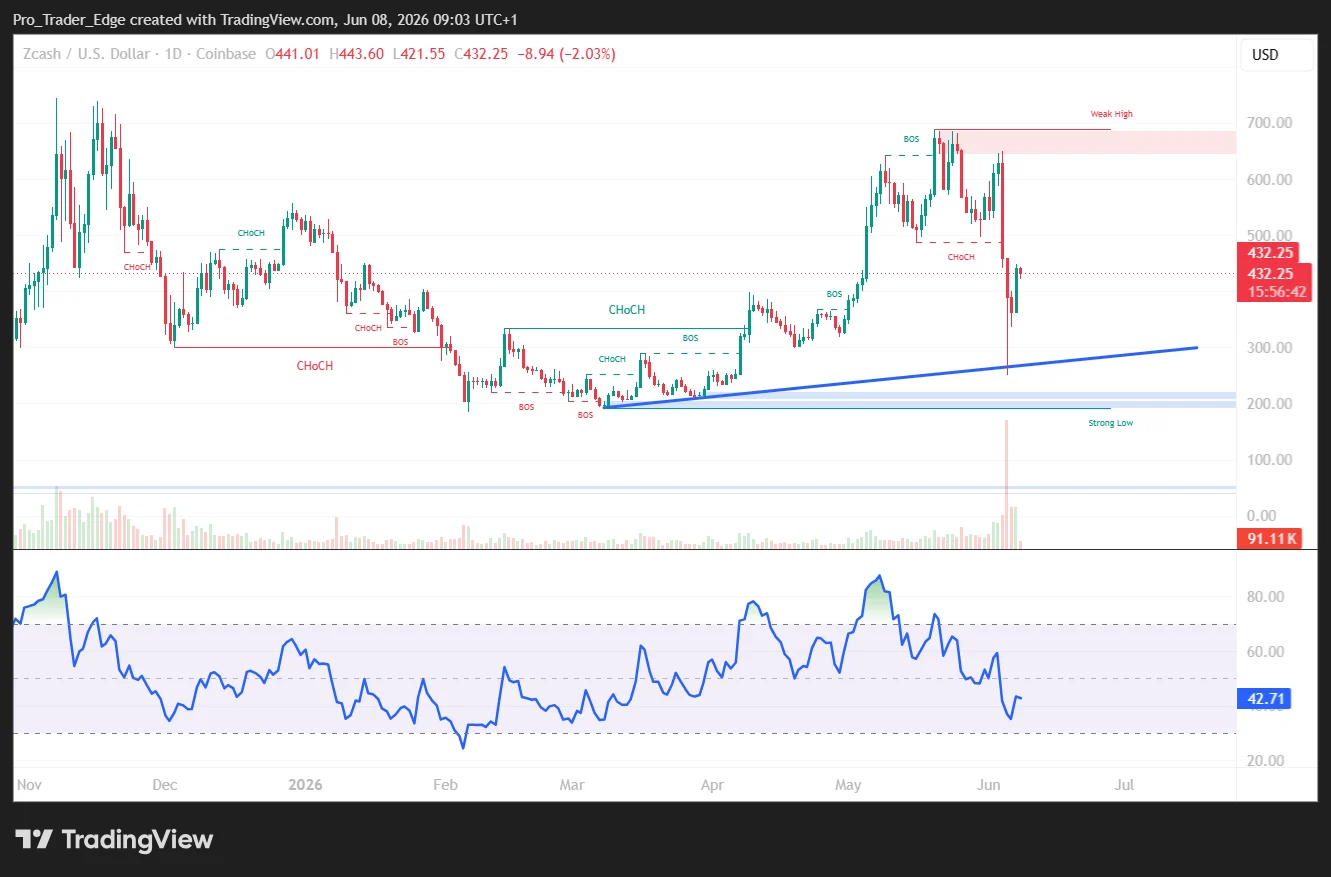
The Relative Strength Index is recovering from oversold territory but remains constrained within a descending channel, leaving room for additional weakness. The Average Directional Index registers around 28.6, suggesting the next directional move could carry significant momentum.
ZEC currently trades above its 200-day moving average. However, near-term moving averages continue flashing bearish signals.
The $390–$400 range represents the critical battleground. Sustained trading above this zone supports the recovery narrative. A violation below reopens $350, followed by the recent bottom near $304.
The initial resistance objective lies around $450. A convincing breakout above this threshold would strengthen the case for advancement toward $550, with $650 representing the subsequent major barrier beyond that point.
