


Key Takeaways
- Wall Street futures declined Wednesday morning following a historic session that saw the Dow reach new heights and the Nasdaq surge
- Both the S&P 500 and Nasdaq Composite delivered their strongest quarterly performance since 2020, climbing 15% and 21% respectively in Q2
- Federal Reserve Chairman Kevin Warsh is scheduled to deliver remarks at a European Central Bank conference, with traders eager for monetary policy hints
- Thursday’s release of June employment data could significantly influence expectations around future Fed interest rate decisions
- Crude oil prices hover near pre-conflict territory, though geopolitical tensions around the Strait of Hormuz continue to loom
Wall Street futures traded lower Wednesday morning as market participants took a breather following an impressive conclusion to the second quarter. Pre-market contracts tied to the Dow Jones, S&P 500, and Nasdaq all declined between 0.2% and 0.7% during early hours.
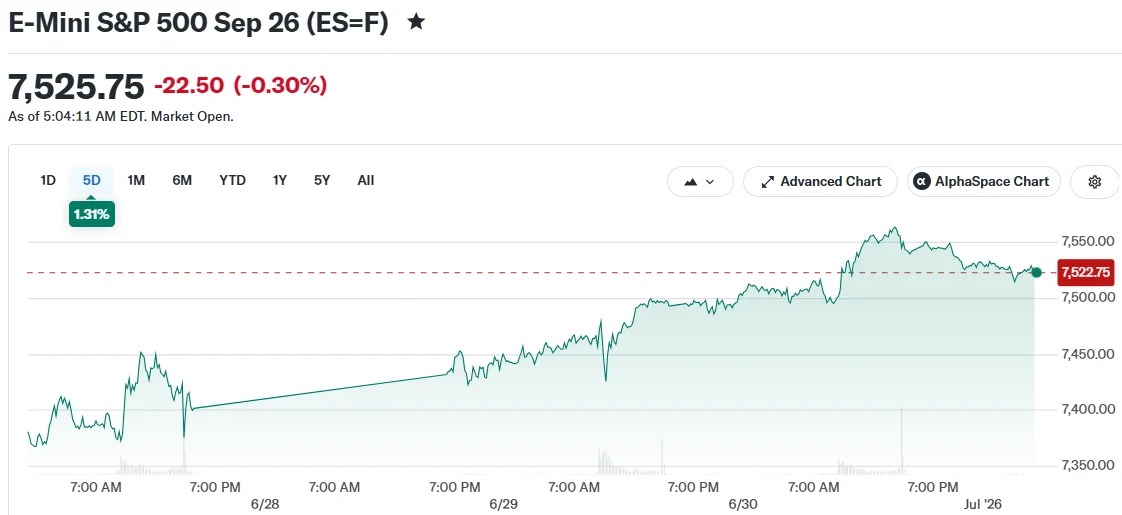
The previous session witnessed the Dow Jones Industrial Average setting a fresh all-time high. Meanwhile, the S&P 500 wrapped up its strongest three-month stretch since 2020, advancing 15% throughout Q2. The tech-heavy Nasdaq Composite surged 21% during the identical timeframe, matching its best quarterly showing since 2020. The blue-chip Dow jumped 13% in Q2, marking its most robust quarter since 2022.
All Eyes on Fed Chairman Warsh
Federal Reserve Chair Kevin Warsh was scheduled to address attendees at the European Central Bank’s yearly gathering in Sintra, Portugal, during Wednesday’s morning session. Market participants are keenly observing for any indication regarding the central bank’s inclination toward implementing additional interest rate increases before year-end.
Market strategists suggest there’s minimal expectation for Warsh to soften his restrictive monetary stance. According to ING strategist Chris Turner, consumer sentiment readings have exceeded forecasts, while American equity markets continue producing nearly double-digit gains year-to-date.

The benchmark 10-year Treasury yield registered 4.471%. Japan’s currency weakened to a four-decade low versus the dollar, influenced partially by anticipation of continued Fed policy tightening.
Thursday brings the much-anticipated June employment report. This economic release will provide market observers with enhanced insight into labor market conditions and enable better assessment of potential rate increase probability in upcoming months.
Middle East Geopolitical Concerns and Energy Markets
Oil prices maintained levels around $70 per barrel, approaching pre-conflict pricing territory. Washington and Tehran continue diplomatic engagement, despite ongoing tensions.
President Trump has weighed returning to military operations but opted to pursue continued negotiations, per reporting from The Wall Street Journal. Trump has communicated to advisors his willingness to allow discussions to extend beyond the August 18 target date for nuclear agreement finalization.
Iran’s Islamic Revolutionary Guard Corps has issued warnings about potentially blocking the Strait of Hormuz once more without assurances regarding exclusive control over the strategic waterway. This threat maintains a cautious undertone among energy market participants.
Gold retreated beneath $4,000 per ounce Wednesday as concerns about monetary tightening pressured the precious metal that generates no yield. The greenback strengthened as market participants elevated their expectations for Fed tightening measures.
Artificial intelligence and semiconductor equities fueled substantial portions of the technology sector’s advancement during 2025’s initial half. Market analysts indicate only the tech sector appears well-positioned to maintain market leadership through the year’s second half.
Investors now focus attention on Thursday’s employment figures as the next critical economic indicator. Robust employment numbers could intensify pressure on the Fed to implement rate hikes, whereas softer readings might alleviate such expectations.
