



Key Takeaways
- Evercore ISI projects an S&P 500 base target of 7,750 by the close of 2026, while assigning a 30% probability to a bullish scenario hitting 9,000.
- The optimistic projection hinges on artificial intelligence momentum across technology, communications, and consumer discretionary sectors.
- RBC Capital Markets forecasts a 12-month S&P 500 target of 7,900, representing approximately 7.7% potential gains from early May price levels.
- RBC anticipates market corrections to remain moderate at 5–10%, with more significant drops only emerging if recession concerns intensify.
- A dramatic earnings divergence centers on AI: RBC projects 28% profit growth for AI-centric companies compared to just 6% for non-AI stocks.
Leading Wall Street investment houses have published their S&P 500 projections extending through 2026. While both outlooks lean optimistic, analysts caution that volatility will likely punctuate the upward trajectory.
Evercore ISI: Multiple Scenarios Point Higher
Julian Emanuel, an analyst at Evercore ISI, anticipates the S&P 500 will reach 7,750 under his primary forecast by year-end 2026. However, he assigns a 30% likelihood to an aggressive bull scenario that could propel the benchmark index to 9,000.
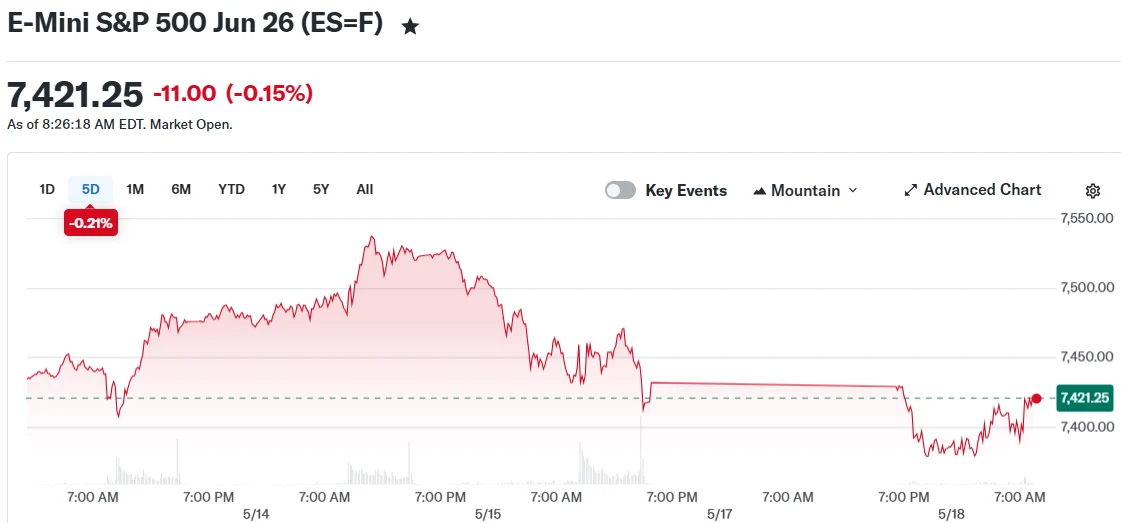
According to Emanuel, markets are navigating the intersection of two powerful dynamics: a technology-led rally powered by artificial intelligence innovation and significant shifts in international geopolitical arrangements. This convergence, he argues, expands the spectrum of potential market outcomes beyond typical parameters.
Drawing historical parallels to the 1920s and 1990s, Emanuel highlighted what he described as “warlike fiscal stimulus, expanding M2 money supply, and a transformative productivity shift” coinciding with an AI revolution. His analysis suggests productivity expansion could reach 3% annually by decade’s end.

Evercore’s tactical recommendations include purchasing long-dated call options on its designated “AI Class of 2026” equities and the QQQ exchange-traded fund to position for upside potential. Simultaneously, the firm advocates implementing collar strategies on S&P 500 funds to provide downside protection against near-term headwinds from energy costs and borrowing rates.
Emanuel also noted an inherent constraint within AI technology itself. He observed that large language models frequently converge toward consensus forecasts and fail to adequately price tail-risk scenarios. Consequently, sustainable competitive advantages will derive from specialized industry knowledge and comprehensive workflow ownership rather than merely deploying AI tools.
RBC Capital: Gradual Ascent With Periodic Setbacks
Lori Calvasina, who leads U.S. equity strategy at RBC Capital, established a 12-month S&P 500 price objective of 7,900. This target suggests roughly 7.7% appreciation potential from price levels observed in early May.
Calvasina emphasized that upward progress will feature interruptions. She forecasts pullbacks in the 5–10% magnitude but excludes deeper corrections of 14–20% unless economic recession risks resurface.
RBC’s framework rests on what the firm characterizes as an “AI accelerating, Middle East conflicts restraining” environment. Their earnings model projects 28% profit expansion for AI-aligned corporations in 2027, contrasting sharply with only 6% growth for remaining index constituents.
The projection incorporates a 5% reduction to broader earnings expectations and assumes inflation stabilizes near 3.3%, with the Federal Reserve maintaining current policy and 10-year Treasury yields at 4.5%. Should inflation climb to 3.8% and prompt Fed rate increases, RBC indicates fair value would contract to the 7,400–7,500 band.
Near-term vulnerabilities the firm identified include earnings revisions stemming from geopolitical conflict impacts, profit-taking within semiconductor equities, midterm election volatility, and elevated borrowing costs.
RBC continues favoring growth-oriented stocks relative to value names, while preferring U.S. markets over international alternatives.
