


TLDR
- President Trump issued an executive order requiring the Federal Reserve to assess providing cryptocurrency and fintech companies direct access to central bank payment accounts.
- Financial regulators including the SEC, CFTC, OCC, and FDIC have 90 days to examine rules potentially preventing fintech partnerships with federally regulated banking institutions.
- Digital asset firms may obtain “master accounts,” enabling direct connection to fundamental U.S. payment infrastructure without requiring traditional bank intermediaries.
- Kraken obtained the first limited-purpose master account for a cryptocurrency company from the Kansas City Federal Reserve in March 2026, triggering opposition from conventional banking associations.
- Coinciding with the executive order, Trump’s Truth Social withdrew regulatory filings for Bitcoin, Bitcoin-Ethereum, and cryptocurrency blue chip ETFs.
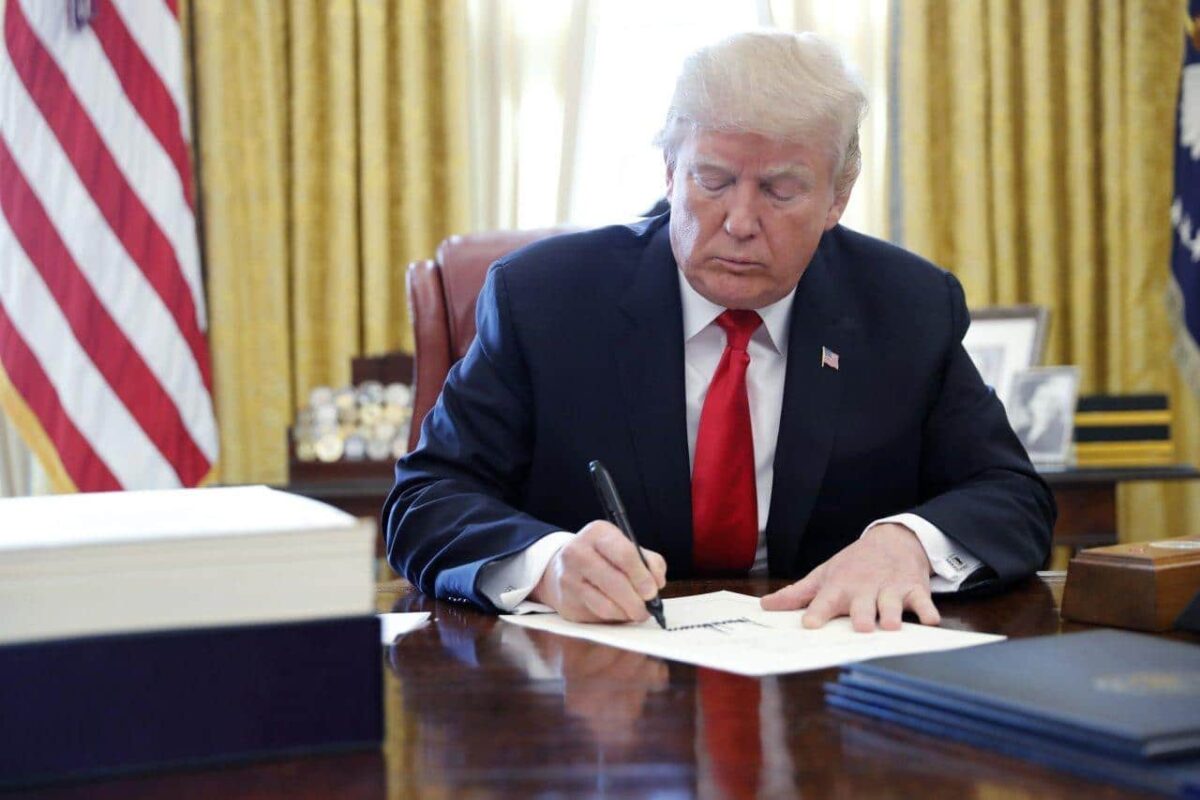
President Trump issued an executive order Tuesday requiring federal financial regulators to assess whether cryptocurrency and fintech enterprises should receive direct access to the Federal Reserve’s payment infrastructure. The directive, called “Integrating Financial Technology Innovation into Regulatory Frameworks,” mandates several agencies to scrutinize regulations potentially preventing these firms from entering traditional financial channels.
The directive provides an expansive definition of fintech enterprises, encompassing organizations providing digital asset operations, blockchain technology, payment facilitation, custody solutions, credit services, brokerage functions, and securities trading platforms.
Federal Reserve Responsibilities Under the Directive
A central component of the order targets the Federal Reserve directly. Trump instructed the Fed’s Board of Governors to determine whether non-banking entities and uninsured depository organizations handling digital currencies should receive access to Reserve Bank payment facilities and accounts.
These facilities are referred to as “master accounts.” Obtaining such an account would enable cryptocurrency enterprises to establish direct connections with essential U.S. payment infrastructure—the fundamental system for dollar transactions throughout the nation—without relying upon conventional banking institutions as intermediaries.
Additionally, the directive requests the Fed to determine whether the dozen regional Federal Reserve banks possess independent statutory authority to grant or reject such access. The Federal Reserve must deliver its findings to the president within 120 days.

The order simultaneously directs the SEC, CFTC, Office of the Comptroller of the Currency, and FDIC to conduct comprehensive reviews within 90 days. These regulators must identify existing regulations that might obstruct fintech companies from collaborating with federally chartered financial institutions. The administration seeks simplified procedures for obtaining bank charters and federal deposit insurance.
Kraken’s Master Account Ignited the Controversy
The question of cryptocurrency companies obtaining Fed master accounts became contentious in March 2026. The Kansas City Federal Reserve granted limited-purpose account access to Payward, the corporate entity behind cryptocurrency exchange Kraken. This arrangement provided Kraken with access to high-value dollar settlement systems, potentially accelerating transaction processing for institutional customers.
Kraken Co-CEO Arjun Sethi described it as the “convergence of crypto infrastructure and sovereign financial rails.” However, the authorization generated significant pushback from established banking organizations.
The Bank Policy Institute, representing prominent U.S. banking institutions, expressed being “deeply concerned” that approval occurred before the Fed completed comprehensive policy guidelines for such arrangements.
In December 2025, the Fed released a framework for “skinny” master accounts—limited central bank accounts offering payment capabilities while excluding interest accrual on reserves or discount window borrowing privileges.
Congressional Initiatives Are Underway
In April 2026, California Representatives Sam Liccardo and Young Kim proposed the Payments Access and Consumer Efficiency Act, abbreviated as PACE. This legislation seeks to grant qualifying providers access to Federal Reserve payment infrastructure and has garnered endorsements from cryptocurrency industry organizations, though it remains in preliminary legislative phases.
The executive order also carries implications for Wyoming special purpose depository institutions—entities focusing on digital currency operations that have pursued Fed master account authorization.
A noteworthy development: concurrent with the executive order’s signing, Trump’s Truth Social withdrew regulatory submissions for a Bitcoin ETF, a Bitcoin-Ethereum ETF, and a cryptocurrency blue chip ETF—an action seemingly contradicting the administration’s generally supportive cryptocurrency position.
