



Key Takeaways
- Telegram is set to take over from the TON Foundation as the driving entity behind TON while becoming its dominant validator
- The network holds $752 million in stablecoins with $39.7 million in daily DEX trading volume, demonstrating genuine usage
- However, daily network fees total just $8,086, revealing poor revenue generation compared to its market capitalization
- Monthly unlocks from the TON Believers Fund release approximately 36.59 million TON, with the upcoming unlock valued at roughly $75 million
- The network demands a minimum stake of 300,000 TON for validators, while Telegram’s expanding influence sparks centralization questions
Toncoin stands apart from typical cryptocurrency ventures because it bypasses the struggle for user acquisition. While most blockchain networks invest years building communities through promotional campaigns, funding programs, and token rewards, TON follows an entirely different trajectory.
The TON Wallet operates natively within Telegram’s ecosystem. Users maintain full custody of their private keys while enjoying an intuitive mobile experience. This fusion of security and ease-of-use remains uncommon in the cryptocurrency landscape.
Telegram boasts a user base exceeding one billion registered accounts. This provides TON with immediate access to an audience size that competing blockchain platforms rarely achieve.
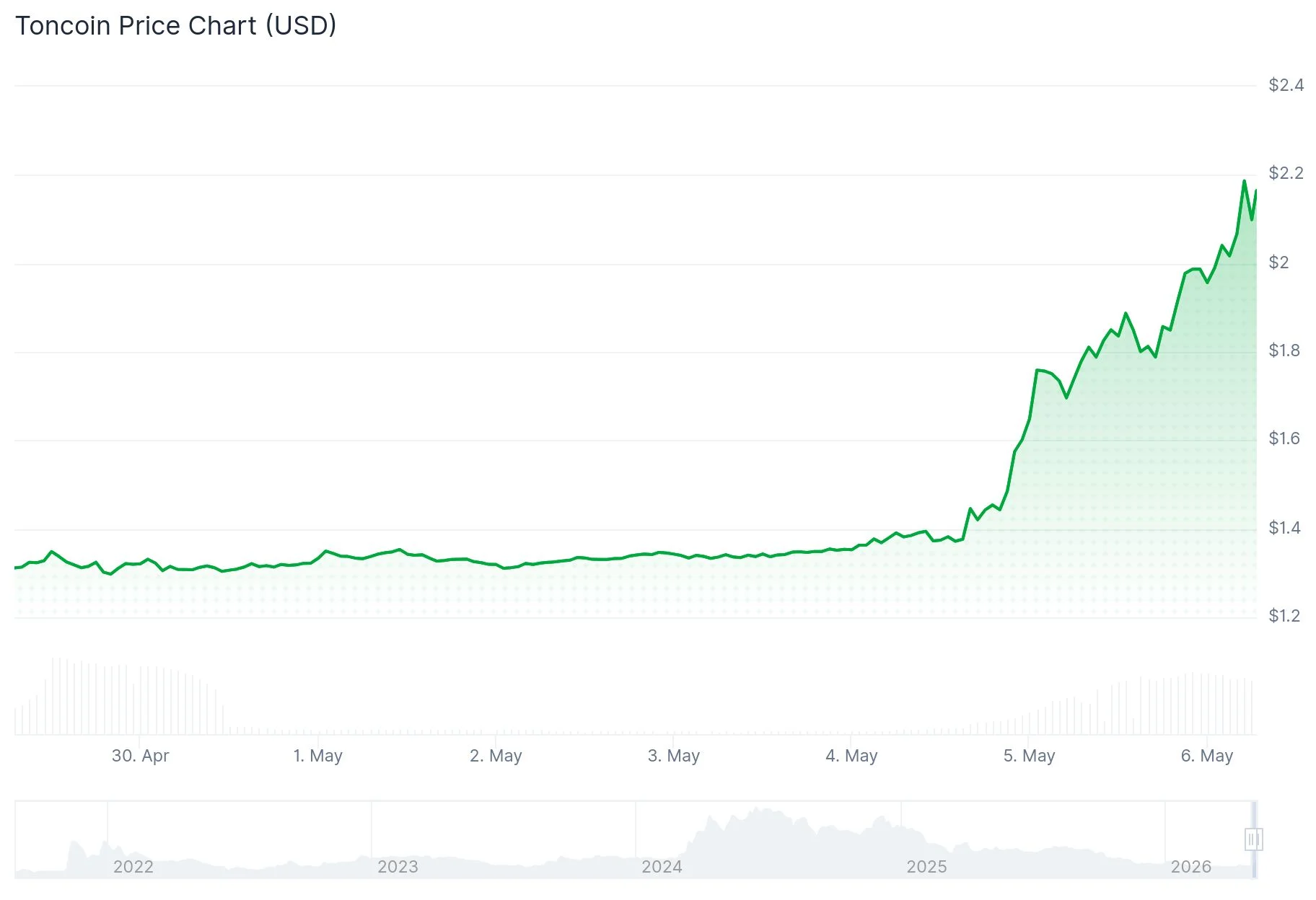
During May 2026, Telegram’s creator Pavel Durov revealed plans for Telegram to supersede the TON Foundation as the network’s principal governing entity. Additionally, Telegram will assume the role of the network’s most powerful validator.

This declaration reignited market interest in TON while highlighting the deepening integration between both platforms.
Examining the Blockchain Metrics
According to DeFiLlama analytics, approximately $752 million worth of stablecoins currently reside on the TON blockchain. Daily decentralized exchange volume reaches about $39.7 million, while perpetual contracts generate roughly $1.48 million in 24-hour volume.
These figures demonstrate that both builders and participants are actively selecting TON for their activities. Capital is flowing into the ecosystem, and transaction volumes reflect authentic engagement.
Yet the network generates merely $8,086 in daily fees, with overall revenue approximating $4,043. Considering TON’s market valuation ranging from $5.6 billion to $5.7 billion, this fee production appears surprisingly modest.
Revenue capture serves as a critical indicator because it demonstrates the economic value a network successfully retains. Substantial transaction activity paired with minimal fees suggests users are engaging with the platform, though the network hasn’t yet converted that engagement into sustainable income.
Scheduled Token Releases and Validator Dynamics
CoinGecko data indicates approximately 2.7 billion TON tokens currently circulating in the market. The original TON technical documentation established an initial maximum supply of 5 billion tokens, with planned expansion through staking rewards distributed to validators.
The TON Believers Fund represents an additional consideration. Messari research indicates this fund releases roughly 36.59 million TON monthly. Approximately 1.098 billion TON tokens await distribution through roughly October 2028.
DeFiLlama’s unlock monitoring system estimates the upcoming scheduled release at approximately $75 million in market value. This persistent influx of new supply introduces continuous downward pressure on token prices.
Regarding network validation, TON mandates a baseline requirement of 300,000 TON tokens for participation. Real-world operational thresholds are understood to exceed this minimum significantly.
With Telegram preparing to become the dominant validator, the network’s control structure is consolidating around one principal organization. While this concentration may enhance operational efficiency and network stability, it fundamentally compromises the decentralization principle.
Telegram’s transition into TON’s primary validator represents the latest evolution influencing how market participants and developers evaluate the network’s long-term trajectory.
