



Quick Summary
- Crude prices retreated Wednesday as Iranian and American representatives engaged only through intermediaries in Qatar
- Tehran declined face-to-face negotiations with Washington envoys, casting uncertainty over diplomatic resolution
- Brent experienced approximately 38% decline in Q2, marking its sharpest quarterly collapse since early 2020
- American crude output reached an all-time high of 13.93 million barrels daily in April
- Vessel movement through the Strait of Hormuz shows gradual improvement but remains inconsistent
Crude oil markets experienced downward pressure Wednesday following Tehran’s decision to avoid direct engagement with American representatives in Doha, intensifying uncertainty about a durable resolution to the Middle Eastern tensions that have disrupted energy markets for months.
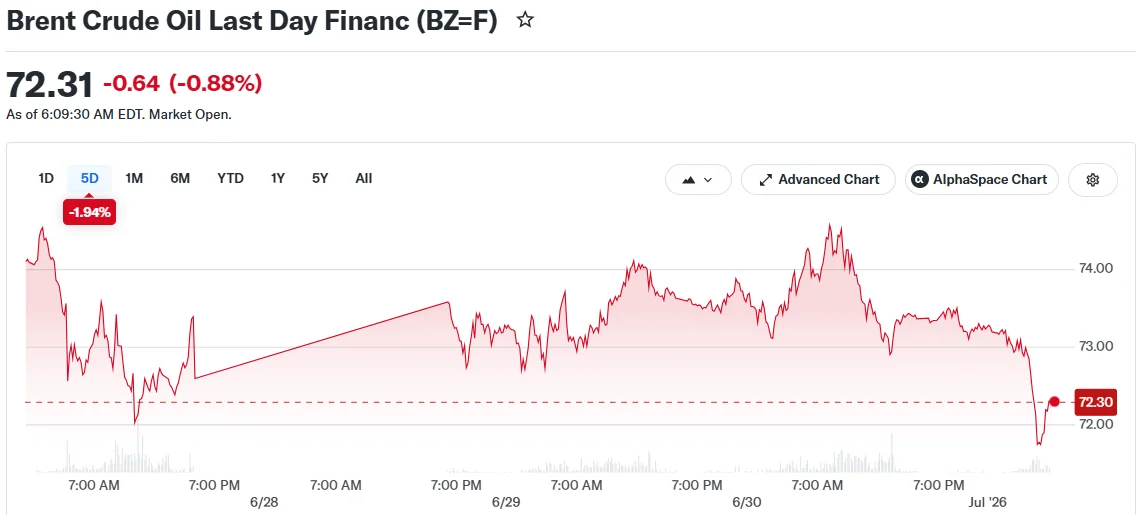
West Texas Intermediate crude declined 1.2% to approximately $68.68 per barrel. Brent crude experienced a comparable reduction to $72.12. As trading progressed, both benchmarks mounted partial recoveries, with Brent climbing to $73.09 and WTI bouncing back to $69.61.
Jared Kushner alongside U.S. representative Steve Witkoff made the journey to Qatar for discussions the White House characterized as “high level” diplomatic engagement. However, Iranian authorities and Qatari hosts confirmed that Tehran would interact exclusively through mediating parties, refusing direct contact with the American delegation.
This approach eliminated expectations for rapid progress within the current 60-day negotiation window established between Washington and Tehran.

Hormuz Strait Continues as Critical Concern
The Strait of Hormuz remains the focal point of ongoing tensions. This maritime corridor represents one of the planet’s most critical petroleum transport routes, and authority over its operation continues to be disputed.
Tehran has indicated its intention to supervise commercial shipping through the strategic waterway. U.S. Vice President JD Vance countered this position, stating that Iran would be prevented from imposing transit fees on vessels navigating the passage.
Maritime activity through the strait has begun showing signs of recovery. Intelligence from Kpler indicated approximately 24 commodity carriers, encompassing petroleum and LNG vessels, transited on Monday, with comparable volumes continuing through Tuesday.
Energy analyst Vandana Hari from Vanda Insights warned that conditions remain volatile. “Hormuz continues to reopen but it’s patchy, unpredictable, and not fully transparent,” she said.
Second Quarter Brings Severe Price Erosion
The April-to-June period proved devastating for petroleum valuations. Brent plummeted roughly $45 per barrel, representing its most significant quarterly decline since the 2008 economic meltdown. American crude futures collapsed about $31 during the identical timeframe, marking their steepest quarterly retreat since the 2020 pandemic crisis.
Brent additionally tumbled 21% throughout June exclusively, following a 19% decrease in May. Both months registered the most substantial monthly contractions since March 2020.
These losses materialized after dramatic gains earlier in the calendar year. Brent had soared approximately 94% in the initial quarter following the outbreak of military tensions, before sharply reversing as ceasefire developments diminished supply concerns.
Market analysts have subsequently reduced their 2026 oil price forecasts for the first occasion since the Iranian conflict commenced, according to a Reuters survey released Wednesday.
Regarding supply dynamics, American crude extraction achieved a historic peak of 13.93 million barrels daily in April. U.S. petroleum stockpiles also decreased by 6.1 million barrels during the week concluding June 26, based on American Petroleum Institute figures.
Traders are currently monitoring additional developments from the Doha negotiations and forthcoming official U.S. inventory reports to determine subsequent price movements.
