


Key Takeaways
- Gold climbed past $4,700 per ounce, reaching its strongest position in two weeks on Thursday
- Prospects of a diplomatic agreement between the US and Iran drove oil prices down, alleviating inflation concerns
- The declining US dollar enhanced gold’s appeal to international purchasers, increasing demand
- Tehran is examining a 14-point peace proposal from Washington, with discussions scheduled in Pakistan
- Silver surged more than 5%, while platinum and palladium recorded gains as well
The precious metal extended its winning streak to three consecutive sessions on Thursday, trading comfortably above the $4,700 per ounce threshold. This momentum builds on growing optimism that Washington and Tehran might be nearing a diplomatic resolution that could lead to the reopening of the strategically vital Strait of Hormuz.
By mid-morning trading in New York, spot gold advanced 1.2% to reach $4,747.26 per ounce. Meanwhile, June gold futures contracts climbed 1.3% to settle at $4,753.71.
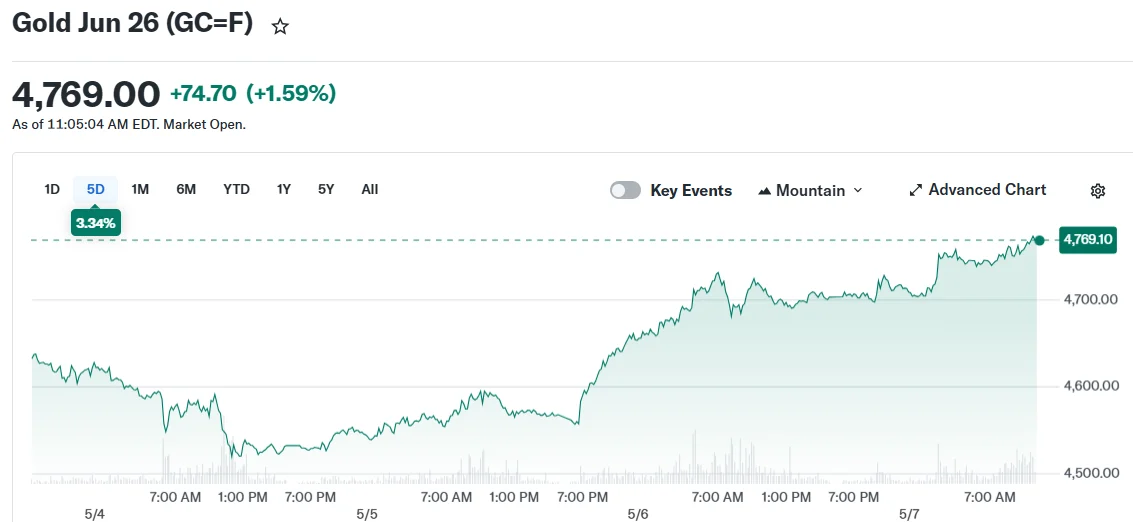
The previous day saw the yellow metal surge more than 3% — marking its most impressive single-session performance since the end of March. This rally pushed gold to levels not witnessed in the past fortnight.
Silver experienced equally impressive momentum, advancing over 5% on Thursday following a robust 6.2% gain the prior session. Both platinum and palladium followed suit with upward movements.

Gold had experienced approximately a 10% decline following the outbreak of hostilities with Iran in late February. The blockade of the Strait of Hormuz — a critical shipping channel responsible for roughly 20% of global oil transport — triggered a sharp spike in energy costs, stoking concerns about sustained inflationary pressure.
Elevated inflation typically prompts central banks to raise interest rates. Since gold generates no yield, it becomes less attractive when rates climb. Conversely, when inflation anxieties subside, the precious metal tends to flourish.
Diplomatic Framework Reduces Inflationary Pressures
Washington has presented a concise, 14-point framework designed to revive diplomatic engagement with Tehran. The Wall Street Journal reports that formal negotiations are slated to commence next week on Pakistani soil.
Iran’s top diplomat, Foreign Minister Abbas Araghchi, convened with his Pakistani counterpart to address the developing situation. Both officials emphasized the critical importance of maintaining dialogue and pursuing diplomatic channels to prevent further deterioration.
Tehran was anticipated to deliver its official response to the American proposal through Pakistani intermediaries within 48 hours of Wednesday. CNN indicated that this response was expected to arrive by Thursday.
President Trump addressed reporters at the White House on Wednesday, characterizing recent communications with Tehran as “very good” over the preceding day. He implied that the United States had achieved a victorious outcome in the conflict.
US Central Command has additionally announced that American forces have successfully established a navigable corridor through the Strait of Hormuz.
Currency Weakness Bolsters Gold’s Appeal
Oil prices continued their descent on Thursday, though they remain elevated compared to pre-conflict levels. The declining energy costs have diminished expectations for persistent inflation.
US Treasury yields retreated in response to these developments. This shift enhanced gold’s attractiveness to investors seeking stable value preservation.
The US dollar retreated to levels seen before the conflict erupted. Because gold trades in dollar-denominated contracts, a softer greenback reduces the cost for international buyers, typically stimulating demand.
The Bloomberg Dollar Spot Index declined 0.2% on Thursday after dropping 0.6% in the previous session.
ING analysts said a potential drop in energy prices “gives the Fed more room to cut rates, which is positive for gold.”
TD Securities strategist Ryan McKay indicated that gold must maintain support above the $4,700 level to preserve its bullish trajectory, identifying $4,900 as the next significant resistance point.
Investors are now turning their attention to Friday’s US non-farm payrolls data for additional insight into the Federal Reserve’s potential interest rate trajectory.
