


Key Takeaways
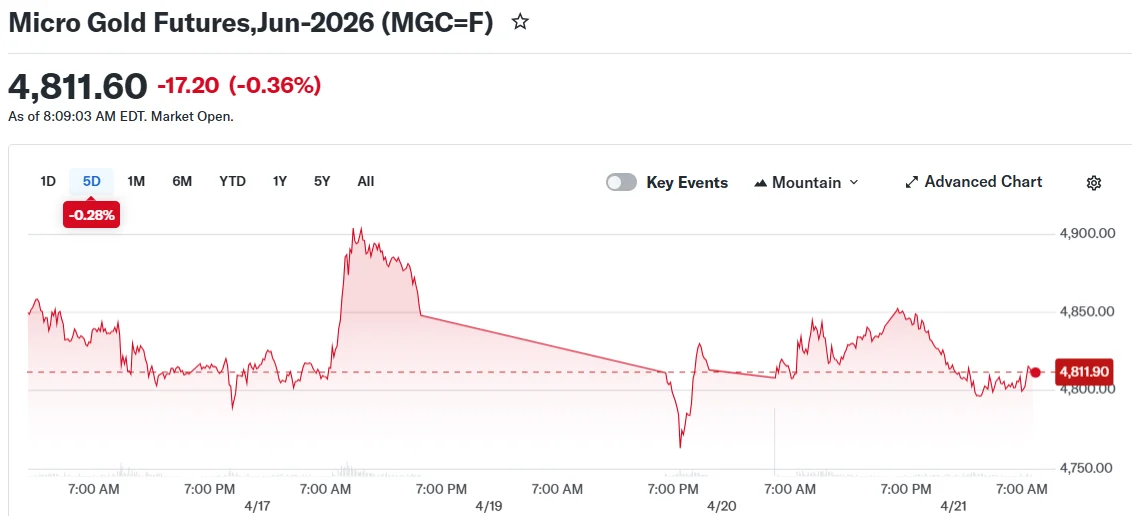
- Bullion declined nearly 1% Tuesday, slipping beneath the $4,800 per ounce threshold
- An advancing U.S. dollar pressured precious metal valuations
- The temporary U.S.-Iran truce concludes Wednesday amid uncertain diplomatic prospects
- Critical oil shipping lanes through the Strait of Hormuz continue blockage, sustaining crude prices and inflationary pressures
- Federal Reserve Chair candidate Kevin Warsh appeared before senators, with investors scrutinizing his monetary policy stance
Precious metals retreated Tuesday as market participants assessed the likelihood of diplomatic progress between Washington and Tehran ahead of a ceasefire expiration scheduled for this week.
Spot gold declined approximately 0.8% to reach $4,782 per ounce during London morning trading hours. Futures contracts similarly weakened, shedding roughly 0.6% to settle around $4,802 per ounce.
The greenback’s appreciation contributed significantly to bullion’s decline. Dollar strength typically diminishes gold’s appeal for international purchasers, as the metal becomes costlier in foreign currency terms, subsequently dampening acquisition interest.
The temporary cessation of hostilities between Washington and Tehran, declared by President Donald Trump on April 7, reaches its scheduled conclusion Wednesday evening Eastern time. Trump indicated minimal prospects for extending the pause in military action.

Both governments have communicated contradictory signals regarding potential diplomatic engagement. Trump announced Vice President JD Vance’s readiness to travel to Islamabad for discussion purposes. Iranian officials have yet to verify participation or representation from Tehran.
Pakistan has assumed an intermediary role facilitating communication between American and Iranian representatives. The military confrontation originated in late February following coordinated U.S. and Israeli military operations targeting Iranian positions.
Hormuz Blockage Sustains Economic Uncertainty
The Strait of Hormuz, a maritime chokepoint handling approximately twenty percent of global petroleum shipments, has remained predominantly closed since hostilities commenced. Though briefly accessible to merchant vessels Friday, authorities reimposed the blockade through the weekend.
Elevated oil prices are amplifying worldwide inflation anxieties. This dynamic holds significance for precious metals because accelerating price growth may compel monetary authorities to maintain or elevate borrowing costs. Elevated interest rate environments typically disadvantage non-interest-bearing holdings like bullion.
Gold has surrendered approximately 10% of its valuation since the military conflict ignited in late February. Silver likewise weakened Tuesday, declining 1.2% to $78.80 per ounce. Platinum and palladium recorded parallel losses.
Commodity analyst Manav Modi observed markets remain “on edge” regarding diplomatic engagement prospects before the truce expires, noting “conflicting signals from both sides adding to volatility.”
Warsh Testifies Before Senators on Central Bank Direction
Market observers simultaneously monitored Senate Banking Committee proceedings featuring Kevin Warsh, Trump’s Federal Reserve Chair designee. Warsh’s testimony commenced at 10 a.m. Eastern time.
Trump has consistently advocated for reduced interest rates. Warsh has expressed alignment with this perspective while simultaneously criticizing the Fed’s asset acquisition programs and advocating for central bank balance sheet reduction.
In prepared testimony, Warsh pledged to safeguard the Federal Reserve’s autonomy from external political influence.
Precious metals experienced sharp declines following Warsh’s nomination announcement in late January.
Warsh’s confirmation timeline faces potential complications. Jerome Powell’s chairmanship term concludes in May, though multiple legislators have advocated for his continuation during an ongoing governmental inquiry examining Powell and Federal Reserve operations. Detractors characterize this investigation as an effort to exert undue influence over the central banking institution.
