


TLDR
- Gold declined 0.7% during New York trading hours to $4,218.20, despite climbing 1.1% earlier in spot markets following constructive U.S.-Iran diplomatic discussions in Switzerland
- Tehran’s top diplomat announced “major progress” in negotiations, while mediators from Qatar and Pakistan confirmed agreement on a framework for comprehensive talks
- Declining crude oil prices dampened inflation concerns, temporarily bolstering gold, though Federal Reserve hawkishness constrained upward momentum
- Federal Reserve Chair Kevin Warsh reiterated expectations for prolonged elevated interest rates, weighing on zero-yield assets including gold
- Market participants anticipate this week’s U.S. Personal Consumption Expenditures data for guidance on monetary policy direction
The gold market experienced bidirectional movement on Monday as conflicting dynamics shaped trading sentiment. Constructive developments in Swiss-hosted U.S.-Iran nuclear negotiations provided early session support, while persistent Federal Reserve hawkishness prevented sustained rallies.
Spot gold climbed 1.1% to $4,205.05 per ounce during Asian morning trading. However, by the time New York markets opened, futures had pivoted downward, declining 0.7% to settle at $4,218.20 per troy ounce.
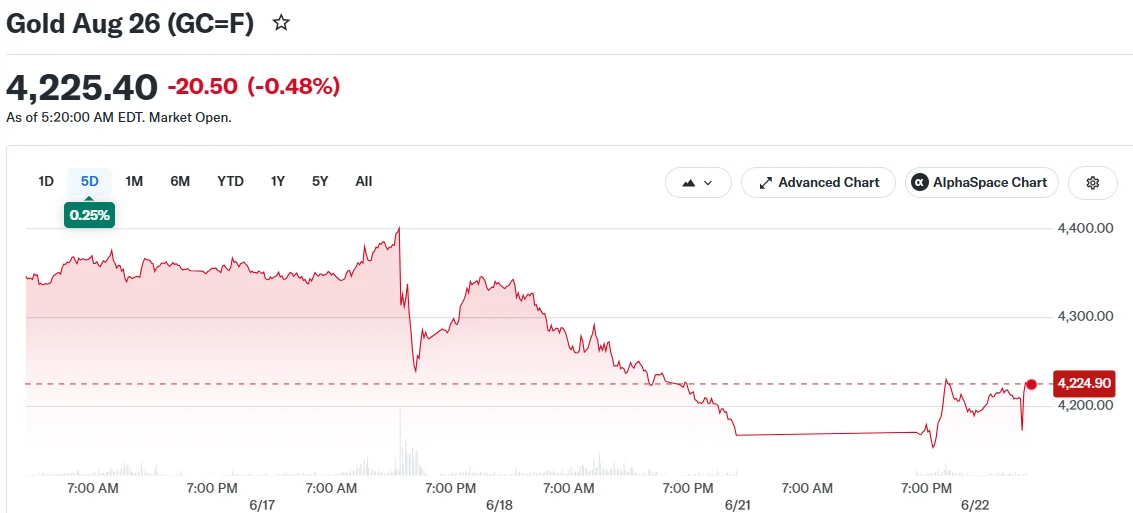
The precious metal has now posted declines across three consecutive trading sessions and recorded a 1.4% weekly loss.
Swiss Nuclear Negotiations Reduce Energy Market Tensions
Diplomatic discussions between Washington and Tehran advanced in Switzerland throughout Monday. Iran’s Foreign Minister Abbas Aragchi characterized the quadrilateral negotiations as achieving “major progress.”

Representatives from Qatar and Pakistan, serving as intermediaries, confirmed that participants established a framework pointing toward comprehensive agreement. Technical-level discussions are scheduled to extend throughout the remainder of the week.
The diplomatic agenda also addressed mechanisms to guarantee secure navigation through the Strait of Hormuz, a critical artery for international petroleum distribution.
Diplomatic headway contributed to declining crude oil valuations. Brent crude surrendered early-session advances as negotiation developments surfaced.
Weakening oil prices alleviated anxieties regarding energy-fueled inflation. This diminished market expectations that the Fed would pursue aggressive policy tightening to combat price acceleration, providing temporary tailwinds for gold.
Central Bank Rhetoric Sustains Elevated Rate Projections
Notwithstanding geopolitical developments, gold’s upward movement encountered resistance from Federal Reserve positioning.
Fed Chair Kevin Warsh delivered hawkish commentary that solidified market conviction that U.S. borrowing costs will remain elevated for an extended period. Traders continue processing last week’s Federal Reserve policy meeting, where officials maintained optionality for additional rate increases.
Elevated interest rates diminish gold’s attractiveness, given the metal generates no income. When investors can capture returns through bonds or deposit accounts, the rationale for maintaining gold positions deteriorates.
“While geopolitical risks should continue to provide underlying support, a higher-for-longer U.S. rate environment may limit near-term upside,” analysts at ING said.
Saxo Bank analysts characterized gold as trapped “in technical limbo” under current conditions.
The U.S. dollar index advanced 0.1% to 100.93, hovering near the 13-month peak established last week. Dollar strength renders dollar-denominated commodities costlier for international purchasers.
Market participants now focus on this week’s U.S. Personal Consumption Expenditures price index release. The metric represents the Federal Reserve’s preferred inflation gauge and could influence rate policy expectations.
Broader precious metals posted gains during the session. Silver surged 2.8% to $66.70 per ounce. Platinum appreciated 1.6% to $1,694.60 per ounce. Copper futures traded on the London Metal Exchange increased 0.8% to $13,700.33 per ton.
