



Key Takeaways
- Ethereum momentarily dropped to $1,500 in June 2026, representing approximately 70% decline from its August 2025 record high of $4,953.
- ETH experienced steeper losses than Bitcoin driven by elevated beta, softer ETF inflows, and cascading leverage wipeouts.
- Surpassing $1,750 resistance could trigger a rally toward $1,800–$2,000 territory.
- Crypto analyst Patel is building positions between $1,550–$1,000, projecting eventual targets of $10,000–$20,000.
- Bitcoin’s trajectory and the ETH/BTC performance ratio remain critical indicators for Ethereum’s future direction.
Ethereum plummeted to $1,500 during June 2026 — marking its weakest valuation in years — before bouncing modestly back above $1,620. This dramatic descent has sparked intense debate: does $1,500 represent the cycle low, or merely a waypoint toward $1,000?
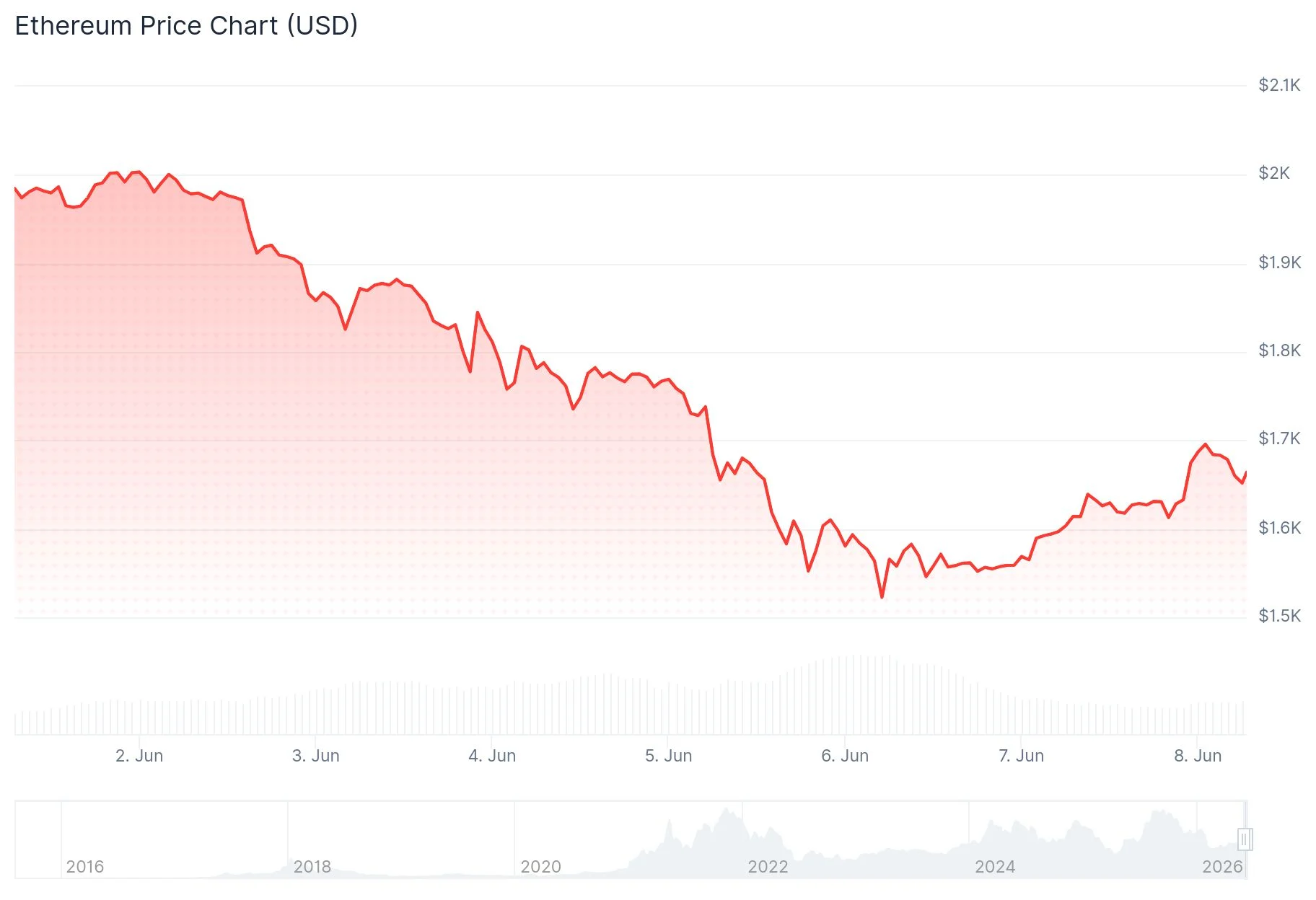
Ethereum reached its zenith at $4,953 during August 2025. The subsequent decline unfolded gradually before accelerating sharply. A robust U.S. employment report extinguished expectations for imminent Federal Reserve interest rate reductions. Escalating U.S.-Iran geopolitical tensions compounded market anxiety. Spot Bitcoin ETFs experienced unprecedented capital withdrawals, dragging Ethereum ETFs down simultaneously. More than $1 billion in leveraged cryptocurrency positions faced liquidation, with Ethereum long positions suffering disproportionate damage.
This confluence of factors propelled Ethereum down to $1,500 — a threshold not witnessed since previous bear market troughs.
The Reasons Behind Ethereum’s Steeper Decline Versus Bitcoin
Ethereum tumbled approximately 70% from peak levels. Bitcoin declined around 50%. This disparity reflects Ethereum’s higher beta characteristics. ETH magnifies Bitcoin’s directional movements — during market corrections, Ethereum typically experiences amplified downside.

The ETH/BTC performance ratio has deteriorated consistently since 2021. Bitcoin’s ETF debut in January 2024 generated sustained institutional capital flows. Ethereum’s ETFs, introduced subsequently, failed to replicate comparable adoption. This demand differential has left ETH more vulnerable during market downturns.
Leverage dynamics exacerbated the selloff. Ethereum long positions were heavily concentrated. When June’s liquidation wave struck, these positions unwound rapidly, triggering price spirals.
Prominent crypto analyst Crypto Patel directly confronted investor anxiety through social media, cautioning followers against panic-driven actions. He disclosed that he is “slowly accumulating ETH/USDT in the $1,550–$1,000 range,” acknowledging that pinpointing exact bottoms is impossible. Patel identifies approximately $1,000 as Ethereum’s maximum downside risk, while maintaining that long-term valuations between $10,000 and $20,000 remain “very possible.” His forecast anticipates the upcoming altcoin season materializing between 2026 and 2027.
Critical Price Thresholds Under Observation
Following the $1,500 nadir, ETH rebounded past $1,620 and currently maintains positioning above its 100-hourly moving average. Initial resistance materializes at $1,700, followed by $1,750 — corresponding to the 50% Fibonacci retracement level from the $2,005 to $1,505 decline.
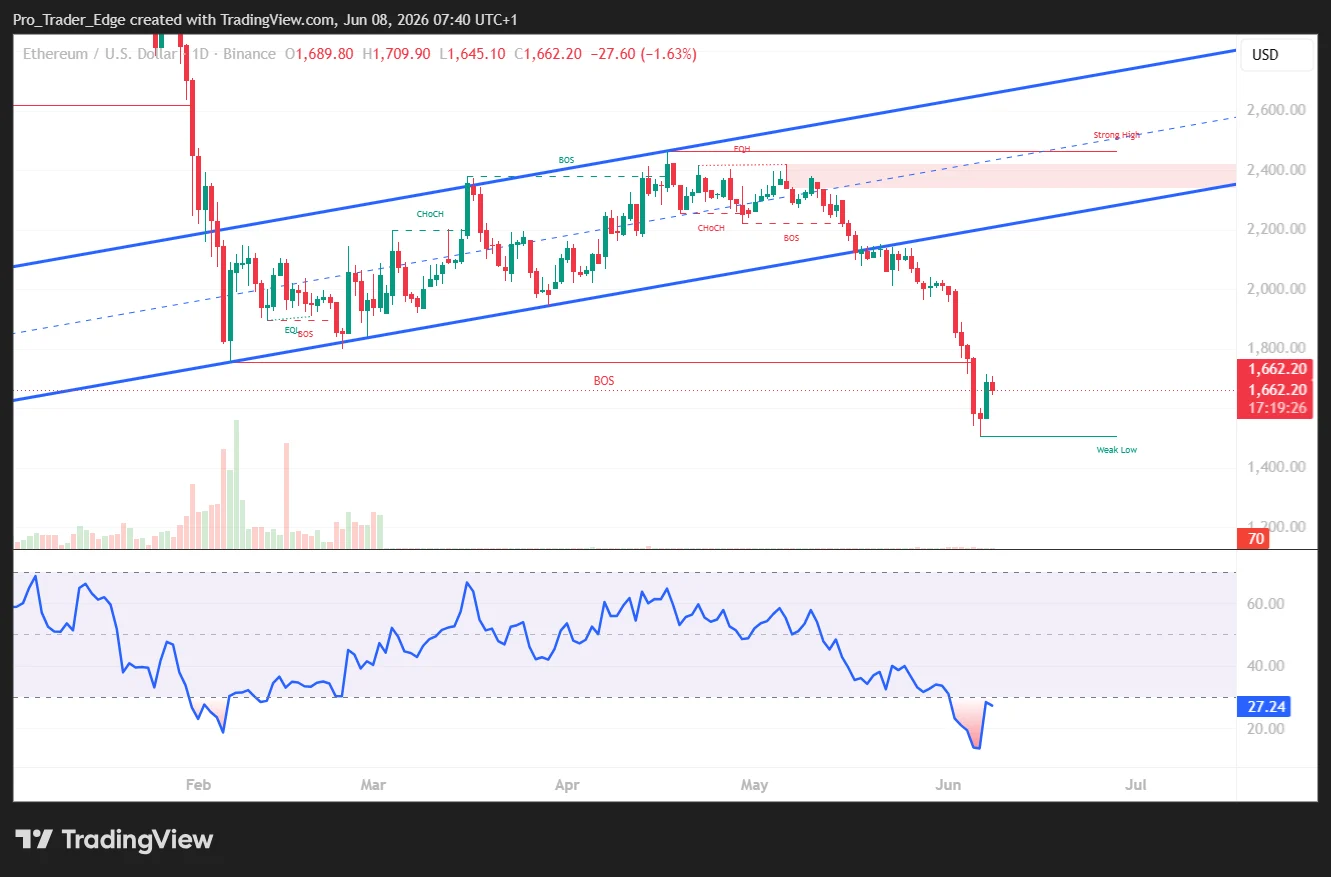
A decisive breach above $1,750 could catalyze momentum toward $1,800, $1,885, and potentially $2,000. Should resistance at $1,750 prove insurmountable, retracement toward $1,620 and $1,600 becomes the probable scenario. The $1,500 threshold maintains its significance as pivotal support beneath current levels.
Ethereum corporate treasury holders factor into market dynamics. BitMine carried approximately $9.58 billion in unrealized ETH losses, while SharpLink’s Ethereum holdings registered roughly $1.59 billion in paper losses at market lows. Neither organization has signaled distressed selling, though these figures underscore the balance sheet vulnerabilities associated with maintaining ETH exposure through severe drawdowns.
As of early June 2026, ETH hovers near $1,620 with bulls working to defend the recovery above the $1,600 threshold.
