


Key Takeaways
- BTC declined to $79,800 following a rejection at the $82,800 resistance threshold
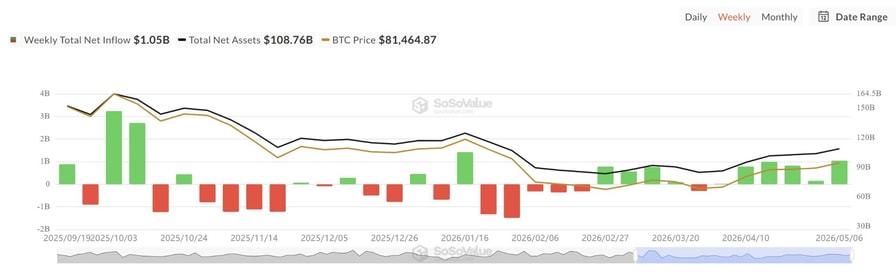
- Spot Bitcoin ETF weekly inflows reached $1.105 billion — the strongest performance since January
- Critical support zone identified between $76,000 and $78,000, matching the 200-day EMA
- Crypto analyst Ali Charts highlights $80,300 as a pivotal whale cost basis threshold
- According to Glassnode, $85,200 represents the next significant resistance barrier
Bitcoin slipped beneath the $80,000 mark on Thursday following rejection at $82,800, reaching an intraday low of $79,800. This downturn occurred even as ETF inflows delivered their strongest weekly performance since January, crossing the $1 billion threshold.
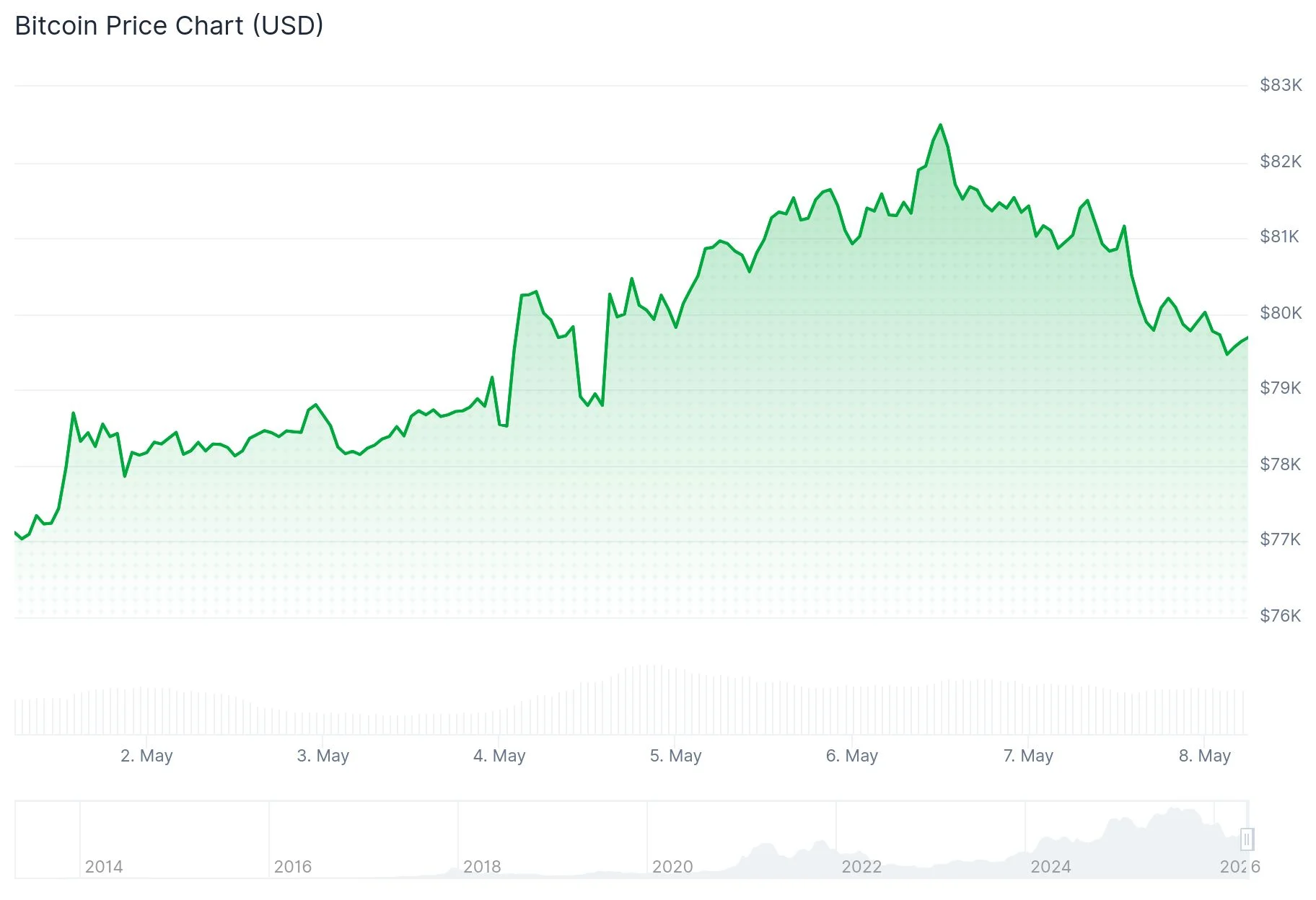
Technical indicators revealed bearish divergences across both one-hour and four-hour RSI timeframes, suggesting diminishing upward momentum. Such divergences emerge when price action registers higher peaks while the RSI trends downward — typically indicating exhaustion in the current rally.
Crypto analyst Jelle noted that the 200-day moving average alongside the EMA cluster is functioning as resistance, with $78,000 marked as the initial significant support threshold. Fellow trader Killa XBT identified a deeper potential support corridor spanning $76,300 to $74,700 should selling intensify.
The weekly opening price of $78,500 serves as the immediate level that bulls are attempting to hold. Should this fail, the daily fair value gap stretching from $76,000 to $78,000 — which coincides with the 200-day EMA — presents a probable area for retesting.

Why the $80,300 Whale Level Matters
Crypto analyst Ali Charts emphasized $80,300 as the most significant price point currently under observation. This figure corresponds to the average acquisition price of recent whale accumulation — specifically, entities that purchased Bitcoin over the preceding 155 days.
When BTC trades beneath $80,300, these whale holders are underwater on their positions. Bitcoin momentarily climbed to $82,800 before retreating below this threshold. Sustained trading under $80,300 could trigger breakeven selling from these whales, potentially amplifying downward momentum.
Spot Bitcoin ETFs documented five consecutive days of positive net inflows through Wednesday, accumulating $1.69 billion — marking the longest stretch of continuous inflows since July 2025. Wednesday’s session alone contributed $46.3 million.
Glassnode’s analysis indicates Bitcoin has successfully surpassed two important onchain thresholds: the True Market Mean positioned at $78,200 and the Short-Term Holder Cost Basis at $79,100. Trading above these levels means the majority of active participants have returned to profitability.
Strong ETF Appetite Points Toward $85,200
Data from Swissblock indicates the Bitcoin Risk Index has normalized near zero, with ETF net flows turning positive at approximately 3,000 BTC. Swissblock analysts observe, “ETF demand is counterbalancing selling pressure. This continues to be a flow-driven breakout.”
According to Santiment analytics, Bitcoin’s total holder count contracted by 245,000 wallets over a five-day period — representing the sharpest decline witnessed in nearly two years. Santiment observers drew parallels to a June–July 2024 scenario where more than 964,000 wallets departed before a substantial bull market emerged.
Perpetual futures funding rates continue to register in negative territory despite BTC’s 26% bounce from February’s nadirs, indicating short position holders remain prevalent. Glassnode’s data reveals long-term holders are crystallizing approximately $180 million daily in profits — a measured pace rather than aggressive distribution.
Glassnode’s subsequent price target sits at the Active Realized Price of $85,200, which represents the aggregate cost basis of all actively circulating supply. This level is anticipated to encounter increased overhead resistance.
Bitcoin was hovering just beneath $80,000 during Thursday’s U.S. trading session. Glassnode analysts assert that a decisive breakthrough above $85,200, supported by persistent spot market demand, would be necessary to validate that the recovery possesses fundamental strength.
