



Key Highlights
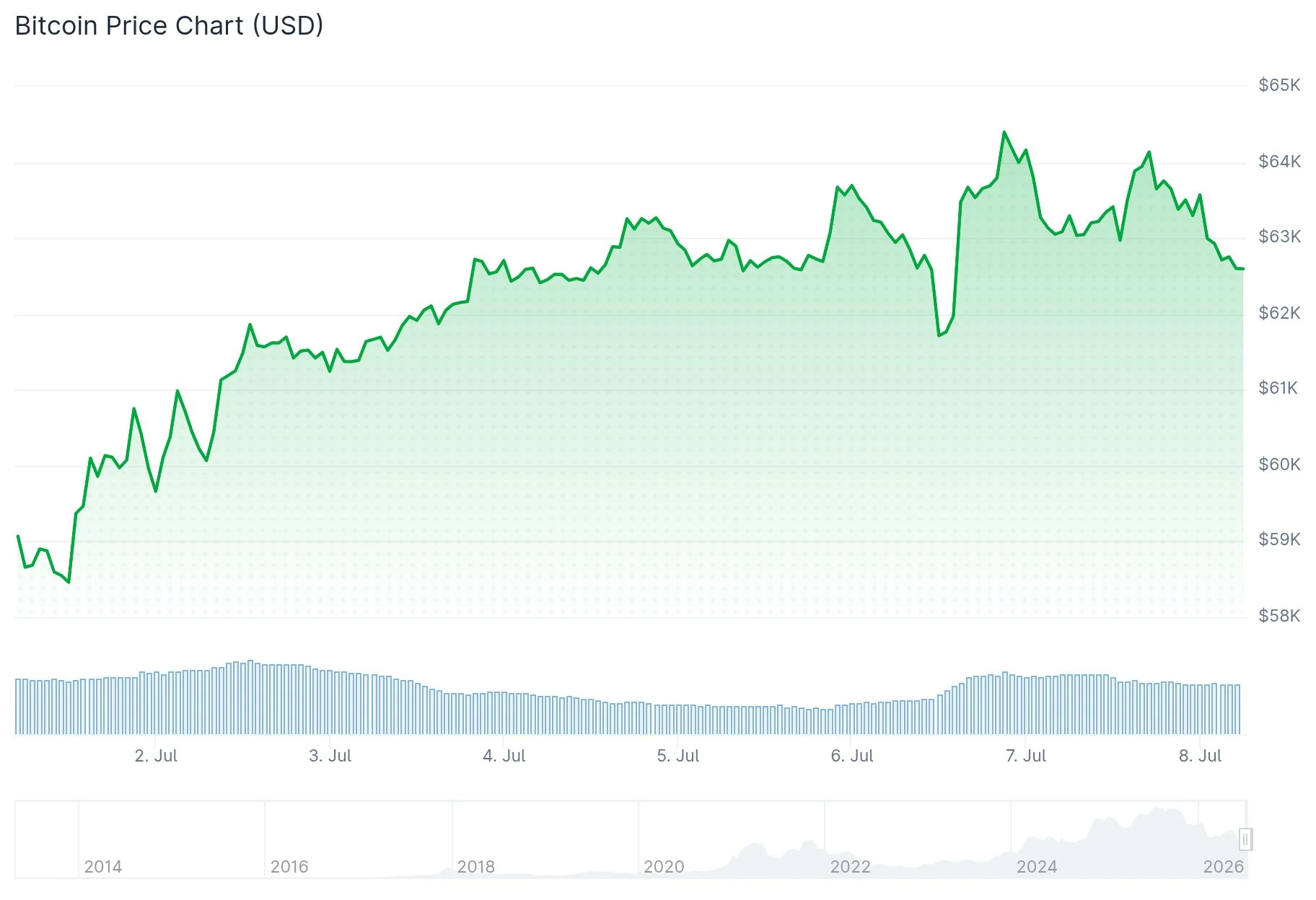
- Bitcoin declined 1.4% to $63,305 following U.S. military action targeting Iranian assets
- Crude oil prices surged more than 5% amid escalating tensions in the Strait of Hormuz
- Technology equities tumbled significantly, with Micron plunging over 9%
- Spot Bitcoin ETFs attracted $265.7 million in net capital on Monday
- Market observer Ted Pillows cautions that breaking below $62,500 may drive BTC toward $60,000
Bitcoin retreated to approximately $63,000 on Tuesday following U.S. military operations targeting Iranian positions. The action followed intelligence reports detailing assaults on three commercial oil vessels operating near the strategically critical Strait of Hormuz.
U.S. Central Command characterized the military response as proportional action addressing Iranian hostility toward international commercial shipping. Two vessels sustained projectile damage while another was struck by an unmanned aerial vehicle. Fortunately, no fatalities or injuries were confirmed.
The United Kingdom’s Maritime Trade Operations division elevated its threat assessment for the waterway to “severe.” Crude oil markets reacted swiftly, with prices advancing more than 5% following the developments.
[[SCRIPT_0]]

The leading cryptocurrency had temporarily surged to $64,660 during the trading session — marking its strongest performance since June 22 — before reversing course. The decline coincided with broader weakness across American equity indices.
The S&P 500 declined 0.6% while the Nasdaq 100 retreated 2.1%. Semiconductor manufacturers bore the brunt of selling pressure, with Micron Technologies shedding over 9% during Tuesday’s session.
Cryptocurrency market analyst Ted Pillows identified a crucial support zone on X. He observed that Bitcoin had encountered resistance within the $64,500–$65,000 range and emphasized that maintaining the $62,500–$62,800 support level was critical. Pillows suggested that a daily closing price beneath this threshold could catalyze a decline toward $60,000.
[[SCRIPT_1]]
Institutional Appetite Remains Robust
Notwithstanding the price correction, institutional investment flows demonstrated resilience. U.S.-traded spot Bitcoin exchange-traded funds absorbed net inflows totaling $265.7 million on Monday, building on the $221.7 million recorded on July 2.
This represented a notable turnaround following challenging conditions in late June, when market participants withdrew approximately $2.4 billion from spot Bitcoin investment vehicles across multiple trading sessions.
Market participant Daan Crypto Trades highlighted on X that Bitcoin’s correlation coefficient relative to the Nasdaq experienced a dramatic reversal from -0.87 to +0.72 within mere days. This transformation indicates Bitcoin is currently behaving more like a volatile technology equity than a portfolio diversification asset.
[[SCRIPT_2]]
Federal Reserve Communications in Focus
Investors are directing attention toward Wednesday’s Federal Reserve meeting minutes for insight into monetary policy trajectory. The publication could significantly influence both traditional markets and digital assets.
John Bollinger, architect of the widely-used Bollinger Bands indicator, characterized Bitcoin’s price behavior as reaching “a critical juncture.” He has been monitoring signals suggesting a potential extended-term trend reversal in BTC valuation.
The United States additionally canceled a general authorization permitting Iranian crude oil production and international sales as part of its comprehensive response to the maritime incidents.
Bitcoin was exchanging hands at $63,305 as of 6:04 PM Eastern Time on Tuesday.
