



Key Takeaways
- Bitcoin has declined more than 16% over the last 30 days while the S&P 500 reached historic peaks
- Bitcoin ETFs recorded withdrawals of 62,794 BTC across three weeks, marking the second-highest outflow period ever documented
- Charles Schwab analyst Jim Ferraioli indicates cryptocurrency is losing momentum momentum to artificial intelligence equities and initial public offerings
- BlackRock’s IBIT ETF experienced a $1.26 billion block transaction, suggesting significant investor liquidation
- The aggregate cryptocurrency market capitalization has contracted to $2.38 trillion, representing a 46% decline from October highs
The cryptocurrency flagship is losing its status as the premier speculative opportunity. Market observers indicate that investment capital is migrating away from digital assets toward artificial intelligence companies and anticipated public offerings, creating sustained downward pressure on bitcoin.
Bitcoin’s valuation has contracted by over 16% during the previous month. During this identical timeframe, the S&P 500 surged to unprecedented levels, advancing approximately 5%.
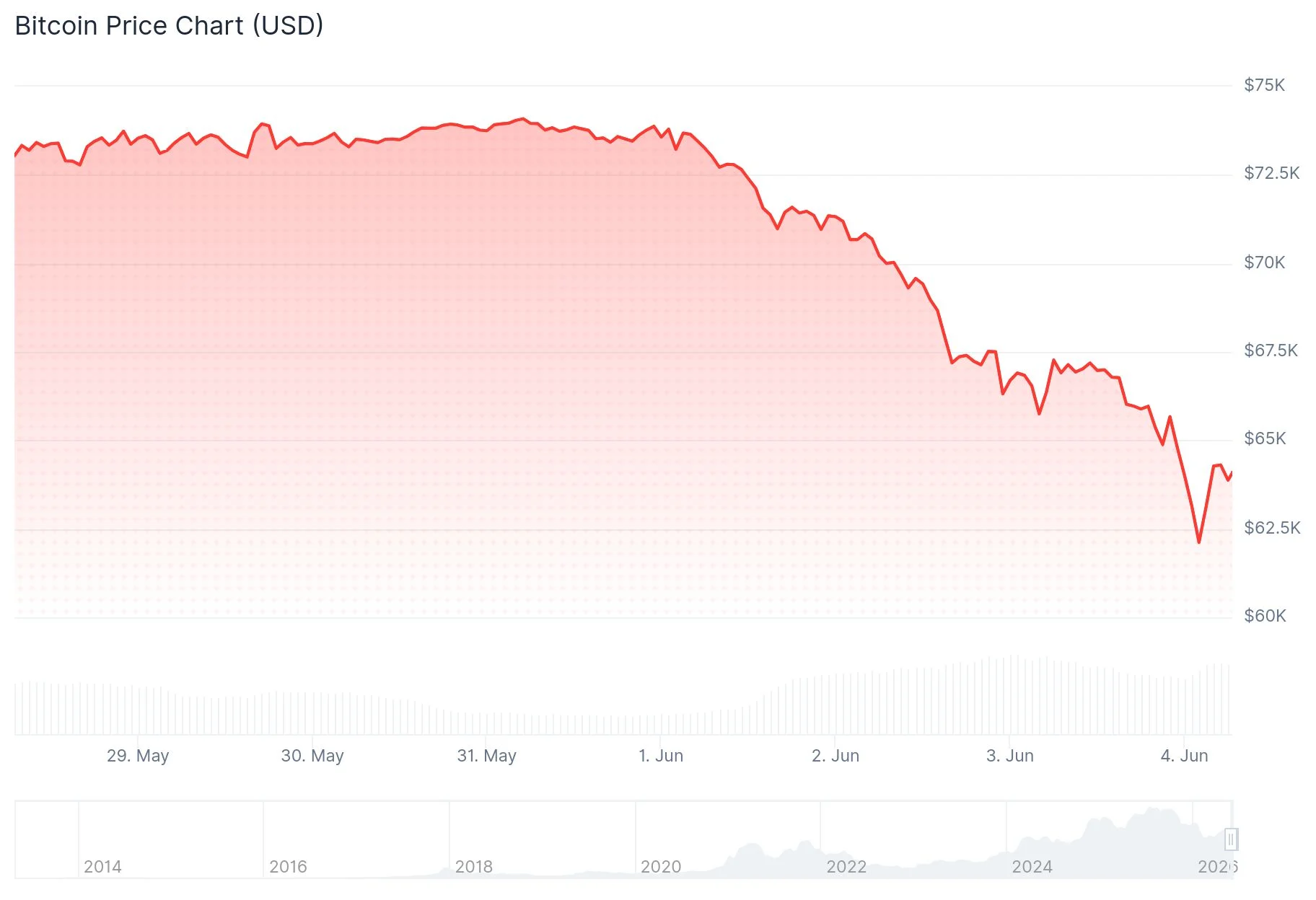
Jim Ferraioli, who directs digital currency research at Charles Schwab, offers a clear perspective on the situation. “Bitcoin has experienced bearish conditions since October,” he stated. “Momentum has exited the cryptocurrency sector currently.”
Ferraioli contends that bitcoin functions predominantly as a retail-focused, momentum-dependent investment. When alternative opportunities become compelling, cryptocurrency participants redirect their capital accordingly.
Presently, that capital is flowing toward AI technologies.

Artificial Intelligence Equities Capture Market Attention
Nvidia stock has surged almost 1,500% following ChatGPT’s introduction in late 2022. Companies focused on AI infrastructure, data facilities, and sophisticated computing have delivered impressive performance, creating formidable competition for bitcoin.
Matt Hougan, Chief Investment Officer at Bitwise, expressed it unambiguously. “AI stocks, robotics companies, SpaceX… who needs crypto when the Nasdaq-100 is up 43% year-over-year?” he noted.
Hougan suggested cryptocurrency has transitioned from momentum-driven speculation to a contrarian position, demanding patience instead of enthusiasm.
Vetle Lunde, research director at K33 Research, reinforced that perspective. “A substantial portion of the market perceives the opportunity cost of maintaining bitcoin exposure as excessive while AI-related investments continue climbing,” he explained.
Bitcoin exchange-traded funds recorded net withdrawals of 62,794 BTC during a three-week span. This represents the second-most significant outflow sequence in historical records. The selling intensified following bitcoin’s inability to penetrate above its 200-day moving average.
Derivative Markets Signal Caution
Open interest in CME bitcoin futures has contracted to levels not witnessed since October 2023, indicating institutional participants are reducing exposure.
Funding rates within perpetual futures contracts have increased despite bitcoin’s declining price. This dynamic suggests leveraged long positions are accumulating during market weakness. K33 characterized this as concerning.
The research firm, which previously projected bitcoin’s February descent to approximately $60,000 would establish the cycle bottom, has revised its outlook. “We interpret the embedded selling pressure within those leveraged long positions as an indication of potentially deeper price lows,” their analysis stated.
On May 26, a $1.26 billion off-exchange block transaction involving BlackRock’s IBIT bitcoin ETF was executed. NYDIG research characterized the transaction as a substantial investor pursuing swift liquidation, rather than a hedge fund position adjustment.
Forthcoming initial public offerings are intensifying the competitive pressure. SpaceX is advancing toward a public listing potentially valued at $1.8 trillion. Anthropic and OpenAI offerings are similarly anticipated. K33 suggests this IPO pipeline may be diverting additional capital from cryptocurrency markets.
Ferraioli articulated the contemporary challenge directly. “There’s an absence of compelling reasons to accumulate here when alternative opportunities exist,” he commented.
The total cryptocurrency market capitalization currently stands at $2.38 trillion, down 46% from its October zenith.
