


Key Takeaways
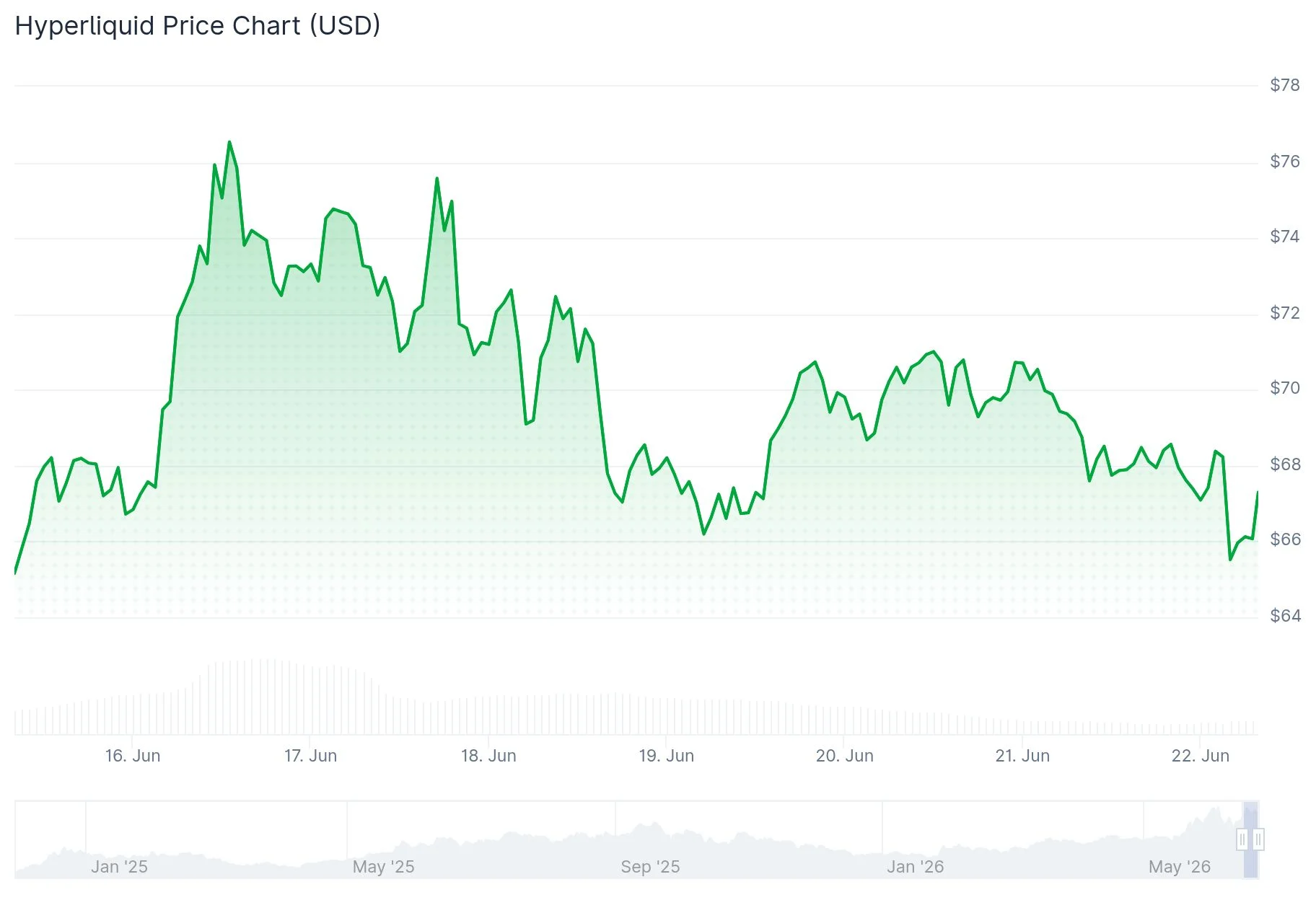
- HYPE token has surged 194% year-to-date in 2026, approaching its record peak of $77
- The platform gained prominence by providing perpetual futures contracts through a decentralized framework
- American financial regulators historically restricted perpetual futures access — a landscape now shifting
- Kalshi emerged as the inaugural CFTC-sanctioned American platform for perps trading, recording $1B volume within seven days
- Major exchanges Coinbase and Robinhood are preparing their own perpetual futures offerings
The Hyperliquid (HYPE) token has emerged as a standout performer throughout 2026’s cryptocurrency markets. With year-to-date gains reaching 194%, the digital asset currently trades in proximity to its historical peak of $77.
The ecosystem supporting HYPE operates as a decentralized trading venue focused on perpetual futures instruments. These financial products enable market participants to establish leveraged positions on cryptocurrency valuations — circumventing the requirement for direct asset ownership.
Perpetual futures contracts have gained substantial traction within cryptocurrency trading circles. Market participants can establish both bullish and bearish positions, creating profit opportunities regardless of directional price movement.
Historically, American traders had minimal access to these instruments. Regulatory authorities expressed concerns regarding embedded leverage mechanisms and the potential for rapid capital liquidation.

This regulatory stance has recently undergone significant transformation.
Kalshi’s Market Entry
During June 2026’s opening days, forecasting platform Kalshi achieved a regulatory milestone by becoming America’s first CFTC-approved venue for perpetual futures trading. The platform documented $1 billion in transaction volume during its inaugural seven-day period.
Kalshi isn’t operating in isolation within this emerging landscape. Industry giants Coinbase and Robinhood have both announced intentions to introduce perpetual futures capabilities, viewing these products as complementary additions to their current service portfolios.
This development presents significant obstacles for Hyperliquid’s market position. American residents currently face legal restrictions preventing platform access. Consequently, U.S.-based traders seeking perpetual futures exposure will gravitate toward newly available regulated domestic platforms.
To accommodate American clientele, Hyperliquid must navigate the comprehensive CFTC approval framework. While company representatives have expressed willingness to pursue regulatory compliance, neither implementation schedules nor potential structural modifications have been disclosed.
Implications for HYPE’s Future
Motley Fool analyst Dominic Basulto published commentary drawing parallels to America’s online gambling sector transformation. Following legalization, betting activity rapidly migrated from international platforms toward domestically regulated operators. Basulto suggests perpetual futures markets may experience similar consolidation patterns, with established American exchanges capturing volume currently flowing to platforms like Hyperliquid.
Basulto indicated he’s avoiding HYPE positions despite recent appreciation, identifying emerging regulated competition as his principal concern.
Hyperliquid’s impressive 2026 trajectory has unfolded during a timeframe characterized by limited regulated American alternatives. Kalshi’s achievement of $1 billion in perpetual futures volume within one week of operations demonstrates substantial market appetite for compliant domestic offerings.
