


Quick Summary
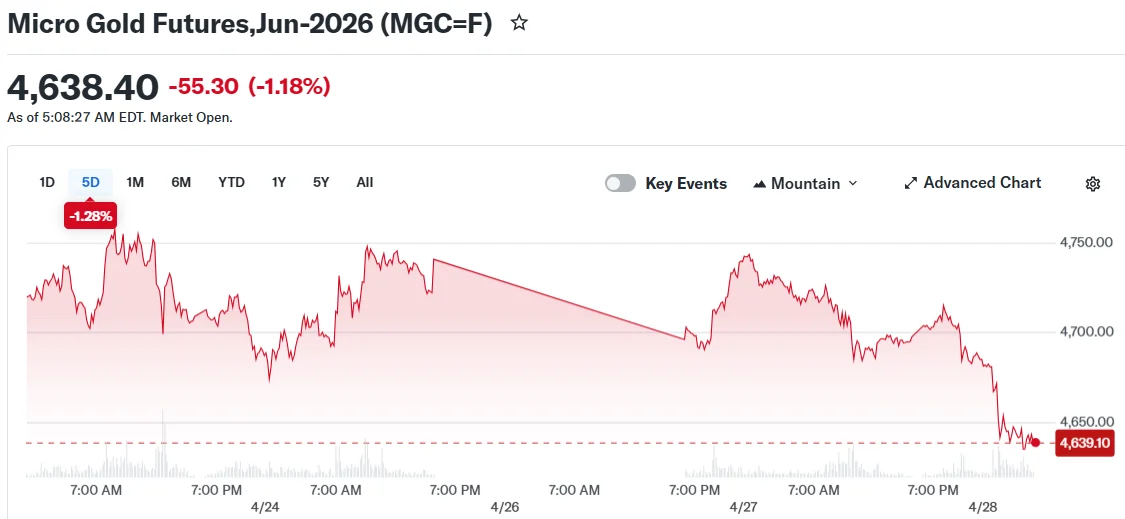
- Precious metal declined more than 1% to approximately $4,625 per ounce amid diplomatic impasse
- Tehran proposed reopening Hormuz strait if Washington lifts port blockade, but US remains doubtful
- Japan’s central bank maintained current rates while cautioning about inflation pressures from energy costs
- Federal Reserve convenes Wednesday for what could be Powell’s final policy meeting
- Bullion has shed approximately 12% in value since late February conflict escalation
Precious metals experienced significant downward pressure Tuesday following the breakdown of peace negotiations between the United States and Iran, while major central banks worldwide expressed growing apprehension over inflationary trends.
Spot gold declined approximately 1.2% to reach $4,624.99 per ounce during Asian trading sessions. Gold futures similarly retreated roughly 1% to settle at $4,646.90 per ounce. Silver experienced a sharper downturn, plummeting 3.3% to hover around $73 per ounce. Both platinum and palladium posted losses as well.
The Strait of Hormuz, a critical chokepoint for international energy transportation, continues to operate at virtually zero capacity. Ship traffic through this vital passage has plummeted to negligible levels following the outbreak of hostilities approximately eight weeks prior.
Tehran advanced a fresh diplomatic initiative early this week. Iranian officials proposed lifting the Hormuz closure in exchange for the United States terminating its naval blockade of Iranian maritime facilities. The White House is anticipated to deliver its response within days.

Nevertheless, intelligence suggests the Trump administration’s national security apparatus remains unconvinced. A primary obstacle centers on Iran’s insistence to postpone nuclear program discussions, a condition Washington seems unwilling to accommodate.
Weekend diplomatic efforts between the adversaries collapsed when neither party agreed to convene in Pakistan. The trajectory of subsequent negotiations remains ambiguous.
Global Central Banking Decisions Compound Gold Weakness
Japan’s central banking authority maintained its policy rate at 0.75% Tuesday, though adopted a noticeably hawkish posture. The BOJ elevated its inflation projections for fiscal year 2026 and signaled probable additional rate increases should price pressures persist.
Monetary policymakers identified higher oil and energy costs as the principal catalyst behind accelerating prices. These remarks weighed on gold, as the precious metal typically loses attractiveness during periods of anticipated monetary tightening.
The Federal Reserve concludes its two-day policy deliberations Wednesday. Market participants anticipate rates will remain unchanged, though concerns persist that policymakers may adopt a more restrictive tone given recent inflation metrics.
March consumer price data revealed a pronounced acceleration in inflationary pressures throughout the United States. The greenback maintained strength, creating additional obstacles for gold.
Powell’s Swan Song at the Fed
Wednesday’s Federal Reserve gathering is widely expected to mark Jerome Powell’s final meeting as chairman. His tenure concludes May 15.
Former Fed board member Kevin Warsh is slated to assume leadership. Warsh appeared before congressional committees last week during confirmation proceedings.
Market observers are monitoring this week’s monetary policy announcements across the United States, European Union, United Kingdom, and Canada with heightened attention.
Marc Loeffert, a precious metals specialist at Heraeus, noted that the prolonged standoff with Hormuz remaining shuttered “extends market uncertainty.” He observed that elevated prices coupled with economic sluggishness might bolster gold over extended timeframes, though immediate prospects remain challenged by interest rate anxieties.
The yellow metal has now surrendered roughly 12% of its valuation since hostilities between Washington and Tehran erupted in late February.
