



Key Takeaways
- Stock futures declined Monday following Iranian state media claims of missile attacks on a U.S. naval vessel in the Strait of Hormuz
- Pentagon officials quickly disputed the Iranian media claims, helping to stabilize early morning sell-offs
- Energy markets reacted sharply with crude oil jumping more than 3%, pushing Brent toward $112 per barrel
- President Trump unveiled “Project Freedom” to provide naval escorts through the strategic waterway; Tehran issued retaliatory warnings
- Friday’s April employment report is anticipated to show a significant slowdown with just 60,000 jobs added
Equity futures declined during Monday’s pre-market session after Iranian government media outlets claimed missiles had struck a United States naval vessel operating near the strategically vital Strait of Hormuz. The reports sparked immediate selling pressure before American military officials refuted the claims.
Dow Jones Industrial Average futures retreated approximately 204 points, representing a 0.4% decline. Futures contracts for the S&P 500 declined 0.2%, while Nasdaq 100 futures dropped 0.1%.
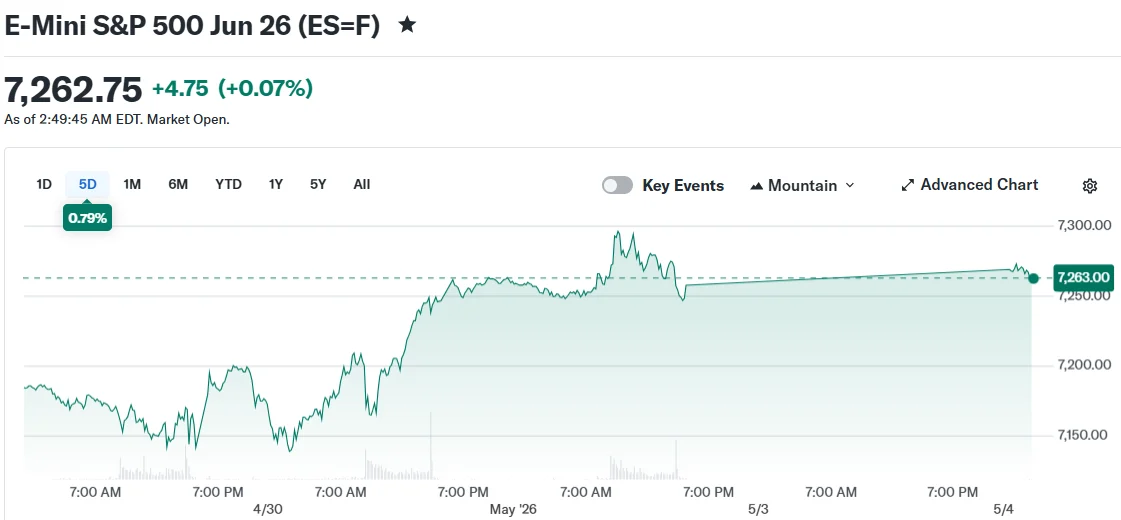
Both the S&P 500 and Nasdaq indexes had reached new all-time highs during Friday’s trading session, concluding their strongest five-week performance streak since May 2020. However, this upward trajectory encountered resistance Monday morning due to escalating geopolitical concerns.
Iran’s Fars News Agency reported that two missiles impacted a U.S. frigate after the vessel allegedly disregarded warnings against entering the Strait of Hormuz. U.S. Central Command responded via social media platform X, categorically denying any strikes against navy vessels.

The official denial provided some market stabilization, though investor anxiety persisted. Market participants pivoted toward traditional safe-haven investments, driving the U.S. dollar index up 0.3% relative to a basket of peer currencies.
The benchmark 10-year Treasury note yield increased 4 basis points to reach 4.41%, reflecting investor migration toward less risky investment vehicles.
Energy Markets Rally on Supply Disruption Concerns
Oil markets demonstrated strong reactions to the developing geopolitical situation. Brent crude futures surged 3.4% to reach $111.80 per barrel. West Texas Intermediate advanced 3.5% to $105.35 per barrel during early morning trading.
The Strait of Hormuz represents one of the planet’s most critical maritime chokepoints. A substantial portion of worldwide petroleum supplies transits through this narrow passage, making any potential military conflict in the area a significant risk factor for global energy markets.
“Project Freedom” Initiative Escalates Regional Tensions
During the weekend, President Trump announced that the United States would commence providing military escorts for commercial vessels stranded in the waterway. The operation was designated “Project Freedom.”
The president issued warnings through social media channels that any attempts to obstruct the operation would face “forceful” responses. Iranian officials countered with threats of military action against American naval assets operating in the region.
This exchange of warnings heightened concerns about potential direct military engagement and maintained elevated trader anxiety throughout the morning trading period.
On the corporate front, quarterly earnings announcements continue through the week. Financial results are scheduled from semiconductor industry players including Lattice Semiconductor, Advanced Micro Devices, and Arm Holdings.
Palantir and Paramount Skydance are additionally scheduled to release their quarterly results this week.
The April employment situation report from the Labor Department is scheduled for release Friday morning. Economic analysts project just 60,000 new positions were created, representing a substantial decrease from March’s 178,000 additions. The unemployment rate is forecast to remain steady at 4.3%.
The swift denial issued by U.S. Central Command regarding the Iranian strike allegations proved instrumental in preventing deeper futures declines during early Monday morning trading activity.
