



Quick Summary
- On March 15, 2026, the XRP Ledger processed 3 million transactions in a single day, demonstrating genuine on-chain usage
- Ripple’s legal battle with the SEC concluded in August 2025 with a $125 million settlement payment
- Approximately 33 billion XRP tokens remain locked in escrow mechanisms, presenting a persistent supply concern for market participants
- Ripple’s proprietary stablecoin RLUSD could potentially divert value away from XRP within the company’s payment solutions
- XRP represents a hybrid investment — improved fundamentals post-litigation, yet questions about token economics persist
For years, XRP has stood at the center of cryptocurrency’s most polarizing debates. Advocates emphasize its practical application in cross-border payment infrastructure. Skeptics highlight its concentrated dependence on Ripple Labs and ongoing ambiguity around token value accrual mechanisms. Following significant legal clarity and expanding network metrics, the investment case has evolved — though complexity remains.
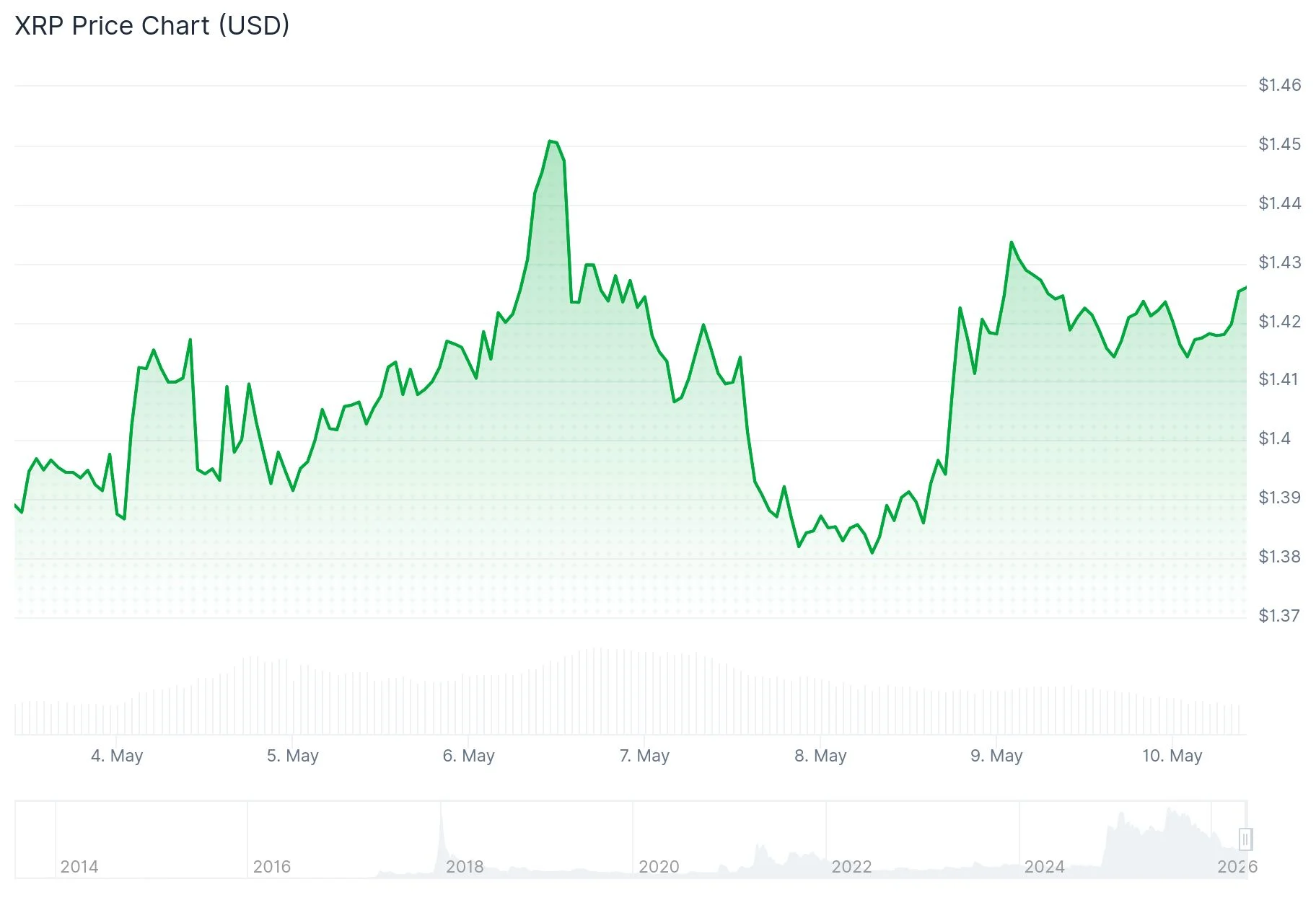
XRP functions as the native digital asset powering the XRP Ledger, a decentralized blockchain operational since 2012. This network finalizes transactions within three to five seconds while maintaining minimal fees. Recent XRPSCAN data indicates over 1.2 million daily transactions under typical conditions, while Ripple verified that activity peaked at 3 million transactions on March 15, 2026. These figures represent verifiable on-chain engagement.
The regulatory uncertainty that suppressed XRP valuations for multiple years has finally dissipated. In August 2025, Reuters confirmed the Securities and Exchange Commission’s lawsuit against Ripple reached formal conclusion. The settlement required Ripple to pay $125 million. Critically, the judicial determination that XRP traded on secondary markets does not constitute securities transactions remained unaltered, although specific institutional distributions were found to breach securities regulations. This resolution eliminated a primary risk factor for token holders.
Token Supply Dynamics Continue to Matter
Current CoinGecko statistics indicate approximately 62 billion XRP tokens actively circulating, supporting a market capitalization near $88 billion. XRPSCAN tracking reveals roughly 33 billion XRP tokens still secured within escrow arrangements. Ripple maintains transparency regarding its escrow protocols, with unreleased allocations typically returned to subsequent lockups. Nevertheless, this controlled reserve represents a substantial portion of total supply, and market participants remain cognizant of its existence.

This supply structure doesn’t invalidate XRP’s investment potential. However, it confirms that token scarcity cannot serve as a foundational value proposition comparable to Bitcoin’s hard cap.
Questions Around Value Accumulation
Ripple’s payment infrastructure currently provides clients with optionality: execute settlements leveraging XRP or alternatively utilize stablecoins such as RLUSD. This strategic flexibility enhances Ripple’s competitive positioning for client acquisition. Yet it simultaneously introduces legitimate concerns — if Ripple’s ecosystem expansion occurs primarily through stablecoins and tokenized instruments with minimal XRP dependency, which stakeholders capture that value?
XRP additionally confronts competitive headwinds from traditional banking settlement infrastructure, alternative blockchain payment networks, and the broader stablecoin sector. Notably, a portion of this competitive dynamic emerges from Ripple’s own diversified product offerings.
March 15, 2026 marked the XRP Ledger’s record of 3 million daily transactions — representing the most current validated network activity benchmark available.
Bottom Line Assessment
XRP occupies a materially improved position compared to two years prior. Litigation has concluded, network utilization shows tangible growth, and Ripple maintains active development efforts. The outstanding considerations regarding supply management and value capture mechanisms are legitimate, yet they are transparent and well-documented. For prospective investors, XRP doesn’t present as an enigma — it exists as a large-capitalization cryptocurrency with identifiable advantages and recognized constraints.
