


Key Highlights
- April electric vehicle deliveries exceeded 30,000 units, representing a 50% increase from the previous month
- Shares jumped 6.75% at close in Hong Kong trading; peaked at 11% during the session
- The latest SU7 generation has secured more than 70,000 confirmed orders since its market debut
- Cumulative deliveries through April total 109,000 vehicles — approximately 20% of the 550,000 annual goal
- Financial experts caution that profitability challenges may persist due to promotional incentives and scaling expenses
Xiaomi experienced a breakthrough month for its electric vehicle division in April, sparking significant investor enthusiasm.
The technology giant shipped over 30,000 electric vehicles during the month, marking a substantial 50% increase compared to March figures and representing the company’s strongest monthly performance this year. Shares concluded Monday’s Hong Kong trading session with a 6.75% gain, following an intraday peak that saw the stock climb as high as 11% to reach HK$31.56.
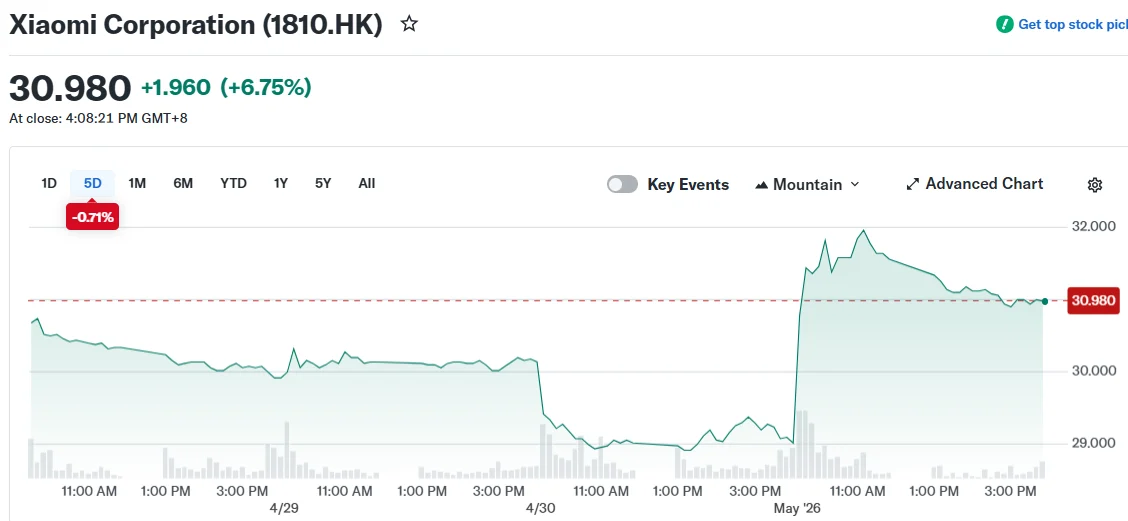
Daily trading activity reached HK$5.2 billion, positioning Xiaomi as one of the exchange’s most heavily traded securities on the main board.
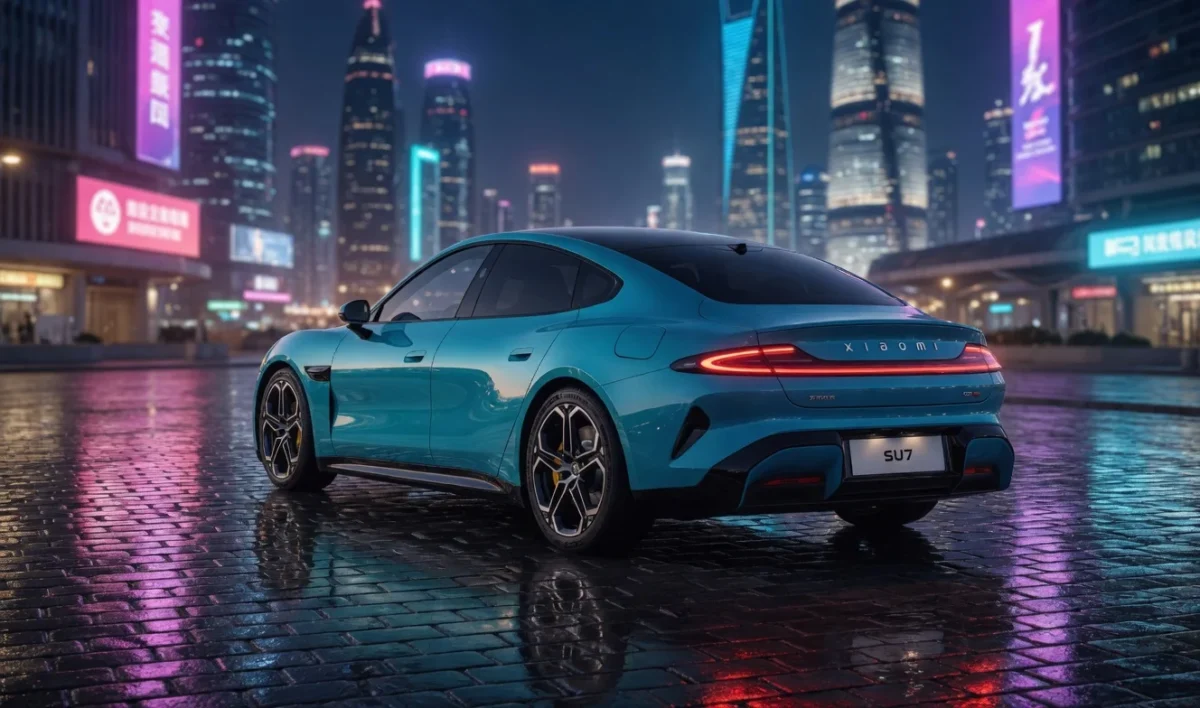
The April surge was primarily fueled by the updated SU7 sedan, Xiaomi’s premier vehicle offering, which completed its inaugural full month of customer deliveries following a late March introduction.

Company founder Lei Jun announced via Weibo on Sunday that confirmed orders for the refreshed SU7 had surpassed 70,000 units. He mentioned that certain customization choices would be discontinued following the initial launch period to streamline manufacturing operations.
The entry-level SU7 carries a price tag of 219,900 yuan (approximately $32,200), while the Pro and Max editions retail at 249,900 yuan and 303,900 yuan respectively. These prices represent a 10,000 yuan reduction from earlier pre-order estimates, though they’re roughly 4,000 yuan higher than the original 2024 model.
Between January and April, Xiaomi delivered a combined 109,000 electric vehicles — reflecting an 11% increase year-over-year, yet accounting for merely 20% of the company’s ambitious 550,000-unit delivery objective for 2026.
Achieving the full-year projection would require monthly deliveries to consistently exceed 55,000 units throughout the remainder of the year. This represents a considerable acceleration from present output levels.
Financial Performance Concerns
Despite impressive delivery figures, market analysts maintain a measured outlook regarding near-term financial results.
Citi research team, headed by Kyna Wong, highlighted expectations for first-quarter revenue to decline both sequentially and compared to the prior year. Their forecast anticipates approximately 97 billion yuan in Q1 revenue — representing a 17% quarter-on-quarter drop and a 13% year-over-year decrease.
The flagship smartphone division faces headwinds from escalating memory component prices, despite Xiaomi‘s strategic pivot toward premium product segments.
Regarding the electric vehicle operation, margin pressure is anticipated to continue as the company maintains customer incentives and absorbs production expansion costs.
Future Outlook
Current delivery timelines provide insight into market demand dynamics. The YU7 standard version shows wait times of 7 to 10 weeks. The updated SU7 base configuration extends to 8 to 11 weeks, while the Max variant requires 9 to 12 weeks.
Xiaomi presently maintains 495 retail locations spanning 165 cities nationwide and has scheduled two additional store openings for May.
The YU7 GT variant is slated for a late May release, with further model introductions planned throughout the latter half of 2026.
With 110,000 vehicles delivered through April’s conclusion, Xiaomi faces a substantial challenge in reaching its yearly delivery commitment.
