


Key Takeaways
- The Nasdaq tumbled 2.1%, S&P 500 declined 1.1%, and the Dow surrendered 140 points during Friday’s session
- Employment figures for May revealed 172,000 new positions, significantly exceeding the 88,000 projection
- Robust employment data elevated rate hike probability to 68.3%, eliminating prospects for imminent reductions
- Broadcom’s post-earnings decline pulled semiconductor equities and the artificial intelligence sector downward
- The S&P 500 faces potential end to its 9-week rally, which would match its longest stretch since 1985
Equity markets experienced significant declines Friday following employment data that surpassed analyst expectations, elevating speculation around interest rate increases while renewed skepticism surrounding artificial intelligence investments pressured technology shares.
The Nasdaq plummeted 2.1%. The S&P 500 declined 1.1%. The Dow Jones Industrial Average retreated approximately 140 points, representing a 0.3% decrease.
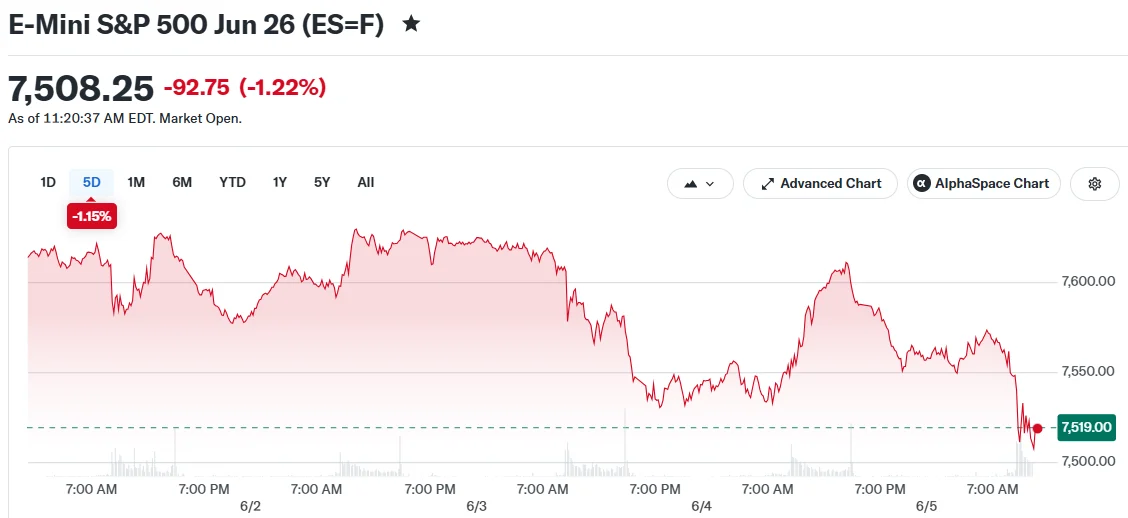
The market downturn resulted from two distinct catalysts converging simultaneously.
Employment Data Exceeds Forecasts
The May nonfarm payrolls release indicated American businesses created 172,000 positions during the month. Analyst consensus had anticipated approximately 88,000. The jobless rate remained unchanged at 4.3%.

The better-than-anticipated figures altered market participants’ outlook regarding Federal Reserve monetary policy. Traders rapidly adjusted positions to reflect expectations of at least one rate increase before year’s conclusion.
Probability of a rate increase surged to 68.3%, climbing from 50.4% the previous session. This development essentially removes rate reductions from consideration in the near term.
Eric Winograd, chief US economist at AllianceBernstein, noted the information demonstrates economic resilience. “That’s enough to keep the Fed on hold,” he stated.
This development occurs while President Trump maintains public pressure for rate reductions. Kevin Warsh, Trump’s selection, has recently assumed the Fed chair position.
Semiconductor and AI Equities Face Renewed Pressure
Broadcom had experienced substantial losses Thursday after releasing quarterly results. Friday brought additional share price deterioration.
The wider semiconductor industry mirrored this movement. Market participants have adopted increased caution regarding AI-focused capital expenditures, with Broadcom’s financial results amplifying these apprehensions.
Technology equities had experienced powerful advances in preceding weeks, contributing to major index appreciation. This upward trajectory has now encountered resistance.
The Nasdaq had emerged as a primary beneficiary of artificial intelligence enthusiasm. It currently ranks among the hardest-hit indices as market sentiment pivots.
Historic Rally Faces Termination Risk
The S&P 500 began Friday positioned for a tenth consecutive week of appreciation. Such an achievement would have represented the longest winning sequence since 1985.
This remarkable streak now confronts termination risk.
The benchmark has retreated as multiple headwinds materialize concurrently — rate anxieties, technology sector vulnerability, and geopolitical tensions.
News regarding stalled US-Iran ceasefire discussions contributed to cautious sentiment across Wall Street. President Trump indicated negotiations have reached “final” phases, though uncertainty persists.
Futures contracts had already signaled downward pressure before employment statistics emerged, with Nasdaq 100 futures spearheading declines throughout the morning period.
The convergence of strong labor market conditions, hawkish rate expectations, and wavering artificial intelligence enthusiasm provided limited refuge within equity markets Friday.
