



Key Highlights
- June employment figures revealed only 57,000 new positions created, significantly trailing the anticipated 113,000.
- Major indexes including the Dow, S&P 500, and Nasdaq posted gains following the release, with the Dow climbing approximately 0.7%.
- Unemployment figures declined modestly to 4.2%, below the projected 4.3% level.
- Federal Reserve Chair Kevin Warsh advised market participants to focus on economic indicators rather than central bank signals for rate direction.
- Probability of rates remaining unchanged through December increased to 21.7%, per CME FedWatch Tool data.
Equity markets experienced a broad rally Thursday following the release of June employment data that came in considerably weaker than anticipated, leading investors to scale back expectations for near-term Federal Reserve monetary tightening.
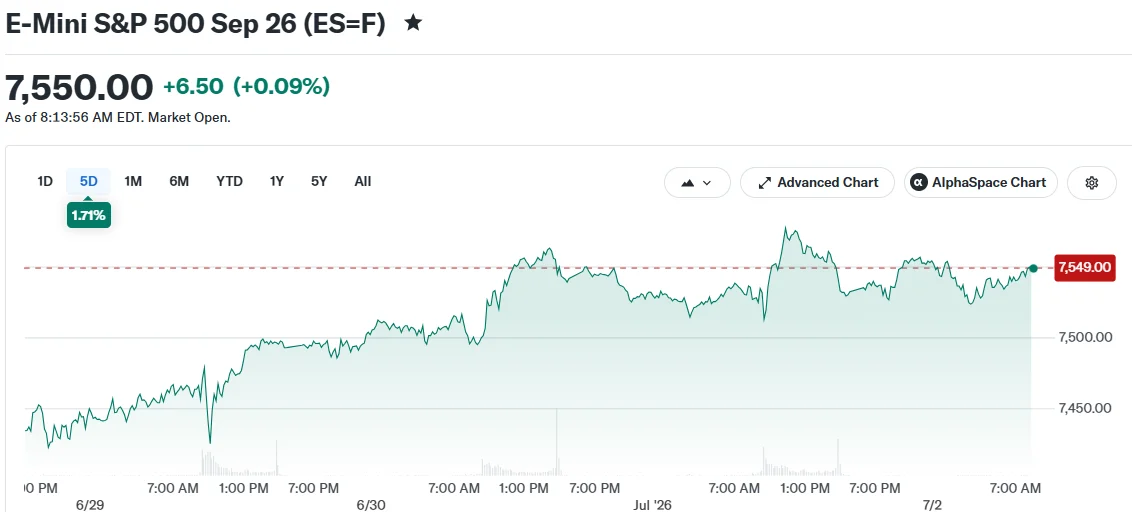
The Dow Jones Industrial Average advanced approximately 370 points, representing a 0.7% gain. The S&P 500 climbed 0.6%, while the Nasdaq Composite increased 0.5% during early market activity.
Employment Data Falls Short of Projections
According to Labor Department figures, the American economy generated 57,000 positions during June. Economic analysts had projected 113,000 new jobs. This represented a considerable deceleration from hiring activity witnessed over the preceding three-month period.
The jobless rate registered at 4.2%. Market forecasters had anticipated the figure would remain at 4.3%, making the slight decrease an unexpected development.

The subdued employment figures concluded what had been a three-consecutive-month period of robust hiring performance. The data also transformed discussions regarding the Federal Reserve’s upcoming policy decisions.
Federal Reserve Chair Kevin Warsh recently advised Wall Street participants to concentrate on economic metrics instead of awaiting policy guidance from monetary authorities. Thursday’s employment release provided market participants with tangible information to evaluate.
Chris Zaccarelli, chief investment officer at Northlight Asset Management, suggested the decelerated employment expansion might prompt more inflation-focused Fed policymakers to reassess aggressive rate increase strategies.
Likelihood of interest rates maintaining current levels through year-end climbed to 21.7%, based on CME FedWatch Tool calculations. Market participants continue to anticipate at least one potential rate adjustment later in 2025.
Treasury market activity responded to the employment figures. The 2-year yield declined to 4.15%, whereas the 10-year yield advanced slightly to 4.49%. The U.S. dollar experienced weakening pressure.
Technology Sector Experiences Headwinds From Asian Semiconductor Decline
Despite the broader market advance, technology equities encountered resistance. The Nasdaq underperformed relative to the Dow and S&P 500 during the trading session.
A substantial decline in South Korean semiconductor manufacturers dampened market sentiment. The Kospi benchmark plummeted 7.9%. SK Hynix tumbled more than 14%, while Samsung Electronics declined over 9%. Both corporations had recently unveiled substantial artificial intelligence infrastructure investment initiatives.
Microsoft shares defied the broader technology sector weakness, registering gains despite pressure elsewhere.
Oil prices retreated following comments from Qatar, which is facilitating U.S.-Iran nuclear negotiations, indicating this week’s diplomatic exchanges were productive. While no agreement materialized, the diplomatic atmosphere was interpreted favorably.
With American financial markets scheduled to close Friday for Independence Day observance, certain market participants may be adjusting positions in advance of the extended holiday weekend.
The S&P 500 was trading at 7,501 at midday. The Dow stood at 52,757. The Nasdaq was positioned at 25,992.
