



Key Highlights
- Futures for major US indices advanced Tuesday morning amid optimism surrounding US-Iran diplomatic efforts
- President Trump indicated negotiations with Iran were “proceeding nicely” while maintaining that military options remain available
- American forces destroyed two Iranian Guard vessels in the Strait of Hormuz during what officials described as defensive operations
- Crude oil markets tumbled, with WTI futures declining nearly 4% to reach $92.84 per barrel
- Bitcoin dropped 1.1% to $76,679 amid continued market uncertainty
American equity futures advanced during Tuesday’s pre-market session as market participants reacted positively to potential diplomatic resolution between Washington and Tehran, despite recent military confrontations in the strategically vital Strait of Hormuz.
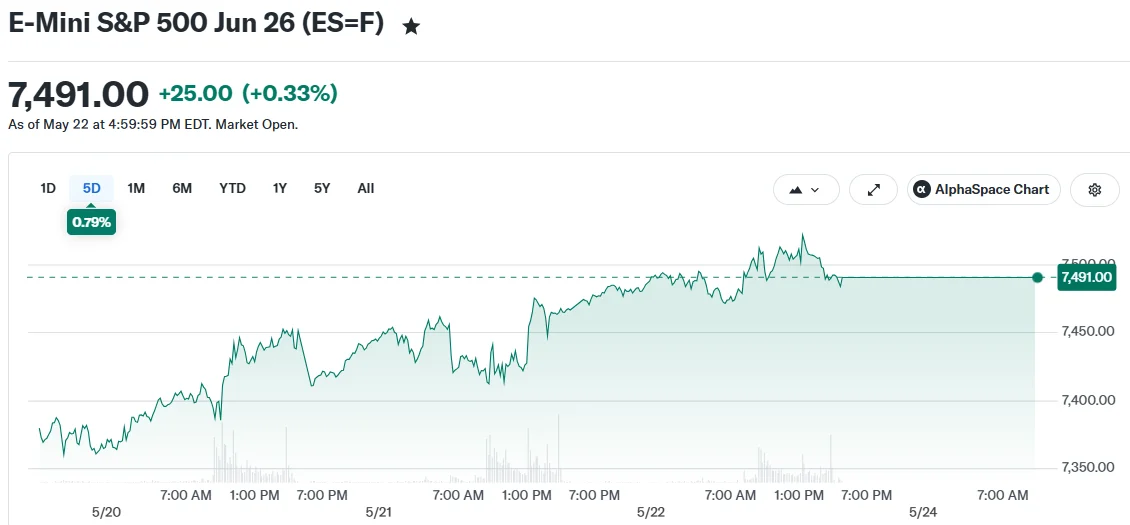
Contracts linked to the Dow Jones Industrial Average jumped 233 points, representing a 0.5% increase. Futures for the S&P 500 climbed 0.6%, while Nasdaq 100 contracts surged 0.9%. Trading activity resumed after the Memorial Day holiday closure on Monday.
In a Truth Social message posted Monday, President Trump shared that diplomatic discussions with Iranian officials were making positive progress. He simultaneously emphasized that additional military strikes could be authorized if negotiations collapse.
Market participants showed minimal concern over recent military engagements. US Naval forces engaged and sank two Islamic Revolutionary Guard Corps vessels that were reportedly attempting to deploy mines in the strategic Strait of Hormuz shipping lane. Pentagon officials characterized the response as purely defensive in nature.

Iranian Revolutionary Guard representatives stated they maintain the authority to respond to what they characterized as violations of cease-fire agreements.
Crude Markets Retreat on Diplomatic Optimism
Energy markets reacted swiftly to the positive diplomatic developments. West Texas Intermediate crude contracts plummeted approximately 4% to settle at $92.84 per barrel. International benchmark Brent crude experienced similar declines exceeding 4%.
Domestic oil prices suffered an 8.4% weekly loss in the previous trading week, marking the most significant single-week decline since mid-April. Falling energy prices have provided substantial support for the ongoing equity market rally.
The benchmark 10-year Treasury yield decreased 6 basis points to 4.51%. Meanwhile, the US dollar index declined 0.2% relative to major global currencies.
The three primary equity benchmarks recorded positive weekly performances, with the S&P 500 achieving its most extended weekly winning streak since December 2023.
Market Strategists Flag Potential Summer Weakness
Some investment professionals maintain a more cautious outlook. Dennis Follmer, serving as chief investment officer at Montis Financial, characterized the Middle Eastern situation as having evolved into “a long stalemate with nearly all the ships still stranded in the Persian Gulf.”
Follmer observed that the S&P 500 continues benefiting from positive momentum generated by a robust first-quarter earnings season, but cautioned that “the likelihood of a summer selloff is high” now that quarterly reporting has concluded.
Market participants are simultaneously recalibrating their Federal Reserve policy expectations. According to CME Group’s FedWatch tool, the probability of a Fed rate increase in July has climbed to 8.5%, a dramatic jump from just 0.9% recorded one month earlier.
Bitcoin declined 1.1% to $76,679 during the past 24-hour trading period. The digital asset frequently correlates with overall risk appetite across financial markets.
Equity futures maintained their upward trajectory even as news emerged regarding the Strait of Hormuz military engagement. The sustainability of this market composure will largely hinge on the trajectory of ongoing diplomatic negotiations in the days ahead.
