



Key Highlights
- Micron (MU) stock soared more than 18% in premarket trading following exceptional quarterly earnings and upgraded guidance
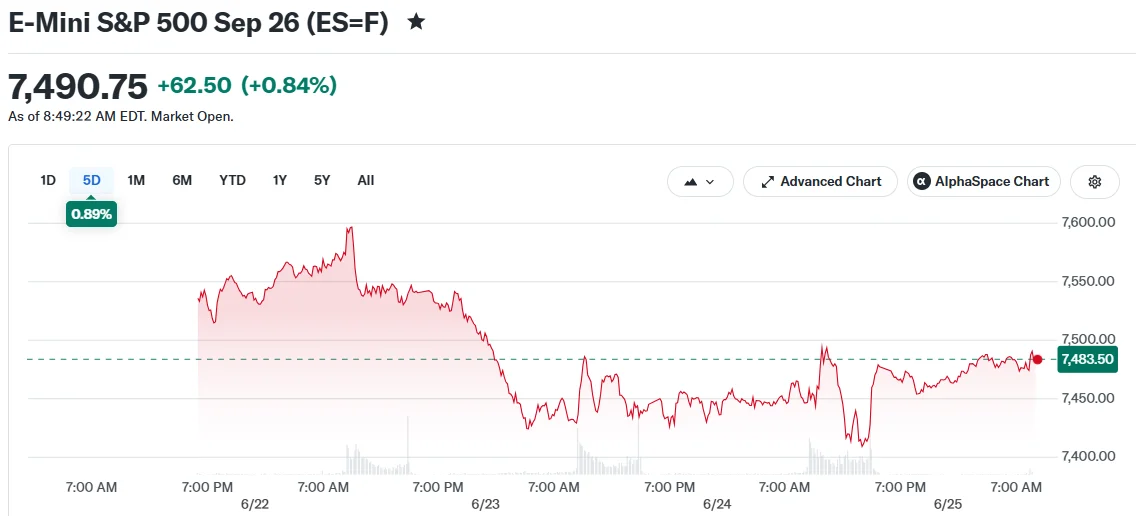
- Futures for the Nasdaq 100 climbed 2.1%, while S&P 500 futures advanced 0.7% before Thursday’s trading session
- Qualcomm revealed plans to enter the data center market with new chips and servers, projecting $15 billion in additional revenue
- Crude oil retreated to levels last seen before the Iran conflict, with Brent falling under $73 per barrel
- The Personal Consumption Expenditures report came in as expected, pushing bond yields down and maintaining positive momentum in futures
Wall Street endured a challenging period leading up to Thursday’s session, but Micron’s quarterly results provided a welcome boost for market participants. The semiconductor manufacturer delivered record-breaking performance, exceeding analyst projections for both profit and forward guidance. Shares rocketed more than 18% in premarket hours.
The impressive figures helped alleviate mounting anxiety surrounding artificial intelligence investments. Market participants had grown increasingly concerned that substantial capital allocated toward AI infrastructure wasn’t generating appropriate returns. Micron’s stellar performance indicated that appetite for memory semiconductors powering AI applications remains robust.
Nasdaq 100 futures responded with a 2.1% surge after the announcement. The S&P 500 futures gained 0.7%. Dow futures registered a modest 0.1% increase, reflecting the benchmark’s lower concentration of technology holdings.
Qualcomm captured attention with its own announcement. The semiconductor company disclosed intentions to diversify beyond its smartphone focus into data center infrastructure, encompassing both processors and complete server systems. Management established a $15 billion revenue objective from this strategic expansion. Qualcomm shares climbed over 12% during premarket activity.

Energy Markets Retreat as Inflation Report Takes Center Stage
Oil prices experienced a significant pullback Thursday morning. Brent crude descended below the $73 threshold per barrel. West Texas Intermediate tumbled beneath $70. These price points marked a return to valuations observed prior to the Iran conflict that disrupted shipping lanes through the Strait of Hormuz.
The decline occurred as Persian Gulf supply chains normalized, relieving strain on global energy markets. Retreating oil valuations typically contribute to moderating inflation, a persistent concern for market participants throughout the year.
Investor attention centered on the Personal Consumption Expenditures index, which serves as the Federal Reserve’s primary inflation gauge. Earlier May releases covering consumer and producer prices exceeded projections. Those readings sparked speculation that the central bank might implement additional interest rate increases.
The PCE data release aligned precisely with economist predictions. Core PCE, excluding volatile food and energy components, increased 0.3% during May. The headline measurement advanced 0.4%. Both figures matched consensus estimates.
Market gains persisted following the inflation report. S&P 500 futures stood at 0.8% higher. Nasdaq 100 futures extended gains to 2.3%. Dow futures strengthened to 0.3%.
Treasury yields declined across the curve. The 2-year note yield retreated to 4.12%. The 10-year benchmark dropped to 4.39%. Decreasing yields generally indicate diminished concerns regarding inflationary pressures or monetary tightening.
The convergence of impressive semiconductor earnings, declining energy costs, and in-line inflation metrics provided investors with reassurance following a turbulent period for equity markets.
Both Qualcomm’s data center initiative and Micron’s forward outlook reinforced the narrative of sustained corporate spending on AI infrastructure, despite ongoing market debates about technology sector valuations.
The PCE release represented the week’s final significant economic data point for US financial markets.
