



TLDR
- The Dow Jones Industrial Average surged approximately 419 points following the signing of an interim US-Iran peace agreement
- The S&P 500 advanced 1.1% while the Nasdaq Composite jumped 1.4%, with technology shares leading the charge
- Brent crude oil declined roughly 3%, driving nationwide gasoline prices under the $4 per gallon threshold
- The Federal Reserve maintained current interest rates, though nine officials project at least one rate increase before 2026 ends
- Markets will remain closed Friday for the Juneteenth holiday, making Thursday the week’s final trading session
A memorandum of understanding between President Donald Trump and Iran’s leadership was finalized on Wednesday. The preliminary peace agreement sparked optimism that additional oil supplies could flow into worldwide markets.
The agreement was executed ahead of its anticipated timeline. Officials had originally planned the signing for Friday.
The accord became operational Thursday, creating potential for the Strait of Hormuz to resume commercial shipping operations and removing restrictions on Iranian petroleum exports. Negotiations addressing extended-term matters, particularly Iran’s nuclear initiatives, will proceed throughout the following 60-day period.
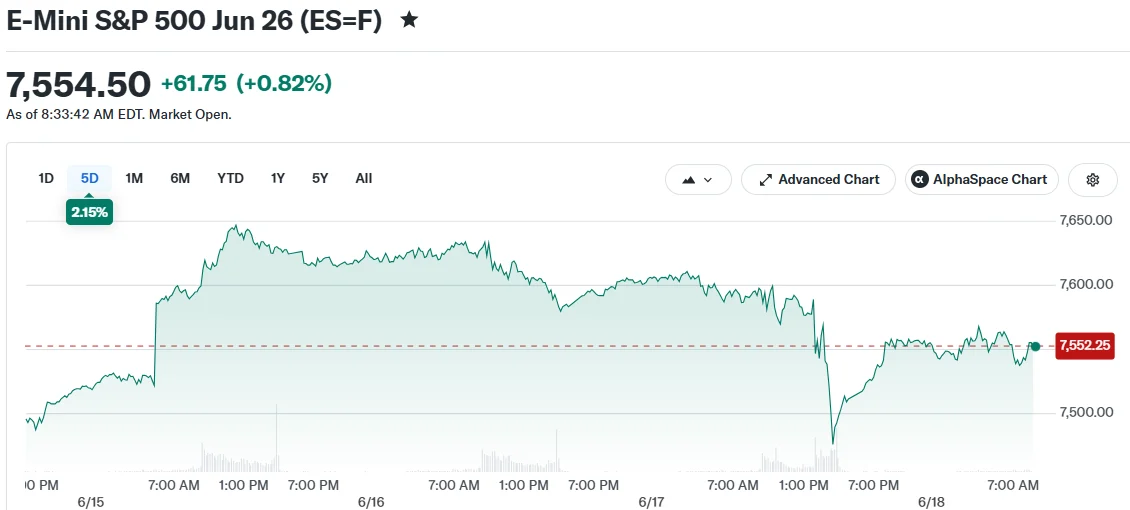
Financial markets reacted swiftly. The Dow Jones Industrial Average climbed approximately 419 points, representing a 0.8% increase, during Thursday’s morning trading session.

The S&P 500 posted a 1.1% gain while the Nasdaq Composite advanced 1.4%. Technology sector equities spearheaded the rebound following significant losses from the previous trading day.
Energy Prices Decline as Gasoline Dips Under $4
Brent crude futures tumbled as much as 3% immediately following the agreement’s announcement. The decrease eliminated most of the price increases associated with recent regional tensions.
Oil prices regained modest territory as initial vessels traversed the strait. Brent concluded trading near $78 per barrel while West Texas Intermediate finished slightly above $74.
The nationwide average cost for regular unleaded gasoline declined to $3.9987 on Thursday. This represents the most affordable price point since March 30, based on Dow Jones Market Data.
Reduced energy costs have contributed to alleviating inflation concerns. Treasury prices increased, driving bond yields lower.
Research analysts at 22V Research indicated that declining oil prices combined with falling 10-year Treasury yields would benefit technology, consumer discretionary, and communications sector stocks.
Federal Reserve Rate Increase Worries Persist
The Federal Reserve maintained interest rates at current levels on Wednesday. However, the central bank adopted a more hawkish stance in its messaging.
Nine Federal Reserve officials anticipate implementing at least one rate increase prior to the conclusion of 2026. This projection emerged as inflationary pressures continued and employment conditions remained robust.
Jobless claims figures published Thursday exceeded expectations marginally but showed improvement relative to the preceding week. The mixed economic indicators provided little impetus for modifying the Fed’s perspective.
Market analysts cautioned that a rate-hiking environment could elevate recession probabilities. One research analysis characterized the market as potentially “violently flat,” oscillating between advances and declines without establishing a definitive direction.
The Bank of England similarly maintained its interest rate policy, as global central banks monitored developments surrounding the Iran situation.
Thursday marked the concluding trading session before the extended weekend. US financial markets will observe the Juneteenth holiday on Friday with a closure.
