


TLDR
- Mike Novogratz of Galaxy Digital describes June as the critical period for the CLARITY Act, stating it’s a “now or never” situation
- Senator Cynthia Lummis cautions that lawmakers may not get another opportunity to enact crypto legislation until 2030
- Jamie Dimon of JPMorgan announces traditional banks will oppose the legislation due to concerns about deposit interest policies and anti-money laundering requirements
- Following Treasury Secretary Scott Bessent’s call for congressional action, Polymarket prediction markets show 60% probability of passage
- Senate scheduling conflicts with reconciliation debates, FISA matters, and housing legislation threaten the bill’s timeline
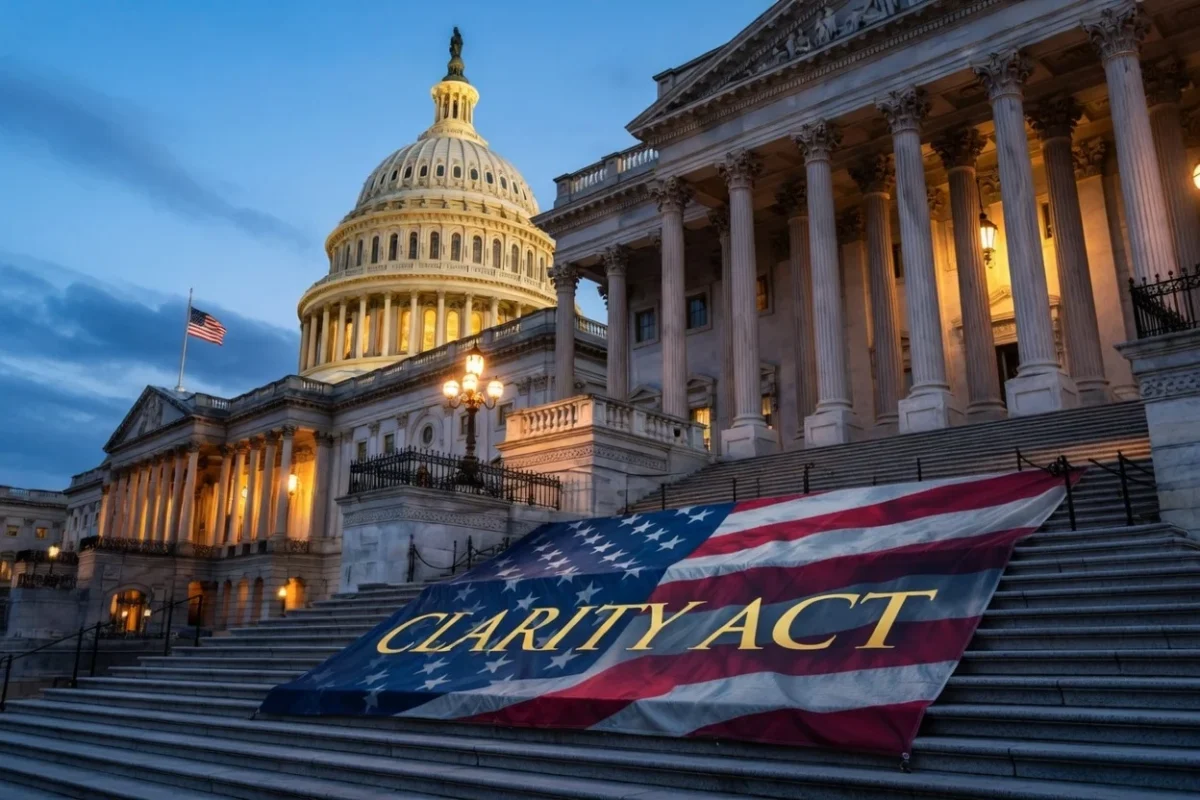
A pivotal crypto market structure proposal known as the CLARITY Act is approaching what may represent its last viable opportunity during this congressional session. Political figures, financial sector executives, and administration officials are united in calling for a Senate floor vote ahead of the August congressional break.
A Narrow Window of Opportunity in June
Mike Novogratz, CEO of Galaxy Digital, stated emphatically on X: “June is ‘Clarity’ month. It’s literally now or never.”
Lawmakers have merely four working weeks available in June, followed by only three weeks in July before departing for the August recess. This compressed timeframe presents significant challenges for legislation that still requires a complete Senate floor vote and subsequent House approval before reaching the president for signature.
Senate Majority Leader John Thune informed Republican colleagues recently that their reconciliation legislation would not reach completion this month. Consequently, the CLARITY Act now finds itself vying for limited floor time alongside reconciliation negotiations, Foreign Intelligence Surveillance Act considerations, and housing policy proposals.
Crypto reporter Eleanor Terrett observed that the bill’s prospects “just got more challenging.”
Lummis Raises Alarms About Chinese Competition and Decade-Long Delays
Senator Cynthia Lummis has emerged as the legislation’s most vocal advocate. She contends that without passage of the CLARITY Act, the United States will forfeit its opportunity to establish regulatory standards for the emerging financial landscape.
“China is not waiting,” she emphasized on X.
According to Lummis, failure to advance the bill this year would delay the next genuine legislative opportunity until 2030. She emphasizes that during this interim period, blockchain developers would continue operating without clear legal frameworks while law enforcement agencies lack proper regulatory tools to pursue fraudulent actors.

The Senate Banking Committee moved the bill forward in May through a bipartisan 15-9 vote. While significant, this represents merely the initial stage of an extended legislative journey.
Traditional Banking Sector Mounts Opposition
The legislation faces more than just scheduling obstacles. JPMorgan CEO Jamie Dimon has announced that traditional banking institutions will resist the bill in its present form.
His concerns focus on two primary issues. First, the legislation permits cryptocurrency platforms to compensate users with interest on their deposited funds. Second, Dimon argues that digital asset firms avoid the same stringent anti-money laundering protocols and capital requirement standards imposed on traditional banks.
“The banks will not accept it that way,” Dimon declared. Addressing Coinbase CEO Brian Armstrong’s advocacy efforts, he added bluntly: “No one is going to bow down to this guy or that company.”
Current Status and Market Expectations
Treasury Secretary Scott Bessent has publicly encouraged both congressional chambers to advance the legislation. Following his public remarks, prediction markets on Polymarket elevated the probability of CLARITY Act passage during 2026 to 60%.
Senator Lummis has additionally connected the legislation to President Trump’s comprehensive digital asset agenda, encouraging legislators to approve it for his signature.
The upcoming weeks will determine whether Congress can allocate sufficient floor time to move forward with the bill.
