



Key Takeaways
- Bond yields showed minimal movement Monday following renewed military confrontations between the United States and Iran
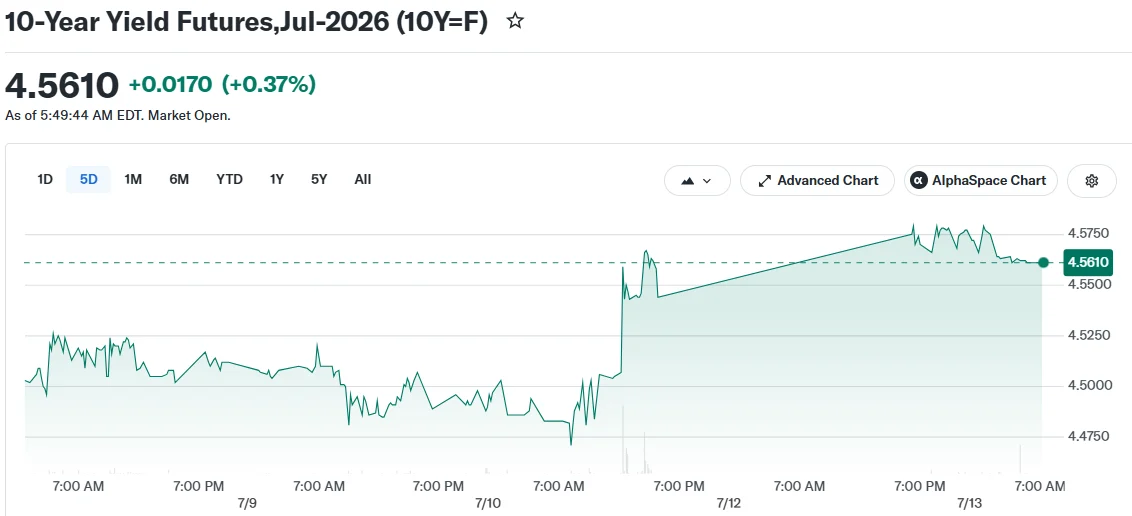
- The benchmark 10-year Treasury yield edged up to approximately 4.577%, while the 2-year reached 4.239%, marking its peak since February 2025
- Tehran launched retaliatory strikes against American military installations across Kuwait, Bahrain, Jordan, Oman and Qatar following U.S. bombardment
- Crude oil markets rallied sharply, with Brent crude climbing as much as 4.5% to reach $79.43 per barrel
- Critical inflation reports and Federal Reserve Chair Kevin Warsh’s inaugural Congressional testimony headline the week ahead
Bond markets displayed remarkable stability Monday despite the weekend collapse of the fragile ceasefire arrangement between Washington and Tehran. Military operations by both nations have cast serious doubt on the peace accord inked just weeks ago.
The benchmark 10-year U.S. Treasury yield, which serves as a critical reference point for government debt costs, edged marginally higher to 4.577%. Meanwhile, the 2-year yield advanced to 4.239%, representing its strongest reading since February 2025, based on Tradeweb market data. The longer-dated 30-year bond yield held steady near 5.08%.
Hostilities erupted after Iranian forces attacked a commercial cargo vessel navigating through the Strait of Hormuz during the weekend. American military forces launched multiple coordinated strikes against Iranian military infrastructure Sunday in response.
Tehran’s counterattack targeted multiple U.S. military facilities spanning five nations: Kuwait, Bahrain, Jordan, Oman and Qatar. Iranian government media outlets characterized the operations as direct retaliation for the resumed American bombing campaign.

The military exchanges have placed enormous strain on the provisional peace framework established last month. That diplomatic breakthrough was designed to permanently secure passage through the Strait of Hormuz and terminate hostilities following two months of intensive negotiations.
The Strait of Hormuz represents a critical chokepoint for global petroleum transport. Any disruption to shipping lanes through this strategic waterway can immediately impact worldwide energy markets.
Energy Markets Surge on Supply Route Concerns
Oil markets responded swiftly to the escalating tensions. Brent crude futures surged as much as 4.5% to $79.43 per barrel during early Asian market hours. West Texas Intermediate futures gained more than 2.4% to reach $73.14 per barrel.
Rising energy costs have direct implications for inflation, making fixed-income markets particularly sensitive to Middle Eastern developments. Bond yields generally trend upward when market participants anticipate accelerating price growth.
Economic Calendar and Central Bank Leadership Take Center Stage
Despite heightened geopolitical uncertainty, bond market volatility remained surprisingly muted. Market participants appear to be maintaining positions in anticipation of a data-heavy calendar.
Core inflation metrics are scheduled for release Tuesday. That same day, newly appointed Federal Reserve Chair Kevin Warsh will deliver his maiden testimony before Congress, an event that market observers will scrutinize carefully for monetary policy guidance.
July consumer sentiment figures are slated for Friday’s release. This report will offer valuable insight into household confidence levels following an extended period of elevated borrowing costs.
Alex Guiliano, chief investment officer at Resonate Wealth Partners, noted the critical question is whether forthcoming data will validate robust consumer spending patterns or reveal that geopolitical uncertainties and restrictive monetary policy have weakened household financial positions.
Fixed-income investors are carefully assessing whether sustained regional conflict could drive energy prices higher and complicate the Federal Reserve’s monetary policy trajectory.
The 2-year yield, which most closely reflects near-term Federal Reserve policy expectations, was most recently quoted at 4.230%, representing a 2.3 basis point increase for the session.
