


Key Points
- President Trump enacted an executive order establishing voluntary government preview access to cutting-edge AI systems up to 30 days prior to public launch.
- The directive emerged following security concerns about Anthropic’s Mythos model, which demonstrates unprecedented capabilities in identifying and exploiting cybersecurity weaknesses.
- Initial proposals requested a 90-day evaluation period; technology firms advocated for 14 days, resulting in the 30-day middle ground.
- The directive establishes a collaborative “AI cybersecurity clearinghouse” uniting federal agencies with private sector partners.
- Participation remains entirely voluntary, with the order explicitly rejecting any compulsory licensing or approval mechanisms for AI developers.
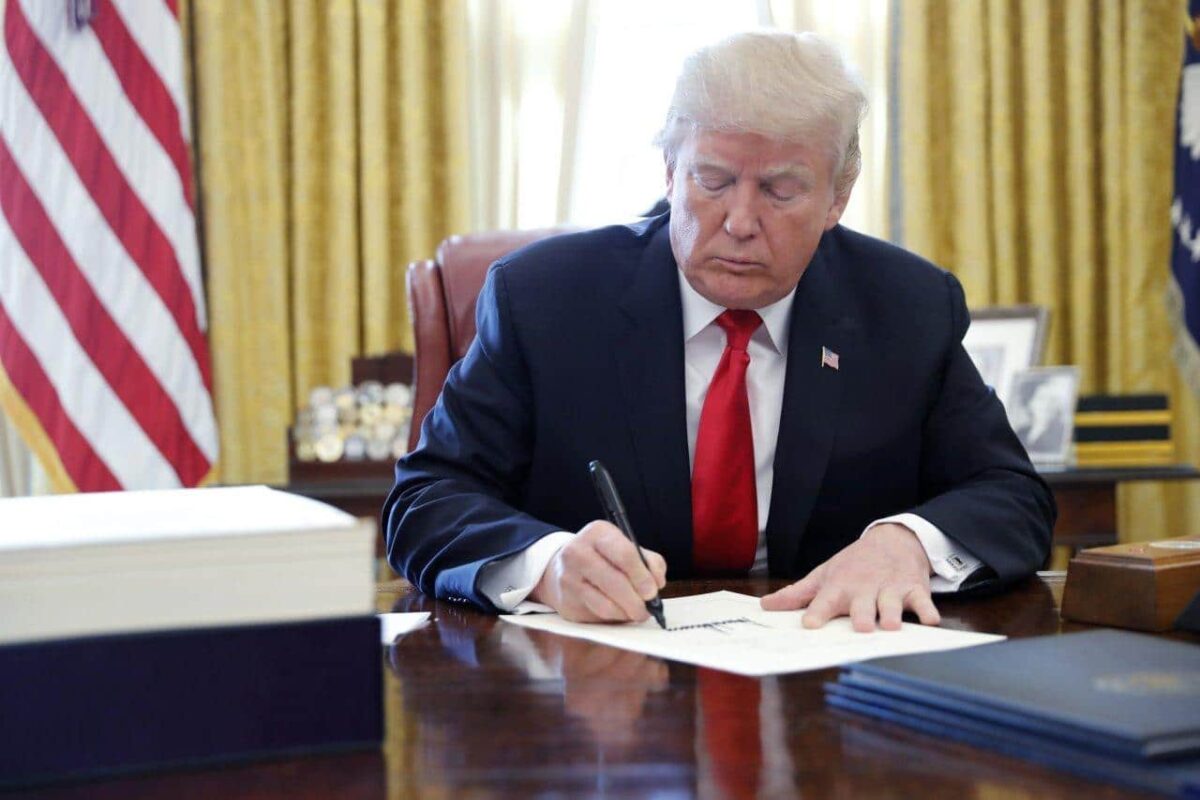
The executive order received Trump’s signature on June 3, 2026, following several weeks of postponements. Below is a comprehensive breakdown of the order’s provisions and their significance.
How Anthropic’s Mythos System Triggered Federal Action
Anthropic’s Mythos system remains unreleased to the broader public. According to the company, this model possesses capabilities to identify and leverage cybersecurity weaknesses at a velocity that has generated significant concern among federal authorities and financial sector observers.
The primary worry centers on how sophisticated AI systems might amplify cyber threats by enabling malicious actors to discover and weaponize vulnerabilities in essential infrastructure—including financial institutions, healthcare facilities, and government systems—more rapidly than security teams can implement protective measures.
Anthropic announced plans to make Mythos available to its entire customer base within weeks. This pre-order announcement intensified pressure on the administration to finalize the framework.
Core Provisions of the Executive Directive
The order permits AI companies to voluntarily provide federal authorities with advance access to emerging models up to 30 days before distribution to external partners or general availability.

This 30-day timeframe represents a negotiated settlement. A May preliminary version proposed 90 days of pre-release government access. Industry leaders vigorously objected, advocating for merely 14 days given the rapid pace of technological advancement.
The document explicitly clarifies that no mandatory licensing or authorization framework is being established. Company participation remains discretionary.
Additionally, the order mandates that the Treasury Department, National Security Agency, and Cybersecurity and Infrastructure Security Agency collaborate to establish a unified “AI cybersecurity clearinghouse” focused on identifying and remedying software vulnerabilities alongside private industry contributors.
Industry Response
OpenAI’s Sam Altman characterized the order as achieving “the right balance.” Google’s Kent Walker described it as “an important step forward.” Anthropic, despite previous tensions with the Trump White House, endorsed the measure, calling it “an important step in strengthening America’s leadership in AI.”
Microsoft President Brad Smith praised the initiative, stating it promotes innovation while safeguarding public security interests.
The signing followed a turbulent period. The White House nearly released the order on May 20, but Trump withdrew support at the eleventh hour, expressing dissatisfaction with “certain aspects” and concern about potentially hindering AI advancement.
David Sacks, Trump’s technology and cryptocurrency advisor, reportedly contacted the president directly to caution that the initial draft risked stifling innovation and undermining US competitiveness against China in artificial intelligence development.
Concerns from Policy Advocates
Not all observers view the order favorably. Anthony Aguirre, who leads the Future of Life Institute, acknowledged the order as “an important step in the right direction” while cautioning that voluntary arrangements prove insufficient. He contended that government requires statutory authority to prohibit AI systems presenting unacceptable national security threats.
The European Union’s AI Act, implemented in 2024, establishes legally binding standards for high-risk artificial intelligence, including compulsory safety assessments and incident disclosure requirements. The American regulatory approach remains substantially more permissive in comparison.
Trump eliminated a Biden-era AI supervision order on his first day following inauguration. Biden’s 2023 directive similarly depended predominantly on voluntary industry cooperation.
Anthropic intends to move forward with Mythos distribution to its customer base in upcoming weeks, now operating within this newly established voluntary review structure.
