



Key Highlights
- Trump directed the US Navy to establish a blockade at the Strait of Hormuz effective Monday, 10 a.m. ET
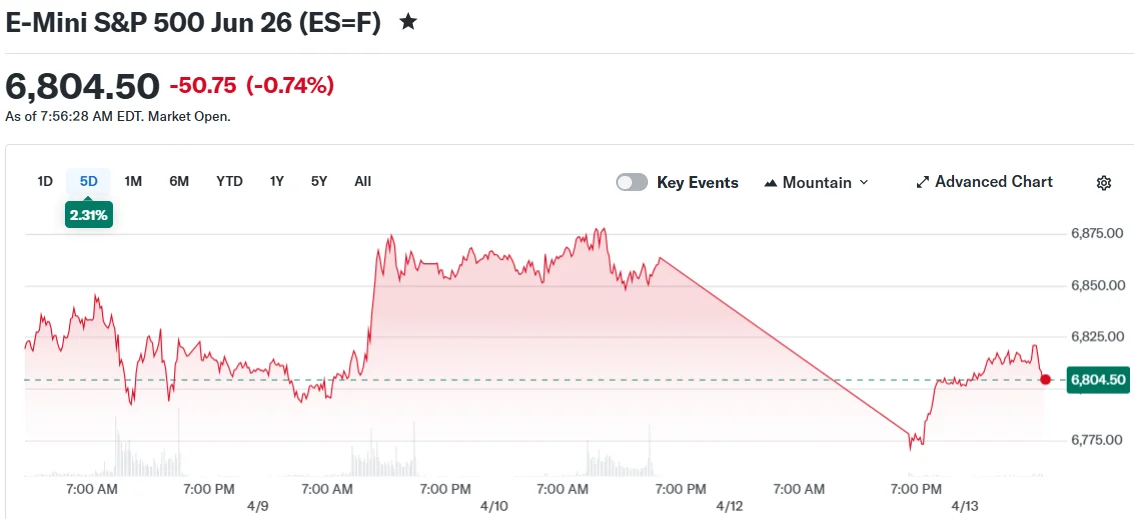
- Dow futures plummeted as much as 580 points before partial recovery; S&P 500 and Nasdaq futures declined approximately 0.5–0.7%
- Crude oil prices jumped beyond $100 per barrel, with Brent climbing up to 9%
- Tehran denounced the blockade as “piracy” and issued warnings about retaliatory strikes on Gulf region ports
- First quarter bank earnings season commences Monday with Goldman Sachs reporting
Equity futures experienced significant declines Monday morning following President Donald Trump’s declaration of a naval blockade targeting the Strait of Hormuz, a vital corridor for global petroleum shipments.
The President revealed his decision via Truth Social, stating: “Effective immediately, the United States Navy, the Finest in the World, will begin the process of BLOCKADING any and all Ships trying to enter, or leave, the Strait of Hormuz.” Implementation was scheduled for 10 a.m. ET Monday.
This directive emerged following the weekend collapse of diplomatic negotiations between Washington and Tehran in Islamabad. The failure of these discussions dashed the recent market optimism that had propelled equities to their strongest weekly performance of 2026.
Futures tracking the Dow Jones Industrial Average plunged by as much as 580 points during early trading before moderating to approximately 300 points down, representing a 0.7% decline. Both S&P 500 and Nasdaq 100 futures contracts registered losses in the 0.5% to 0.7% range.
Crude markets responded with dramatic price spikes. Brent crude futures surged by as much as 9%, approaching $104 per barrel, before moderating slightly to hold above $101. West Texas Intermediate contracts climbed more than 8%, breaking through the $104 threshold.

Tehran issued swift countermeasures to the President’s directive, threatening military action against all Persian Gulf port facilities should Iranian energy infrastructure face assault. Iranian officials characterized the blockade as “an act of piracy.”
Energy Price Surge Reignites Inflation Concerns
The spike in oil prices rekindled anxiety about inflationary pressures. Elevated energy expenses typically cascade through the broader economy, potentially dampening consumer expenditure and overall economic expansion.
Gold futures retreated 0.7% to settle at $4,756 per ounce. The greenback appreciated 0.3% versus a collection of major global currencies. The benchmark 10-year Treasury yield ticked higher by one basis point to 4.33%.
Major equity benchmarks had just concluded their strongest weekly performance of 2026, buoyed by a fragile truce that now faces mounting pressure. Market strategists indicated investors were reevaluating equity valuations given the uncertain outlook for Middle Eastern hostilities.
“Anytime there is a repricing in markets, we see volatility,” said Clark Bellin, president of Bellwether Wealth.
Despite the selloff, some market observers highlighted that futures had recovered from session lows, indicating investors maintained some optimism for a negotiated resolution.
Corporate Earnings Reports Launch This Week
Investor focus was simultaneously shifting toward the opening of first quarter earnings disclosures. Goldman Sachs was scheduled to release quarterly results Monday.
JPMorgan Chase, Citigroup, Bank of America, Wells Fargo, and Morgan Stanley were all expected to report financial performance later this week. Netflix and PepsiCo were also slated to announce quarterly results.
The Strait of Hormuz represents a narrow maritime passage situated between Oman and Iran. Approximately 20% of global petroleum supplies transit through this waterway, establishing it as an essential component of international energy infrastructure.
