


Key Highlights
- March vehicle registrations in South Korea reached 11,134 units for Tesla, representing a 330% year-over-year increase.
- Tesla achieved a historic milestone as the first imported automaker to surpass 10,000 monthly sales in South Korea.
- Electric vehicles captured 47.8% of the imported vehicle market, surpassing hybrid sales for the first time ever.
- First quarter South Korean deliveries totaled 20,964 vehicles, marking Tesla’s second-strongest quarterly performance in the market.
- Chinese manufacturer BYD broke into South Korea’s top four imported brands for the first time.
The March performance data from Tesla in South Korea tells a remarkable growth story. Data from automotive research firm Carisyou shows the electric vehicle manufacturer registered 11,134 units during the month, representing a massive 330% increase compared to March of the previous year.
This achievement marked a watershed moment in South Korea’s automotive history. Never before had any imported vehicle brand crossed the 10,000-unit threshold in a single month within the country.
The transformation of South Korea’s automotive landscape was equally remarkable. Electric vehicles claimed the majority share among imported cars for the first time, capturing 47.8% of the market and surpassing traditional hybrid vehicles.

Looking at the complete first quarter picture, Tesla delivered 20,964 vehicles in South Korea — representing the company’s second-highest quarterly performance in the market. This impressive 335% year-over-year growth was partially attributed to the government’s decision to release EV subsidy details in January, two months earlier than the typical March announcement.
Strategic pricing adjustments on China-manufactured Model Y and Model 3 vehicles by Tesla’s team also contributed significantly, triggering a broader pricing war among electric vehicle manufacturers competing for Korean consumers.
March’s brand performance rankings revealed a significant market shift. Tesla secured a top-three position alongside BMW and Mercedes-Benz — marking the first time a pure electric vehicle manufacturer competed directly with established luxury German automakers that continue offering combustion engine and hybrid alternatives.
Model Y L Generates Major Interest at Seoul Showroom
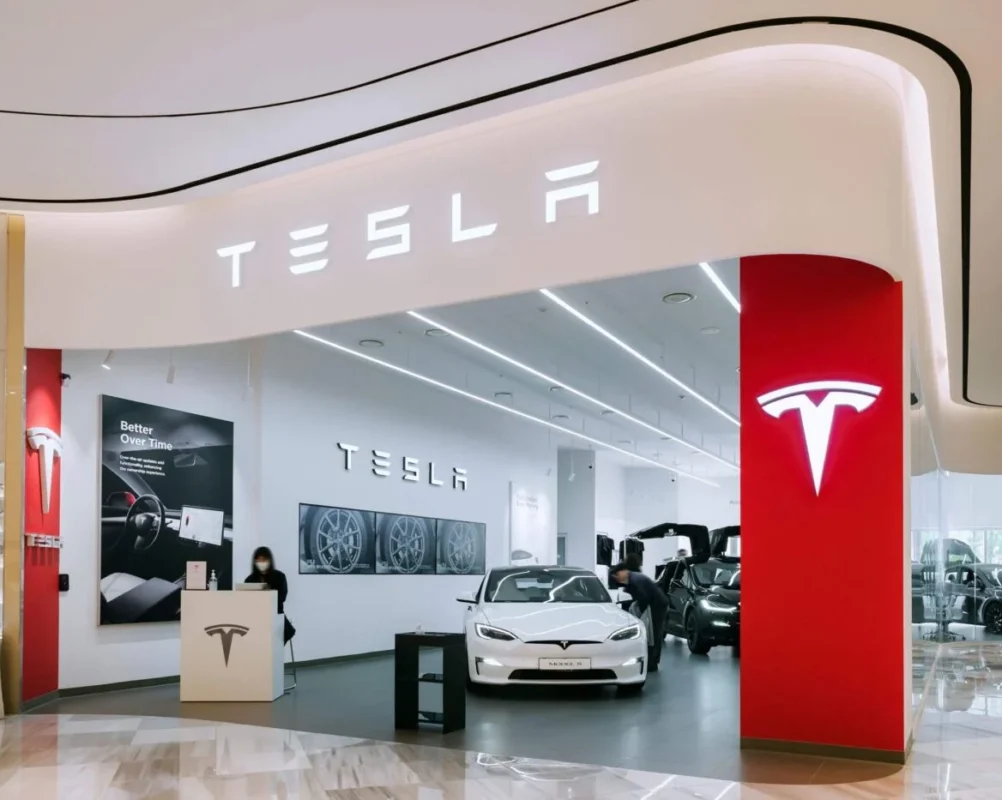
Tesla’s momentum shows no signs of slowing. The recently unveiled six-seat Model Y L variant has attracted substantial foot traffic at the company’s Starfield Hanam location in Seoul, even before the official market launch.
The Model Y L variant boasts approximately 150mm of additional wheelbase length, a genuine 2-2-2 seating configuration, and an advertised driving range of 543 kilometers. South Korean regulators have already granted approval, and multiple color variants are currently on display for public viewing.
Tesla has simultaneously opened Model Y L pre-orders across eight Asian territories, encompassing markets like Japan, Hong Kong, and Singapore.
BYD Makes Its Mark
Tesla’s dominance hasn’t gone unchallenged in the Korean market. For the first time, Chinese electric vehicle manufacturer BYD secured a position among South Korea’s top four imported brands — a significant development in a territory traditionally controlled by European manufacturers.
BYD’s competitive advantage lies in substantial manufacturing capacity and an extensive electric vehicle portfolio, frequently offered at aggressive price points. This development signals that South Korea’s EV marketplace has evolved beyond a simple competition between Tesla and German luxury brands.
Tesla’s worldwide delivery figures provide important perspective. The company experienced a 14% quarter-over-quarter decline in global deliveries last quarter, falling short of Wall Street projections. Should production capacity and logistics fail to match South Korean consumer demand, competitors stand ready to capture market share.
The upcoming months will prove critical — determining whether March’s record-breaking numbers and strong Model Y L pre-launch enthusiasm can sustain sales performance throughout the second quarter.
