


Key Highlights
- Wang Hao, Tesla’s China president, described GigaShanghai as a “golden key” to achieving mass-scale Optimus robot manufacturing
- This represents the initial public acknowledgment by a Tesla executive identifying Shanghai as a prospective humanoid robot manufacturing location
- The Shanghai facility manufactured 851,000 vehicles during 2025, representing 52% of Tesla’s worldwide production volume
- Tesla has plans to transform its Fremont facility into a dedicated humanoid robot manufacturing center
- Achieving 1 million Optimus units by 2035 is a requirement for Musk’s compensation package approval
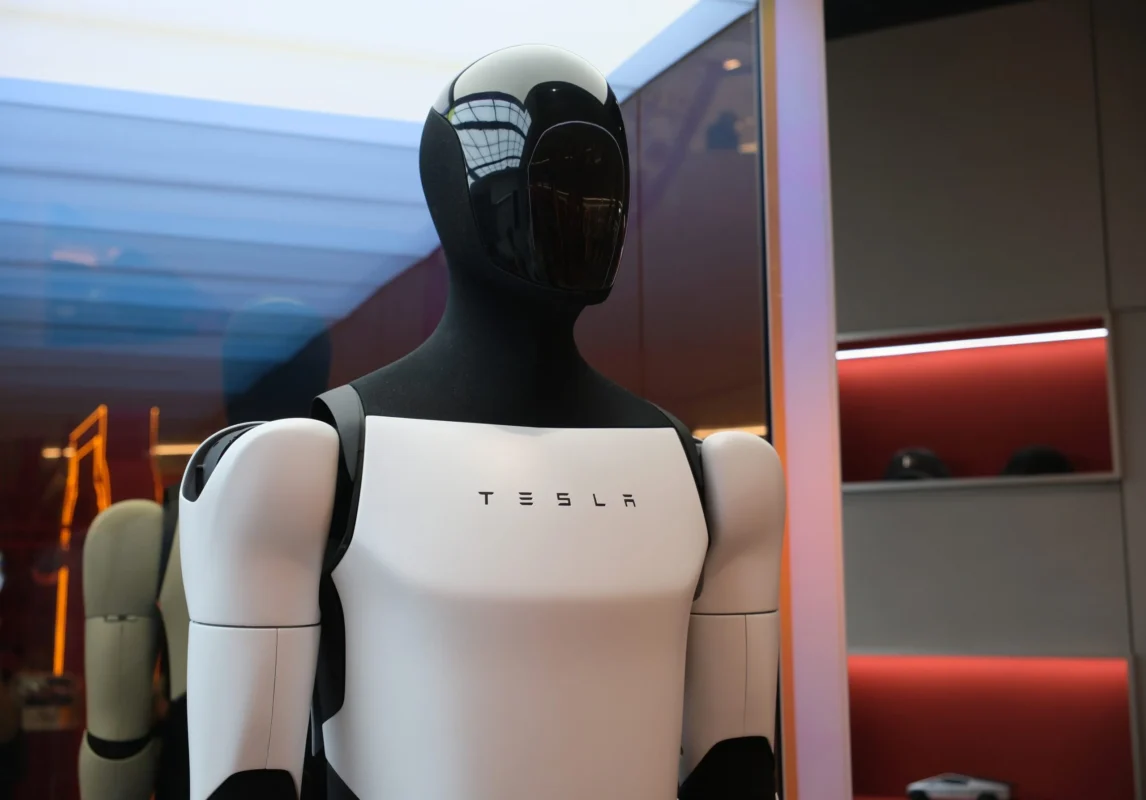
Tesla’s manufacturing giant in Shanghai may expand beyond automobile production in the near future. Wang Hao, president of Tesla China, indicated on Tuesday that the facility possesses the capabilities to manufacture Optimus humanoid robots and could serve as a cornerstone for expanding production.
Wang characterized GigaShanghai as the “golden key” needed to overcome mass production obstacles for Optimus robots — representing the first occasion a Tesla executive has openly identified the Shanghai location as a prospective robot production facility.
According to Wang, the facility is prepared to “shoulder important responsibilities in manufacturing all new products, including robots,” while expressing optimism about “welcoming the arrival of a new era of robots.”
Wang stopped short of clarifying whether Tesla plans to utilize current Shanghai infrastructure or construct a separate facility dedicated to robotics manufacturing.
The Shanghai Gigafactory stands as Tesla’s most expansive and efficient production facility. Throughout 2025, it manufactured approximately 851,000 vehicles — accounting for 52% of Tesla’s worldwide production. During Q1 specifically, the plant’s deliveries increased 23.5% compared to the previous year, reaching 213,398 vehicles and comprising 59.6% of Tesla’s global quarterly deliveries.

Currently, the facility manages both Model 3 and Model Y assembly for Chinese consumers and international markets. Additionally, Megapack battery production commenced at the site last year, with an annual production target of 10,000 units.
Strategic Advantages of the Shanghai Location
The Shanghai manufacturing site offers multiple practical benefits for robot production: cutting-edge automation systems, experienced personnel, and proximity to an extensive supplier ecosystem. These elements provide precisely the foundation required for managing the intricacies of humanoid robot manufacturing at volume.
Elon Musk has openly recognized that achieving production scale for Optimus presents significant challenges. However, GigaShanghai’s established infrastructure provides Tesla with a competitive advantage.
Optimus represents Tesla’s vision for an accessible, versatile humanoid robot — with pricing anticipated between $20,000 and $30,000. The robot operates on a 2.3 kWh battery system, features bipedal locomotion, achieves speeds approaching 5 mph, and incorporates dexterous hands capable of managing delicate operations.
Simultaneously, Tesla is repurposing its Fremont manufacturing facility — previously utilized for Model S and Model X production, both models facing discontinuation — into a specialized humanoid robot production hub.
Musk’s recently approved compensation structure, potentially valued at $1 trillion, hinges on achieving delivery of 1 million Optimus robots by 2035. This performance milestone explains the intensified focus on production scalability.
Competitive Landscape in Chinese Robotics
Musk has been forthright regarding Tesla’s primary competitor in the robotics sector. During Tesla’s earnings presentation in January, he identified China as “by far the biggest competition” in humanoid robotics, praising the nation as “incredibly good at scaling manufacturing.”
Musk also asserted that Tesla’s Optimus represents “much more capable than any robot we are aware of under development in China,” while recognizing advancements from competitors such as XPeng, which projects 1,000 IRON robot units monthly and pursues one million annual sales by 2030.
Government-backed manufacturers Changan and Chery have entered humanoid robot development. Meanwhile, Nio has adopted a cautious approach, stating it will postpone robotics investment until achieving consistent profitability.
Analysts on Wall Street maintain a Hold consensus rating on TSLA, derived from 13 Buy recommendations, 11 Hold ratings, and 6 Sell ratings compiled over the preceding three months. The consensus price target stands at $402.29, suggesting approximately 10.5% potential upside.
