



Key Takeaways
- A two-week ceasefire between the US and Iran has reopened the Strait of Hormuz to commercial vessels
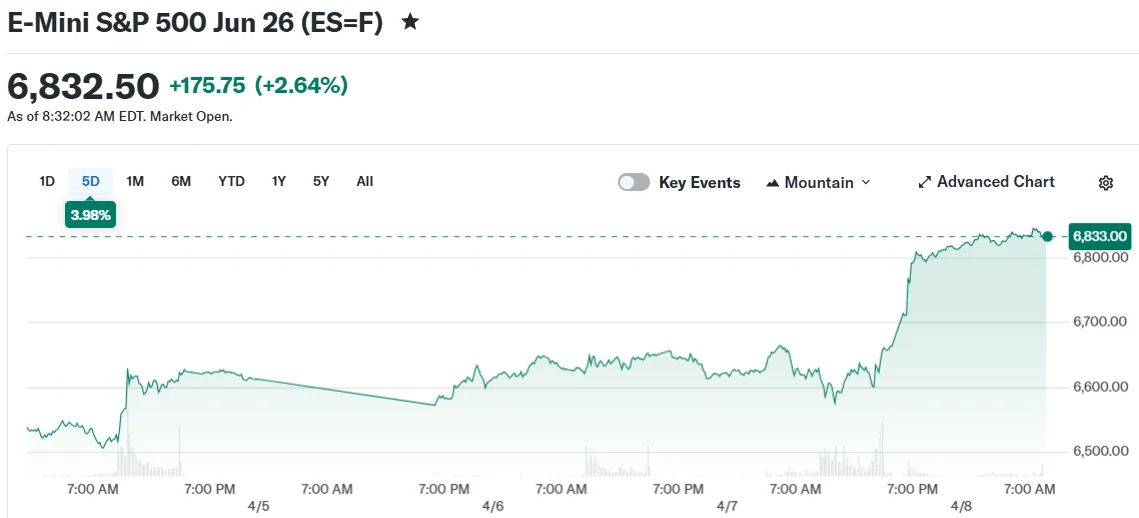
- Major US indices rallied significantly, with the Nasdaq gaining 3.5% and the Dow advancing more than 1,300 points
- Crude oil markets collapsed, with Brent falling nearly 16% and WTI plunging almost 18%
- Wedbush analysts believe the ceasefire establishes a favorable “risk-on” climate for technology equities and the Magnificent 7
- The investment firm contends that recent software stock declines are exaggerated and a market floor has likely been established
Wednesday brought a significant breakthrough as the United States and Iran announced a two-week ceasefire arrangement, catalyzing a substantial market upswing and causing crude oil values to tumble. The agreement notably includes Iran’s commitment to lift its blockade of the strategically vital Strait of Hormuz.
President Trump revealed the temporary truce on Truth Social, stating: “I agree to suspend the bombing and attack of Iran for a period of two weeks. This will be a double sided CEASEFIRE!” Iran’s foreign minister Abbas Araghchi publicly confirmed the agreement minutes later.
The Strait of Hormuz represents a crucial 21-mile-wide passage for worldwide energy transportation. News of its reopening immediately triggered substantial declines across petroleum markets.
Brent crude contracts plummeted nearly 16% to settle just north of $91 per barrel. West Texas Intermediate crude experienced an even steeper decline of almost 18%, trading around $92 per barrel.
Equity markets across the United States demonstrated robust positive momentum. The S&P 500 advanced 2.5%, the Nasdaq Composite surged 3.5%, and the Dow Jones Industrial Average climbed 2.9%, representing an increase exceeding 1,300 points.

Technology Sector Positioned to Capitalize
Wedbush Securities identified the ceasefire as establishing a “risk-on” market dynamic particularly advantageous for technology companies. The firm highlighted the Magnificent 7 group — Nvidia, Apple, Amazon, Tesla, Meta, Alphabet, and Microsoft — as prime candidates to benefit from renewed investor confidence.
In a client communication, Wedbush analysts observed that an “anxious geopolitical landscape throughout recent months has generated an oversold technology sector condition” affecting these companies and additional players in the artificial intelligence domain.
The research firm dismissed concerns that AI-focused enterprises such as Anthropic and OpenAI pose existential threats to established enterprise software providers. Following extensive consultations with chief information officers throughout various industries, analysts determined that organizations prioritize collaboration around AI capabilities rather than wholesale replacement of current platforms.
Wedbush specifically identified Microsoft, Salesforce, and ServiceNow as examples of companies experiencing “very disconnected selloffs” that don’t reflect their substantial AI revenue generation capabilities.
Fed Rate Cut Expectations Increase Amid Oil Decline
The dramatic contraction in petroleum prices has amplified market speculation that the Federal Reserve might restart its interest rate reduction cycle within 2025. Declining energy costs alleviate inflationary concerns, potentially providing the central bank additional flexibility for monetary policy adjustments.
The Federal Reserve’s March policy meeting minutes were scheduled for publication Wednesday afternoon and were anticipated to provide insights into how committee members have been evaluating the Iranian situation’s economic implications.
Regarding corporate earnings, Delta Air Lines was preparing to announce quarterly financial performance ahead of the opening bell. Market participants were particularly interested in assessing the conflict’s financial impact following suspended flight operations and elevated aviation fuel expenses.
The ceasefire arrangement extends for a two-week duration. According to statements from the Iranian foreign ministry, vessels transiting the Strait of Hormuz during this interval will require coordination with Iran’s Armed Forces.
