


Key Takeaways
- Equity futures retreated Monday following a weekend escalation between Washington and Tehran that threatens diplomatic progress
- Dow futures declined 0.6%, while S&P 500 and Nasdaq 100 futures each lost 0.5%
- A US naval operation intercepted an Iranian vessel; Iran responded with gunfire and shut down the Strait of Hormuz
- Crude prices jumped dramatically, with WTI climbing 5.7% to approximately $87/barrel and Brent rising 4.7% to roughly $95/barrel
- Gold retreated 1.3%, the greenback gained 0.1%, and Bitcoin declined 0.5% to $74,942
Equity futures turned negative Monday morning as tensions between Washington and Tehran escalated over the weekend, dampening hopes for diplomatic resolution and triggering a substantial rally in crude oil markets.
Dow Jones Industrial Average futures declined 394 points, representing a 0.6% drop. Both S&P 500 and Nasdaq 100 futures retreated approximately 0.5%.
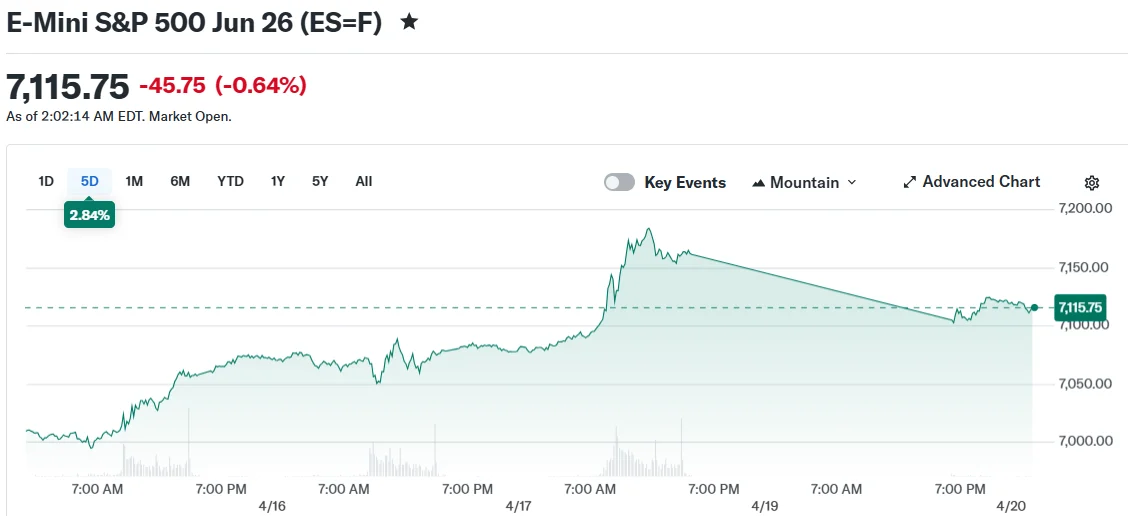
The pullback arrives on the heels of an impressive market rally. Both the S&P 500 and Nasdaq reached all-time highs during the previous week’s session. The Nasdaq had just completed an extraordinary 13-day winning streak—the most extended such run since 1992.
This upward trajectory now confronts a significant challenge.

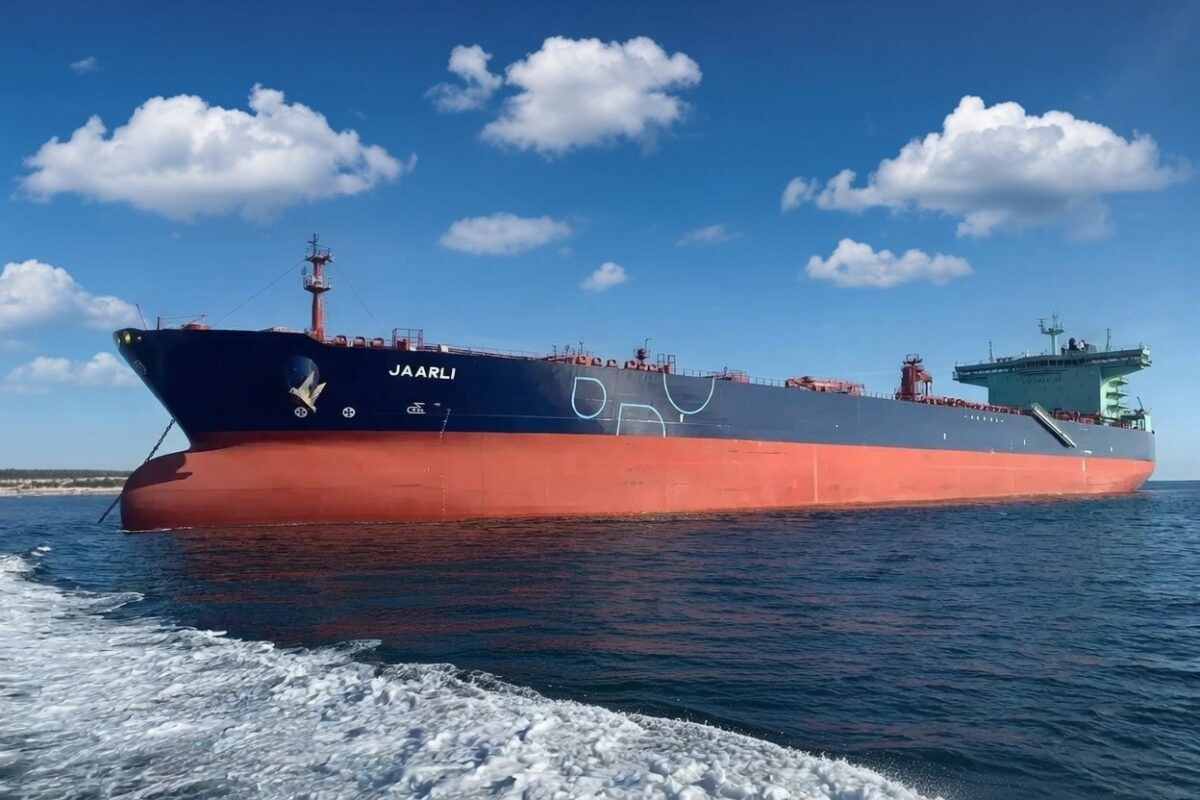
During the weekend, President Trump announced that US naval forces had intercepted an Iranian cargo vessel attempting to evade the blockade of the Strait of Hormuz, reportedly damaging its engine room. Tehran responded by launching attacks on ships navigating the strait and completely halting maritime traffic through the crucial waterway, reversing earlier commitments to permit limited passage.
Iran’s official media outlet also challenged reports suggesting a second phase of diplomatic discussions, stating the “prospect for meaningful negotiations remains dim.” American representatives are reportedly still planning to travel to Pakistan for continued talks.
Crude Surges, Safe-Haven Assets Show Mixed Response
Oil markets responded immediately to the news. Brent crude surged 4.8% to approximately $94.70 per barrel. WTI advanced 5.1% to $86.82. While both benchmarks remain beneath the psychologically significant $100 threshold that would intensify inflation concerns, the upward momentum is causing unease among market participants.
The renewed blockade of the Strait of Hormuz—a critical passage handling approximately 20% of worldwide petroleum shipments—is reviving inflation anxieties just as markets had begun pricing in a more predictable environment.
Jim Reid, a macro strategist at Deutsche Bank, highlighted a concerning historical parallel. He observed that the S&P 500 rallied over 10% during the initial weeks of the Ukraine conflict as traders anticipated a swift resolution. “That experience serves as a stark cautionary tale,” he remarked.
The US dollar strengthened 0.1% versus a basket of major currencies. Gold, traditionally viewed as a safe-haven asset, surprisingly dropped 1.3% to $4,818 per ounce. Bitcoin decreased 0.5% over the past 24 hours to $74,942. The benchmark 10-year Treasury yield increased 3 basis points to 4.27%.
This Week’s Market Calendar
Corporate earnings reports continue at a rapid pace. Tesla (TSLA), INTC), and United Airlines ($UAL) are scheduled to announce results this week, providing investors opportunities to redirect attention toward company performance rather than geopolitical developments.
In Monday’s pre-market session, Dow futures stood at 49,365, S&P 500 futures registered 7,129.50, and Nasdaq 100 futures traded at 26,718.75.
Iran’s Islamic Republic News Agency maintained its skeptical stance regarding negotiation prospects as of Sunday.
