



Key Highlights
- Futures contracts for the S&P 500 advanced 0.4% while Nasdaq 100 futures climbed 0.6% during Monday trading
- Diplomatic negotiations between Washington and Tehran, facilitated by Pakistani officials, improved investor confidence
- President Trump extended his Iran ultimatum to Tuesday evening, warning of attacks on Iranian power infrastructure
- The critical Strait of Hormuz shipping lane continues to operate with severe restrictions, impacting approximately 20% of worldwide oil transport
- Crude oil values declined following ceasefire news, with Brent crude dropping roughly 1.6% to reach $107 per barrel
Equity futures for US markets pushed into positive territory Monday following emerging reports of potential diplomatic negotiations between Washington and Tehran, providing traders with cautious optimism. The upward movement followed a volatile weekend marked by military exchanges and escalating rhetoric from the White House.
The S&P 500 futures contract increased approximately 0.4% during the session. Nasdaq 100 futures posted stronger gains of 0.6%. Futures tied to the Dow Jones Industrial Average showed more modest appreciation at 0.1%.
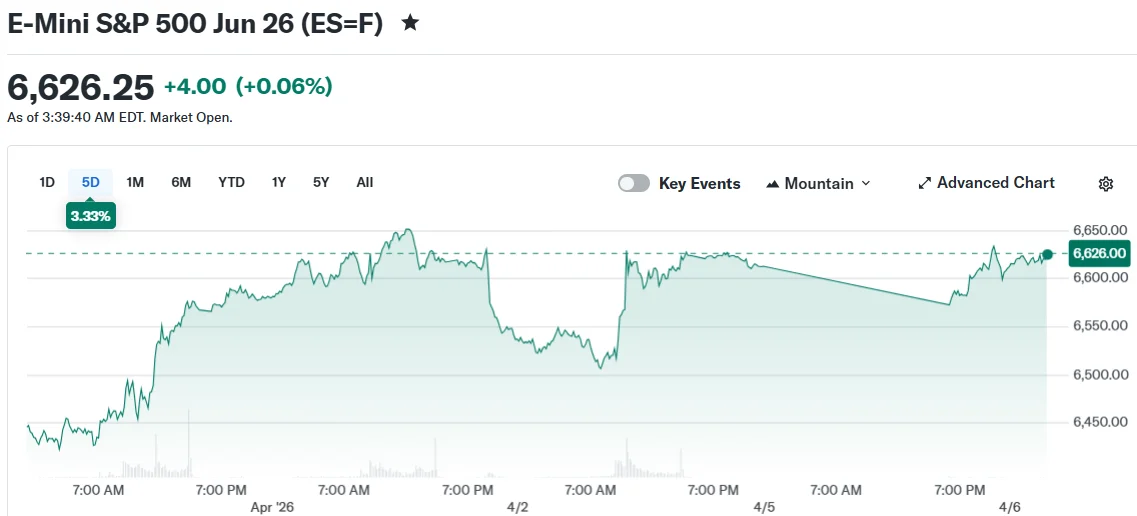
Equity markets had experienced downward pressure during overnight trading following renewed warnings from Trump. However, sentiment reversed course as news of diplomatic channels emerged.
Reporting from Reuters indicated that both Washington and Tehran have been presented with a preliminary ceasefire framework through Pakistani intermediaries. The proposed agreement would establish an immediate cessation of hostile actions. Neither government has formally acknowledged or endorsed the framework publicly.

Additional reports suggest American officials alongside regional brokers are advocating for an extended 45-day cessation of hostilities that could potentially conclude the conflict permanently. Sources close to the negotiations caution that prospects for success remain limited.
The initial 10-day ultimatum issued by Trump technically reached its conclusion on Monday. However, the president modified the timeline, announcing via social media that the revised deadline stands at “Tuesday, 8:00 P.M. Eastern Time.” In comments to the Wall Street Journal, he threatened comprehensive strikes against Iranian electrical infrastructure should the Strait of Hormuz remain blocked beyond that point.
Crude Prices Retreat Following Diplomatic Developments
The strategically vital Strait of Hormuz, which typically facilitates passage for approximately 20% of global petroleum shipments, continues to face significant operational constraints for most commercial tanker traffic. These restrictions have maintained upward pressure on oil prices throughout recent trading sessions.
Crude oil valuations had surged nearly 3% when trading commenced Sunday evening. However, prices reversed direction after ceasefire developments surfaced. Brent crude contracts declined approximately 1.6% to settle near $107 per barrel. West Texas Intermediate experienced a sharper decline of roughly 2% to approximately $109.
A noteworthy market anomaly emerged: WTI contracts were trading at a premium to Brent contracts. This inversion is historically uncommon. Market analysts attribute the discrepancy to contractual timing variations, with WTI remaining tied to May delivery specifications while Brent has transitioned to June settlements.
Research analysts at Gavekal Research suggested that Iranian authorities appear to be leveraging their strategic position over the strait to impose substantial transit fees on commercial vessels. They characterized this approach as representing a novel economic strategy for the region.
Additional Market Movements
Gold appreciated 0.9% during Monday’s session, reaching approximately $4,720 per ounce. The benchmark 10-year US Treasury note yield increased slightly to 4.362%.
American military personnel successfully extracted a US aviator who had been detained within Iranian territory over the weekend. Iranian forces maintained their campaign of missile and drone launches targeting Gulf states and Israeli territory through Monday morning.
The geopolitical landscape remains volatile, with Tuesday evening’s deadline emerging as the next critical inflection point for both financial markets and international diplomatic efforts.
