



Key Highlights
- SpaceX (SPCX) stock launched Friday in a historic public offering, securing $75 billion at a share price of $135
- With a market valuation of $1.77 trillion, Elon Musk stands poised to achieve trillionaire status
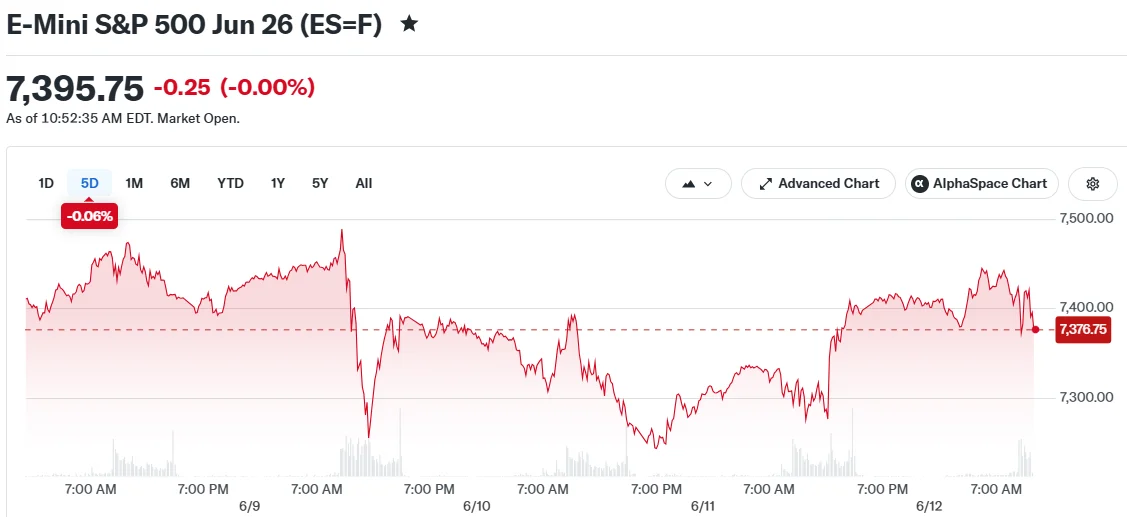
- Major indices showed divergent performance at the opening bell: Dow climbed 0.2%, S&P 500 hovered near unchanged, Nasdaq slipped 0.3%
- Crude markets tumbled following news of advancing US-Iran diplomatic negotiations, with Brent crude dropping up to 5%
- Consumer confidence data from the University of Michigan plunged to a record low of 44.8 in May, with updated figures expected Friday
Wall Street navigated choppy waters Friday morning as traders juggled two significant developments: the highly anticipated market entry of SpaceX and emerging indications of diplomatic progress between Washington and Tehran.
The Dow Jones Industrial Average advanced approximately 138 points, translating to a 0.2% gain during morning trade. The S&P 500 edged up 0.2% while the Nasdaq Composite held steady after an initial 0.3% decline at the opening. Thursday’s session had delivered robust gains following President Trump’s announcement that a peace accord with Iran was within reach.
Operating under the ticker symbol SPCX, SpaceX established its initial share price at $135 before Friday’s trading commencement. The aerospace venture secured approximately $75 billion in capital, establishing a new benchmark as the most substantial initial public offering on record. The company’s projected market value reaches $1.77 trillion.
This extraordinary valuation positions CEO Elon Musk to cross the trillion-dollar wealth threshold, a milestone never before achieved.

SpaceX has outlined ambitious plans to deploy artificial intelligence data infrastructure in orbit. Market participants harbor elevated expectations for the stock’s performance, with industry observers noting that any underwhelming initial showing would likely trigger intense examination.
The public offering represents a crucial litmus test for broader equity markets, which have weathered considerable pressure from AI-sector stock liquidation throughout recent sessions.
Crude Markets Retreat on Diplomatic Breakthrough
Oil prices experienced significant downward pressure Friday as market participants incorporated the likelihood of a US-Iran diplomatic resolution. Brent crude contracts plummeted as much as 5% during early hours, touching their weakest point since March, before staging a modest rebound. West Texas Intermediate crude declined 2.8% to approximately $85.26 per barrel.
Emerging reports indicate both nations are progressing toward an arrangement that would restore access through the Strait of Hormuz, a critical conduit for global petroleum shipments. G7 leadership is scheduled to convene in the coming week, potentially providing a forum for agreement ratification.
According to Barclays strategist Emmanuel Cau, a validated US-Iran accord would “eliminate a significant macro tail risk and facilitate additional market broadening and rotation.”
Consumer Confidence and Digital Assets Under Watch
Friday’s economic calendar also featured the anticipated release of the University of Michigan’s consumer sentiment gauge. The May reading witnessed the headline metric collapse to an unprecedented low of 44.8, underscoring persistent economic anxieties.
Bitcoin continued trading within established boundaries following a modest uptick earlier in the week.
Gold advanced more than 2.5% amid optimism surrounding potential US-Iran diplomatic success, though the precious metal remained positioned for a weekly decline.
Additional aerospace-sector equities captured market attention as well. Rocket Lab alongside four additional firms were preparing to enter the Nasdaq 100 index, injecting further energy into the space industry on the same day SpaceX commenced public trading.
The convergence of the SpaceX market debut, retreating energy prices, and geopolitical developments provided investors with numerous substantial narratives to process entering the weekend.
