


Key Highlights
- President Lee Jae-myung announced South Korea’s ambitious $576 billion semiconductor and AI infrastructure initiative
- Tech giants Samsung and SK Hynix will each construct two new fabrication facilities in southwestern regions
- The initiative forms part of Lee’s comprehensive “Three Mega Projects” strategy encompassing semiconductors, data infrastructure, and robotics
- The nation targets a 100% increase in DRAM manufacturing capacity over the next five years
- Opposition voices raise concerns about potential political motivations behind the southwestern location choice, citing Lee’s electoral support in the area
President Lee Jae-myung of South Korea introduced a monumental industrial strategy this Monday, placing semiconductors and artificial intelligence at its core. The comprehensive investment package exceeds $576 billion, with industry leaders Samsung and SK Hynix spearheading the initiative.
This sweeping plan represents a pillar of the administration’s “Three Mega Projects” framework, encompassing semiconductor manufacturing complexes, advanced data centre infrastructure, and robotics innovation.
Addressing the nation, Lee characterized this undertaking as crucial for Korea’s future competitiveness, emphasizing the urgency to “acquire AI’s fundamental components more rapidly than competing nations.”
Major Chipmakers Leading the Charge
Samsung and SK Hynix, together with their extensive supplier networks, will deploy 800 trillion won—approximately $518 billion—to establish four new chip manufacturing complexes in South Korea’s southwestern territories.

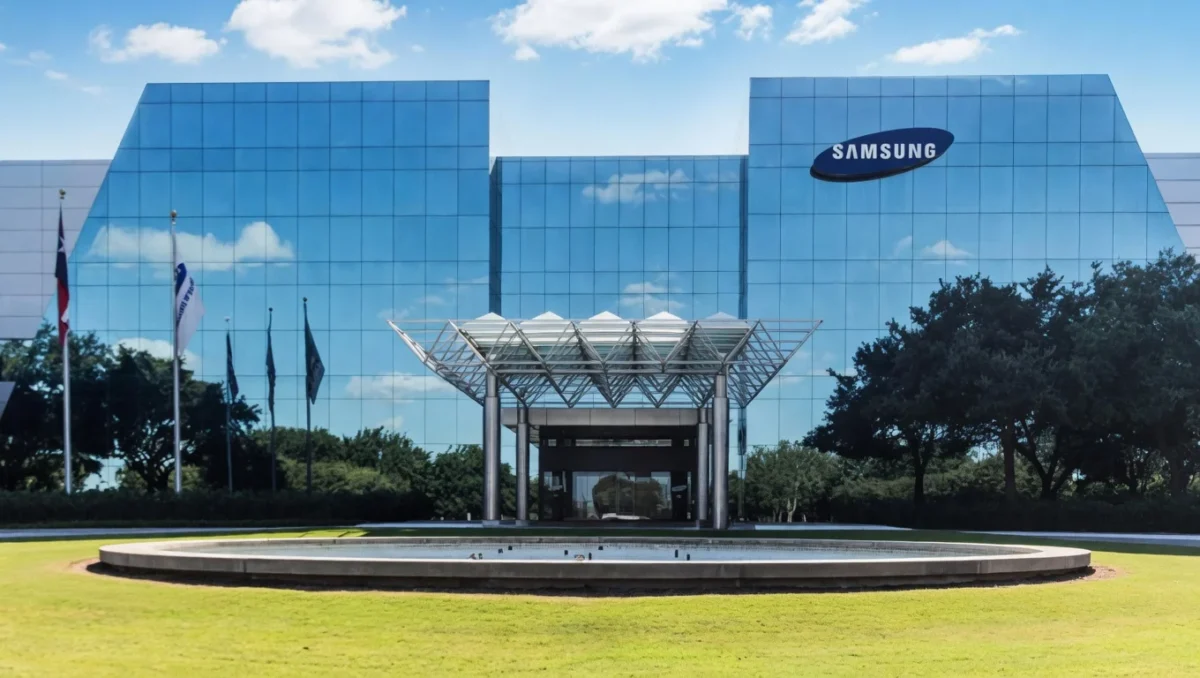
Samsung Electronics Co., Ltd., SMSD.L
The municipal government of Gwangju and South Jeolla provincial authorities will supplement these efforts with contributions ranging from 5 to 20 trillion won.
Additionally, a specialized chip packaging facility in the Chungcheong region adjacent to Seoul is under development, attracting an estimated 81 trillion won in capital.
Samsung’s Chairman Jay Y. Lee publicly confirmed Gwangju as the designated location for the company’s upcoming chip production complex. Meanwhile, SK Hynix’s leadership indicated they require additional time to determine their precise site and establish essential utilities and infrastructure.
The government’s blueprint includes ambitious plans to expand DRAM manufacturing capacity twofold within a five-year timeframe by expediting construction schedules for new fabrication plants in the Seoul metropolitan region, with target completion dates in the mid-2030s.
Controversy and Operational Challenges
Opposition lawmakers have voiced strong objections to the proposal, alleging the southwestern site selection serves political purposes. Data shows approximately 85% of regional voters supported Lee during the previous presidential contest.
Public opinion polls indicate declining support for Lee, with his approval rating decreasing for six straight weeks to reach 46.5%, as measured by Realmeter polling organization.
Responding to critics through weekend social media posts on X, Lee firmly dismissed allegations that the strategy disproportionately benefits traditionally liberal-leaning constituencies.
Semiconductor sector analysts acknowledge that diversifying chip production beyond Seoul could alleviate strain on existing manufacturing zones’ infrastructure. Nevertheless, they caution that constructing state-of-the-art fabrication facilities demands enormous quantities of electrical power, water resources, available land, specialized technical personnel, and comprehensive supplier ecosystems—assets that may prove difficult to mobilize swiftly in developing regions.
SK Hynix’s Chairman highlighted the complexity involved, referencing the nine-year timeline required to complete the company’s Yongin manufacturing complex.
This strategic investment arrives amid surging worldwide demand for high-bandwidth memory semiconductors—critical components powering artificial intelligence platforms. SK Hynix achieved a significant milestone in May when its market capitalization surpassed $1 trillion.
Competing semiconductor-producing nations, including Taiwan, China, and Japan, are simultaneously channeling substantial resources into chip manufacturing capabilities as artificial intelligence applications drive unprecedented semiconductor requirements across global markets.
