


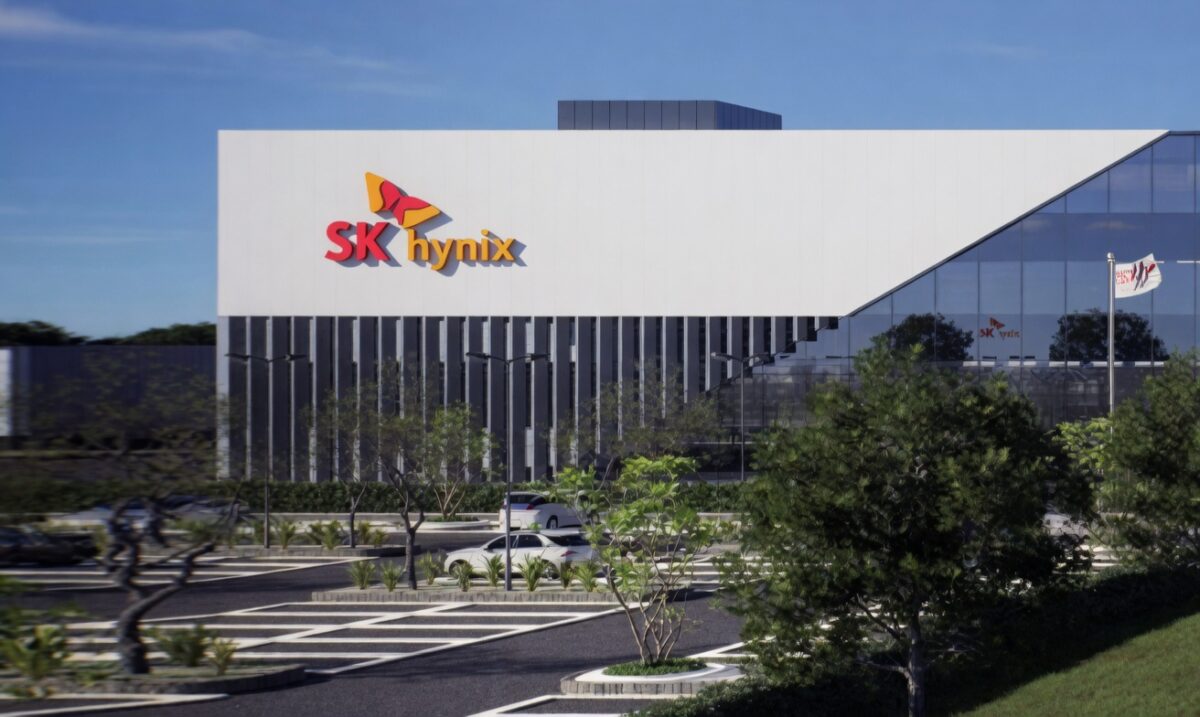
TLDR
- SK Hynix has surpassed Samsung Electronics as South Korea’s highest-valued company, achieving a market capitalization approaching 2.1 quadrillion won.
- A strategic investment in High-Bandwidth Memory (HBM) technology dating back to 2012 has fueled the company’s remarkable ascent.
- As Nvidia’s main HBM chip provider, SK Hynix occupies a central position in the artificial intelligence semiconductor revolution.
- A planned American Depositary Receipt offering on Nasdaq scheduled for July 10, 2026, aims to generate $29.43 billion in capital.
- Shares have skyrocketed over 340% year-to-date, with funds designated for manufacturing facilities and advanced equipment purchases.
SK Hynix has officially claimed the title of South Korea’s most valuable publicly traded enterprise, eclipsing Samsung Electronics — the culmination of a strategic vision pursued over fourteen years.
The memory chip manufacturer achieved a market valuation approaching 2.1 quadrillion won during this week’s trading sessions. This milestone represents a figure that SK Group’s leadership once established as an aspirational long-term objective, arriving ahead of virtually all projections.
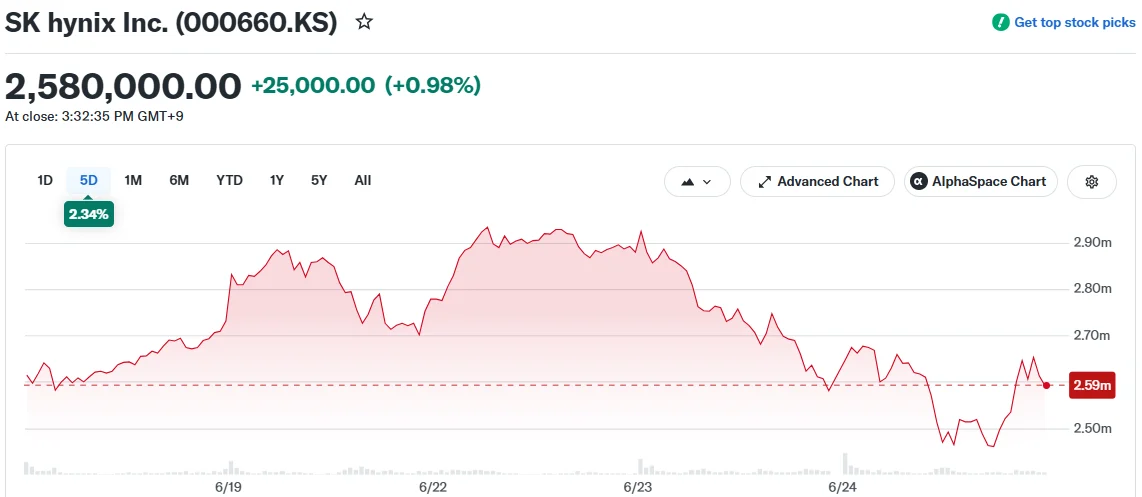
Shares have climbed over 340% during the current year.
This remarkable transformation traces its origins to 2012, when SK Group completed its acquisition of Hynix Semiconductor amid considerable market doubt. Standard & Poor’s responded by placing SK Telecom under a negative credit watch, expressing concerns about the volatile semiconductor industry’s cyclical patterns.

During that period, Samsung commanded a market capitalization exceeding SK Hynix’s by more than tenfold.
Instead of pursuing direct confrontation in the conventional DRAM market, SK Hynix committed resources to High-Bandwidth Memory — a specialized chip technology offering superior data transfer speeds but facing uncertain market acceptance.
“We recognized that competing against Samsung in standard DRAM products would prove futile,” explained Hyun Sun-yeop, a former human resources executive at SK Hynix. “We faced an urgent need to transform competitive conditions.”
A Risky Technology Wager
SK Hynix introduced the industry’s inaugural HBM chip in partnership with AMD during 2014. However, the subsequent generation encountered setbacks, allowing Samsung to establish leadership through the latter half of the 2010s. Internal discussions arose questioning whether HBM development warranted continuation.
The company persevered. Leadership committed 880 billion won toward constructing a specialized packaging plant in Icheon, expanding production capabilities in expectation of orders from Nvidia — at that time primarily recognized for consumer gaming graphics processors.
That manufacturing facility operated below capacity throughout 2019 as orders from Nvidia and cryptocurrency mining operations declined sharply.
“The situation created significant challenges in 2019,” recalled Shim Dae-yong, who directed HBM development initiatives. “Utilization rates were disappointing.”
The landscape transformed dramatically following ChatGPT’s debut in 2022. The artificial intelligence revolution generated unprecedented demand for HBM semiconductors, which became essential components in Nvidia’s data center AI processing units. SK Hynix possessed the necessary infrastructure and expertise.
“The explosive expansion of the HBM market exceeded all forecasts,” Shim noted. “However, we had established both technical capabilities and manufacturing capacity.”
Nasdaq Expansion Plans
SK Hynix continues advancing efforts to diversify its shareholder composition. The corporation disclosed intentions Wednesday to secure 45.45 trillion won — approximately $29.43 billion — via an American Depositary Receipt offering on Nasdaq, scheduled for July 10, 2026.
Capital raised will finance construction of a manufacturing facility in Yongin, an advanced packaging plant in Cheongju, and acquisition of Extreme Ultraviolet Scanner technology.
SK Hynix temporarily surpassed Samsung as the global leading DRAM producer in 2025, following unprecedented operating profits in 2024 — representing a dramatic reversal from the 7.73 trillion won operating deficit recorded in 2023 during a severe industry contraction.
Samsung currently pursues recovery strategies. Its internal foundry operations manufacture components for HBM products, whereas SK Hynix partners with TSMC for base die production.
SK Hynix’s market capitalization Monday reached nearly 2.1 quadrillion won. SK Group chairman Chey Tae-won had previously established that valuation as an organizational goal. The target materialized on Monday.
