


Key Highlights
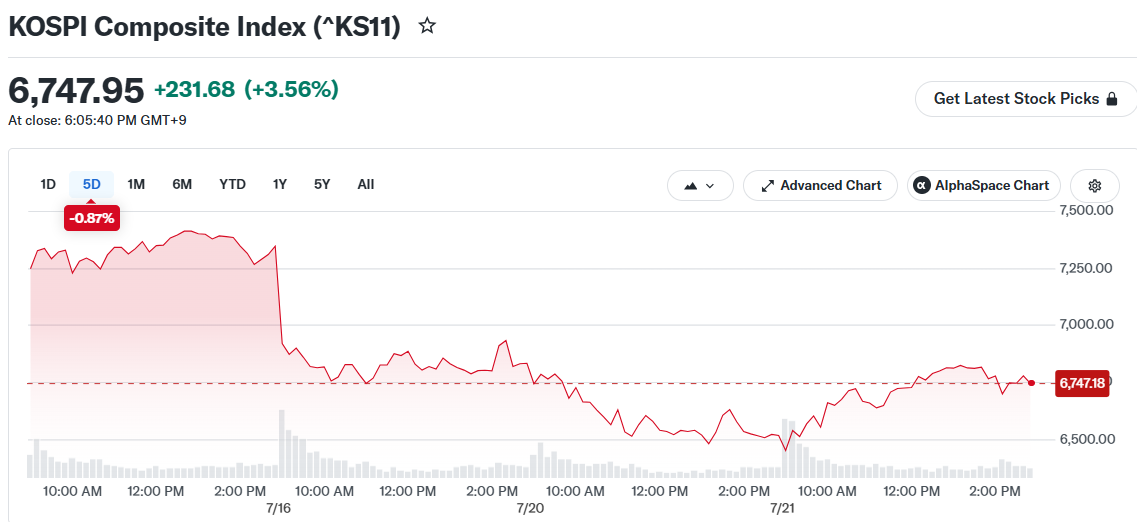
- South Korea’s benchmark index climbed 4% Tuesday following a 9% decline last week and a more than 30% drop from June highs
- Samsung Electronics rallied almost 7% while SK Hynix advanced 5%, driving the market recovery
- Morgan Stanley projects a 9,000 KOSPI target with a downside scenario of 6,000
- The correlation between the Kospi and Nasdaq-100 has reached 0.95, indicating near-identical movement
- Regulatory authorities in South Korea have suspended new approvals for leveraged single-stock ETFs
The KOSPI staged a significant recovery on Tuesday, climbing approximately 4% as semiconductor giants Samsung Electronics and SK Hynix bounced back from a severe downturn. This rally arrived after the benchmark index tumbled 9% during the previous week and had shed over 30% since reaching its June zenith.
Samsung’s stock price soared almost 7% during Tuesday’s trading session. SK Hynix advanced 5%. Both companies had experienced significant pressure amid worries that artificial intelligence-related valuations had become excessive.
The previous week’s downturn reflected a broader global technology sector retreat. AI-focused semiconductor stocks suffered losses despite Taiwan Semiconductor Manufacturing reporting robust earnings results, as market participants grew skeptical about elevated valuations.
Morgan Stanley offered its assessment, suggesting the correction appears substantial but hasn’t yet reached full bear market territory. The investment bank noted that semiconductor companies accounted for approximately 70% of the KOSPI’s market capitalization decline since the beginning of the second half.

The firm maintained its 12-month KOSPI projection at 9,000 while adjusting its downside scenario to 6,000, citing moderating earnings expansion. It characterized the 6,000 to 9,000 range as the probable trading band for the coming three to six months.
Korea’s Market as an AI Trade Bellwether
The South Korean equity market has emerged as one of the most closely monitored proxies for global artificial intelligence investment trends. The nation’s significant weighting toward semiconductor companies has rendered it particularly responsive to changes in AI spending sentiment.
Evercore ISI analysts observed that the relationship between the Kospi and the Nasdaq-100 has hit 0.95, signifying the indices have been tracking nearly identically. They characterized South Korea as the “tail that wags the dog” in international financial markets.
Michelle Gibley from the Schwab Center for Financial Research characterized the market as “effectively a barometer for the AI trade,” pointing to memory semiconductors’ critical position in AI infrastructure and increasing leverage usage among individual investors.
Leveraged Products Magnify Market Movements
Individual investors throughout South Korea have channeled substantial capital into leveraged single-stock ETFs, especially those tracking Samsung and SK Hynix. This activity has magnified price movements in both upward and downward directions, leading to the Kospi activating its circuit breaker mechanism seven times throughout the current year.
The turbulence became severe enough that regulatory officials in South Korea halted new approvals for leveraged single-stock ETFs in an effort to reduce speculative trading.
Notwithstanding the recent turbulence, the Kospi remains up 113% compared to last year and approximately 60% year to date. Morgan Stanley indicated that forward-looking valuations for the index and its chip manufacturers stand near historical minimums, though questions surrounding AI expenditure and supply chain dynamics may sustain heightened volatility.
The investment bank continues to recommend a strategy that combines technology sector leaders with more stable, defensive positions.
