


TLDR
- Jensen Huang, Nvidia’s CEO, revealed plans to boost annual Taiwan expenditures from $100 billion to $150 billion.
- The chipmaker will construct Constellation, a new Taipei headquarters designed to accommodate 4,000 workers by 2030.
- Taiwan’s Taiex benchmark reached an all-time high, climbing 1.7%, driven by TSMC’s 1.3% gain and MediaTek’s 8.8% surge.
- Nvidia’s revenue from China and Hong Kong dropped 50% in the recent quarter, while Taiwan sales increased by more than 50%.
- Mainland Chinese semiconductor stocks tumbled, with Cambricon losing 5% and Hygon declining 7%.
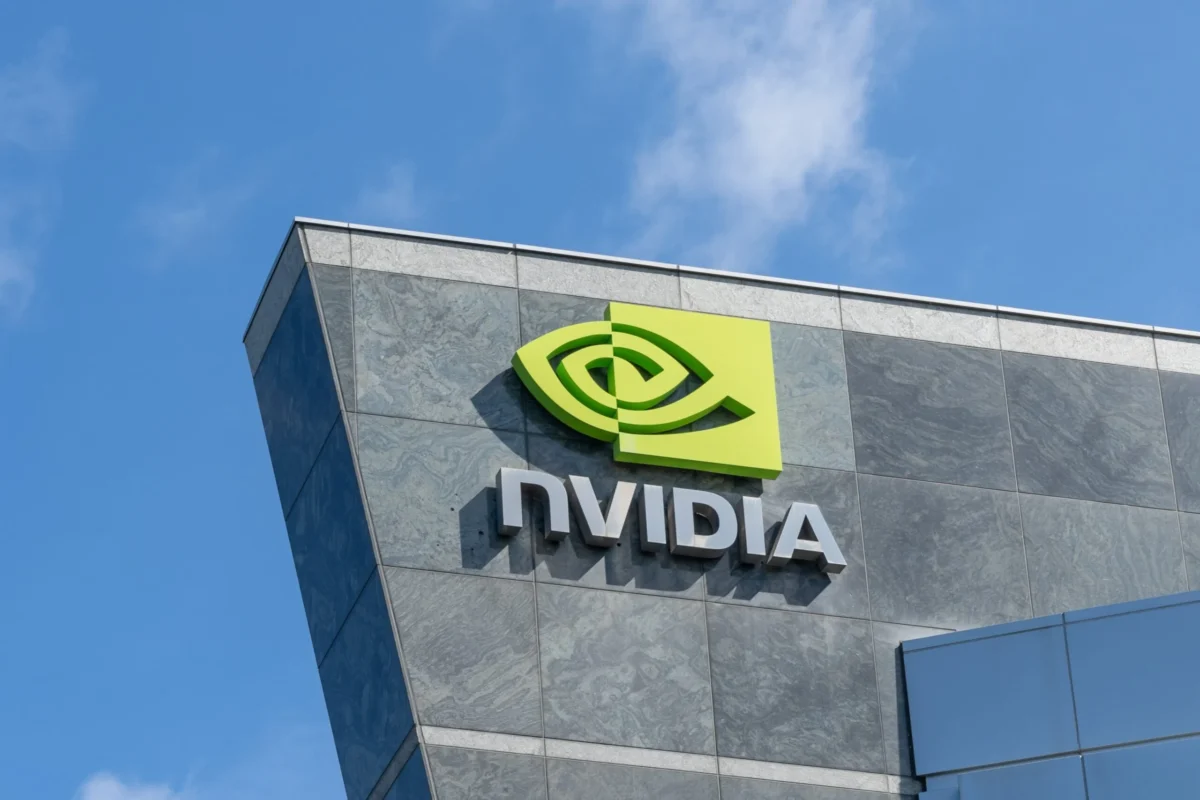
During a company gathering in Taipei this Wednesday, Nvidia’s chief executive Jensen Huang unveiled what represents one of the firm’s most substantial pledges to Taiwan — an ambitious strategy to expand annual procurement from Taiwanese partners from $100 billion to $150 billion.
The declaration coincided with the unveiling of Nvidia’s latest Taiwanese facility. Huang disclosed that the corporation currently allocates approximately $100 billion yearly within the region — a dramatic increase from the $10 to $15 billion spent annually just four to five years prior. The company did not specify a target date for achieving the $150 billion spending threshold.
Nvidia stock (NVDA) slipped 0.22% during trading, while Taiwan Semiconductor Manufacturing (TSM) advanced 1.93%.

The announcement propelled Taiwan’s Taiex benchmark to an unprecedented closing high, surging 1.7% for the session. TSMC, which serves as Nvidia’s principal chip fabrication partner, finished 1.3% higher. MediaTek soared 8.8% while Delta Electronics climbed 7.2%.
Analysts anticipate Nvidia will surpass Apple as TSMC’s biggest client within the year. The proposed $150 billion annual spending actually surpasses Nvidia’s own quarterly sales — the company reported record quarterly revenue of $81.6 billion for the period ending April 26 and forecasts $91 billion for the ongoing quarter.
Construction on Constellation, Nvidia’s planned Taipei office development, is slated to commence before year-end. Upon completion in 2030, the facility will provide workspace for as many as 4,000 staff members in northern Taipei — quadruple the company’s present regional workforce.
China Takes the Hit
This aggressive Taiwan expansion strategy emerges as Nvidia’s mainland Chinese operations experience significant contraction. During the latest reporting period, combined revenue from mainland China and Hong Kong plummeted by half compared to the previous year, even as Taiwan-generated revenue skyrocketed over 50%.
Chinese semiconductor equities experienced steep declines Wednesday. Cambricon shares dropped 5% while Hygon tumbled 7%. These stocks had rallied earlier in the week following Huawei’s introduction of “LogicFolding,” a novel chip engineering methodology the company intends to deploy in smartphone processors this autumn and datacenter chips “around 2030.”
The Geopolitical Backdrop
The investment announcement arrives during a politically delicate period. President Trump indicated earlier this month that a proposed $14 billion U.S. military equipment sale to Taiwan could potentially serve as a “negotiating chip” with China, remarks made following his meeting with Chinese President Xi Jinping. Trump subsequently clarified that U.S. Taiwan policy remains unchanged, and had previously authorized an $11.1 billion defense package in December.
While Huang avoided direct geopolitical commentary, the magnitude of the financial commitment conveys a clear message. “Taiwan is the epicenter of the AI revolution,” he declared Wednesday.
Nvidia has separately pledged $500 billion toward AI infrastructure development across the United States over a four-year span — approximately $125 billion per year — partnering with domestic manufacturers.
Huang emphasized that artificial intelligence integrated with physical hardware, which he termed “physical AI,” would “transform manufacturing,” and that Nvidia’s Taiwanese collaborators would directly benefit from these technological advances.
