


Key Highlights
- The Manassas, Virginia facility has commenced production of 1-alpha DRAM, representing the most sophisticated memory technology manufactured domestically.
- Micron allocated more than $2 billion to upgrade the Virginia site, creating employment for over 3,100 workers.
- Shares of MU declined approximately 1% Friday to $754.61, following Thursday’s 4.1% advance.
- Bank of America Securities elevated its price objective for Micron to $950, pointing to artificial intelligence-fueled memory requirements.
- Samsung Electronics successfully negotiated a bonus agreement with its labor union, preventing a scheduled work stoppage late Wednesday.
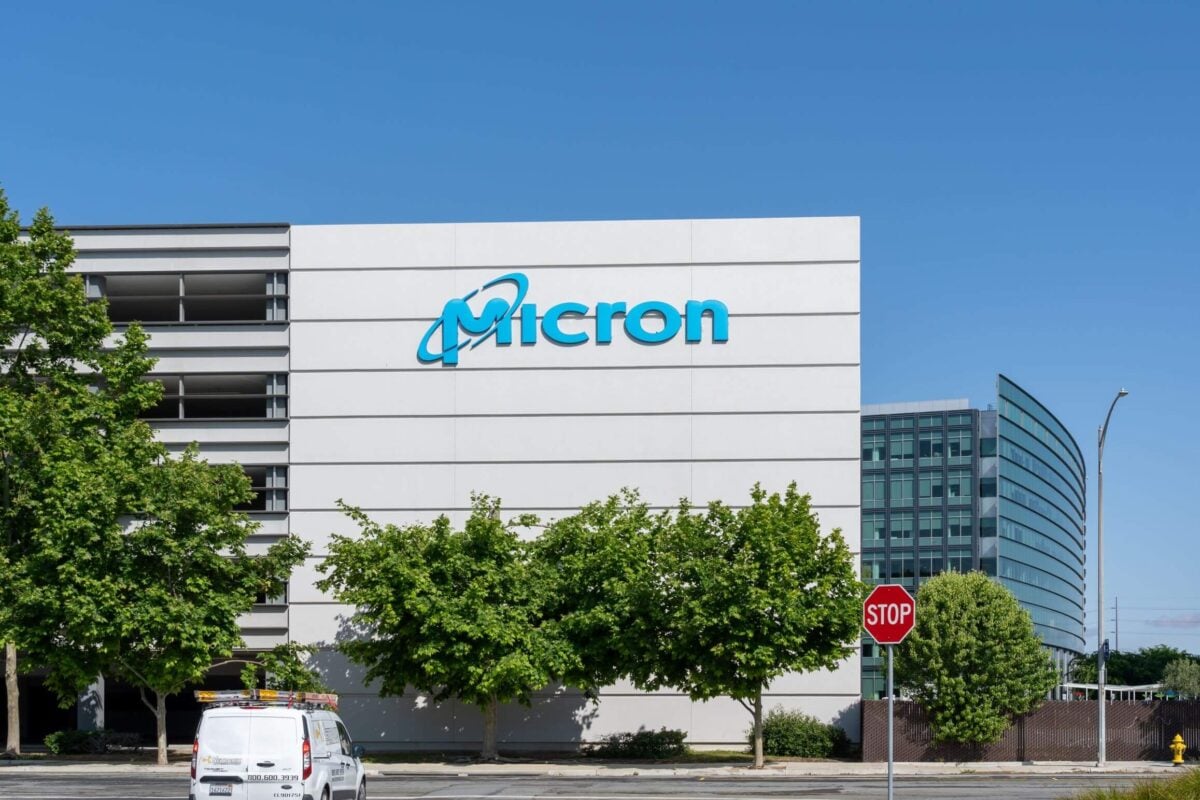
Micron Technology (MU) opened Friday’s session with significant news: the semiconductor manufacturer has initiated production of 1-alpha DRAM at its Manassas, Virginia manufacturing facility — technology the company describes as the most sophisticated memory chips ever fabricated on American soil.
Shares traded at approximately $754.61, declining about 1% during early Friday market activity, following Thursday’s robust 4.1% gain.
The Virginia manufacturing site will fabricate DDR4 and LP4 memory products targeting automotive, defense, aerospace, industrial, networking, and medical device sectors. According to Micron, the 1-alpha process node delivers the globe’s most advanced DDR4 technology and will multiply DDR4 wafer production capacity at the location by four.

Chief Executive Officer Sanjay Mehrotra organized a ceremony at the manufacturing plant with U.S. Commerce Secretary Howard Lutnick, U.S. Trade Representative Jamieson Greer, and Virginia Senators Mark Warner and Tim Kaine in attendance.
The semiconductor company invested upward of $2 billion into expanding and upgrading the Manassas location, which provides employment for more than 3,100 individuals. The expansion benefited from federal, state, and municipal incentive packages.
Qualified production volumes of 1-alpha technology from Manassas are anticipated by the close of calendar year 2026.
Memory Sector Volatility This Week
The memory chip industry experienced considerable turbulence throughout the week. Early this week, remarks from Seagate‘s chief executive created uncertainty across memory and storage equities. During Monday’s investor conference, he indicated that expanding manufacturing capacity to satisfy storage requirements would “take too long,” triggering Micron’s decline to levels under $660.
However, one market analyst contested this interpretation. Brad Gastwirth from Circular Technologies noted that the market reaction “appears disconnected from the underlying supply chain backdrop,” contending the commentary actually suggests tightening supply conditions and improved pricing dynamics moving forward.
Micron rebounded from those depressed levels as the week concluded.
Wall Street Projections and Strategic Context
Regarding analyst coverage, Bank of America Securities increased its price objective for Micron to $950, emphasizing robust artificial intelligence-powered memory chip demand. Mizuho previously elevated its target to $800, highlighting favorable pricing projections for both NAND flash and DRAM technologies.
Micron additionally commenced sampling of 256GB DDR5 memory modules engineered for AI servers, utilizing its 1-gamma manufacturing process. The corporation states these modules reduce operational power consumption by more than 40% compared to existing configurations.
The Virginia production milestone represents one component of a substantially larger strategic initiative. Micron maintains an estimated $200 billion domestic investment blueprint encompassing manufacturing operations in Idaho and New York.
The semiconductor manufacturer initiated construction on its New York manufacturing complex this past January. Its initial Idaho production facility is projected to start wafer manufacturing in mid-2027. A secondary Idaho location is currently undergoing site preparation. The combined projects are forecast to generate roughly 90,000 employment opportunities.
Micron has additionally pledged over $325 million toward workforce training initiatives and community development programs throughout all three states.
Meanwhile, competitor Samsung Electronics successfully avoided a scheduled labor action after finalizing a bonus compensation agreement with its union late Wednesday evening, mere hours before the planned strike commencement. Union membership is conducting ratification voting through May 27. Samsung shares dropped 2.3% in domestic trading Friday.
