


Key Takeaways
- Mizuho increased Sandisk’s (SNDK) stock price target to $2,200 from $1,825 while keeping its Outperform rating intact
- Price targets for Seagate (STX) and Western Digital (WDC) were also elevated by Mizuho analysts
- Artificial intelligence applications are creating a significant supply-demand gap in memory markets, with DRAM demand projected to surge 27% year-over-year in 2026
- Google’s (GOOGL) Tensor Processing Unit shipments are forecast to exceed 35 million units by 2028, a dramatic increase from approximately 4.3 million in 2026, amplifying memory requirements
- Broadcom (AVGO) artificial intelligence revenue projections have been increased to $122 billion for 2027, with a new 2028 forecast of $170 billion
Investment bank Mizuho has increased its price objective for Sandisk (SNDK) stock to $2,200, up from the previous $1,825 target, pointing to artificial intelligence as the primary catalyst behind accelerating memory demand that outpaces available supply. The financial institution maintained its Outperform recommendation.
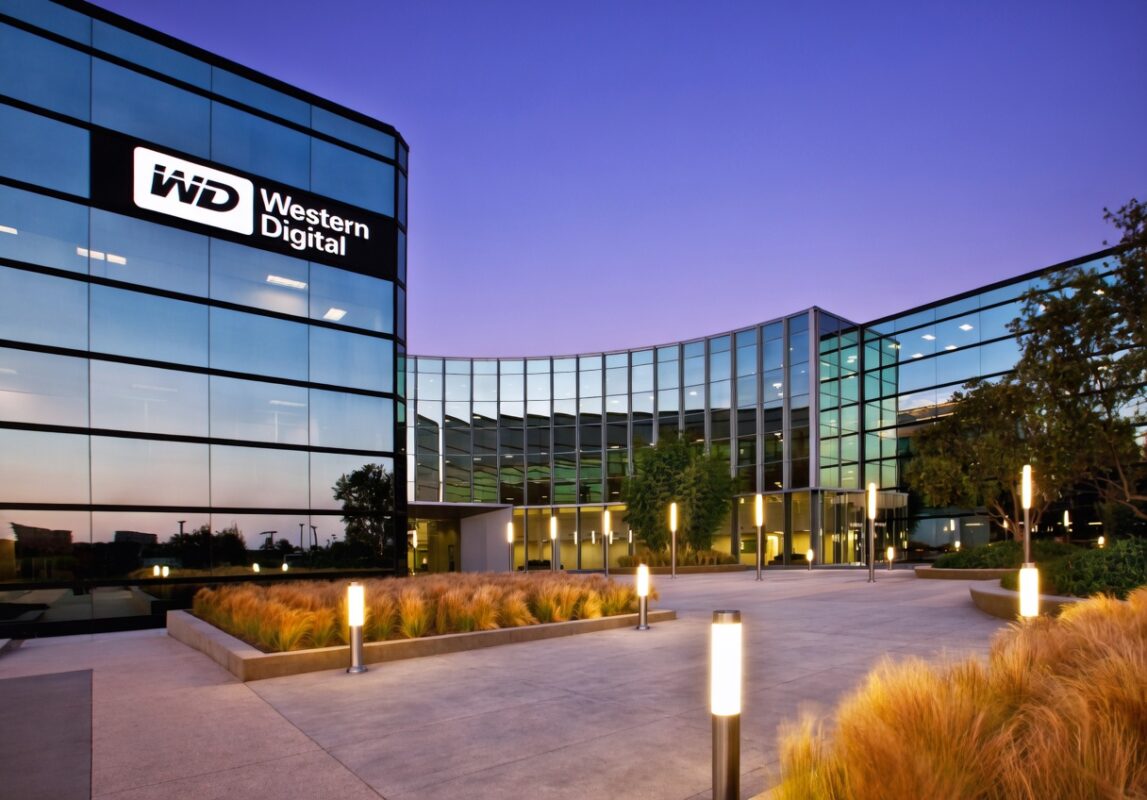
This optimistic perspective also applied to Seagate Technology (STX), with Mizuho raising its price objective to $1,090 from $875, alongside Western Digital (WDC), which saw its target elevated to $685 from $550. Each of these three equities maintained their Outperform designations.
Seagate Technology Holdings plc, STX
Sandisk began trading Monday at $1,982 and has climbed approximately 5.69% during the session following the analyst upgrade.

Vijay Rakesh and his analyst team are forecasting DRAM wafer production starts to increase 10% during 2026 and an additional 6% in 2027, primarily fueled by high-bandwidth memory (HBM) requirements. Their projections show DRAM demand expanding 27% year-over-year in 2026 and 24% in 2027.
Regarding NAND flash memory, enterprise solid-state drives (eSSD) represent the primary growth catalyst. Mizuho anticipates total NAND demand climbing 18% year-over-year in both 2026 and 2027, while wafer manufacturing starts are projected to decline 5% in 2026 before rebounding 3% in 2027. Additional production capacity isn’t anticipated to come online until 2028.
Google TPU Shipments in Focus
Mizuho recently conducted its quarterly artificial intelligence ASIC roadmap conference call, and the projections for Google’s Tensor Processing Units were remarkable. The investment firm forecasts more than 35 million TPU shipments from Google during 2028, compared to approximately 4.3 million in 2026 and roughly 2.4 million in 2025.
This substantial expansion is connected to Google’s strategy to distribute TPU technology externally through collaborations with Anthropic and additional partners. Mizuho indicates this figure significantly exceeds its previous projection of approximately 7 million ASIC shipments for Broadcom, suggesting considerable upside potential for the semiconductor company.
Broadcom AI Revenue Estimates Lifted
Broadcom (AVGO) may achieve 50 million cumulative TPU shipments spanning 2026 through 2028. Additionally, Meta’s (META) MTIA v3/v4/v5 accelerator chips and OpenAI’s forthcoming ASIC — where Broadcom serves as a critical partner — provide additional growth momentum.
Mizuho elevated its Broadcom artificial intelligence revenue projection for 2027 to $122 billion, up from the prior $120 billion estimate, and established a new 2028 forecast of $170 billion. The firm considers TPU to be Broadcom’s flagship artificial intelligence offering.
Rakesh’s analyst team stated that investor apprehensions regarding ASIC versus GPU market share dynamics and competitive threats from MediaTek are “overblown,” and advised investors to purchase shares during the AVGO price decline.
The research team noted that the positive scenario for TPU ASICs in 2028, combined with OpenAI, MTIA, and ARM-related ASICs, presents favorable conditions for memory companies including Micron (MU) and Sandisk, as well as storage manufacturers like Western Digital and Seagate.
Sandisk’s price-to-earnings ratio currently stands at 58.32x, substantially above its historical median of 29.61x, demonstrating the valuation premium investors are assigning to anticipated future expansion. Insider trading activity during the past three months reveals $8.9 million in stock sales, with no documented purchases.
