


Key Highlights
- Dollar index declined marginally by 0.1% but retained strength near six-week peak achieved earlier
- Escalating confrontation between Washington and Tehran continues as Trump issues ultimatum on peace negotiations
- Traders now see 70% probability of Federal Reserve implementing rate increase by year-end, fully anticipated by March 2027
- Crude oil prices surged 2% following drone strike targeting UAE nuclear facility, attributed to Iranian forces
- Weak economic indicators from China in April intensified selling pressure across Asian currency markets
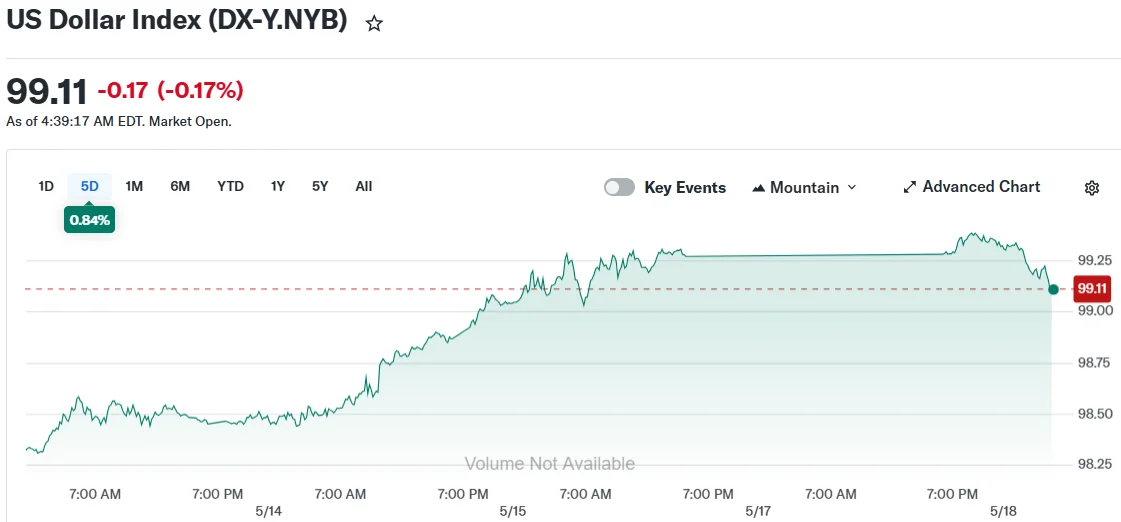
The greenback experienced modest retreat on Monday while maintaining proximity to its most robust position in more than six weeks. Ongoing worries surrounding the Iranian confrontation combined with mounting interest rate projections kept the U.S. currency well-supported.
The benchmark dollar index eased 0.1% to settle at 99.194 following an overnight peak of 99.409, marking a near six-week summit. This performance followed a robust trading week that delivered gains exceeding 1% for the index.
Middle East Standoff Maintains Market Anxiety
The confrontation between the United States and Iran demonstrated no indication of de-escalation. President Trump cautioned Tehran that time is running short and hinted that military intervention might proceed absent diplomatic resolution.
Intelligence reports further suggested Washington and Tel Aviv were coordinating additional military actions targeting Iranian interests. The volatile environment sustained elevated crude prices while applying downward pressure to fixed-income securities.

Crude oil values climbed 2% on Monday after an unmanned aerial vehicle struck a nuclear energy facility in the United Arab Emirates. Emirati officials pointed fingers at Tehran, characterizing the incident as a “dangerous escalation.”
Rising oil prices amplified concerns regarding renewed inflationary pressures. This development prompted financial markets to anticipate elevated interest rates worldwide, propelling government bond yields toward multi-year peaks.
U.S. Treasury 10-year yields climbed to nearly a one-year high during the previous week. The 30-year yield touched levels not witnessed since approximately the 2008 global financial meltdown.
Financial markets currently assign a 70% likelihood that the Federal Reserve will implement monetary tightening by December’s conclusion. A complete rate increase is fully incorporated into pricing by March 2027, based on LSEG intelligence. The prior week’s inflation figures, which exceeded forecasts, strengthened those expectations.
Regional Currencies Face Headwinds
Japan’s yen traded unchanged versus the dollar. Japanese government 10-year bond yields jumped to a 29-year zenith, while accelerating inflation has traders anticipating a Bank of Japan policy adjustment in June.
Market observers noted that a BOJ tightening move would probably deliver only modest support to the yen considering widespread dollar momentum.
China’s yuan depreciated following a series of underwhelming economic releases. Chinese manufacturing output expanded below projections in April. Consumer spending growth decelerated to its weakest pace in over three years.
Capital investment contracted for the first occasion in a three-month span. The statistics highlighted persistent fragility in internal consumption notwithstanding some preliminary recovery observed in 2025.
Beijing and Washington reached agreement during weekend discussions to reduce certain trade levies following bilateral talks. Nevertheless, specific terms of the arrangement remained ambiguous.
The Australian dollar slipped 0.3% against the greenback, participating in a widespread decline throughout Asian currency markets.
The Iranian crisis is projected to continue burdening Asia’s most substantial economy via increased energy expenditures and commercial interruptions.
The dollar appears positioned to maintain support provided rate increase expectations persist and the geopolitical landscape remains unresolved.
