


Key Takeaways
- Spot gold advanced 1.4% on Friday, poised for its first weekly increase since the final week of May
- Disappointing U.S. employment report (57,000 positions added in June) lowered Federal Reserve tightening probabilities
- Traders now assess a 53.5% probability of a September interest rate increase, declining from 65% prior to the data release
- Silver, platinum, and palladium experienced significant gains during Friday’s trading session
- Gold remains approximately 22% below its record peak of $5,300 reached in January
The precious metal market experienced a significant rally on Friday, with gold positioned for its first positive weekly performance in five weeks. Spot gold was changing hands at approximately $4,182 per ounce, registering a 1.4% daily increase and around 2.3% weekly appreciation.
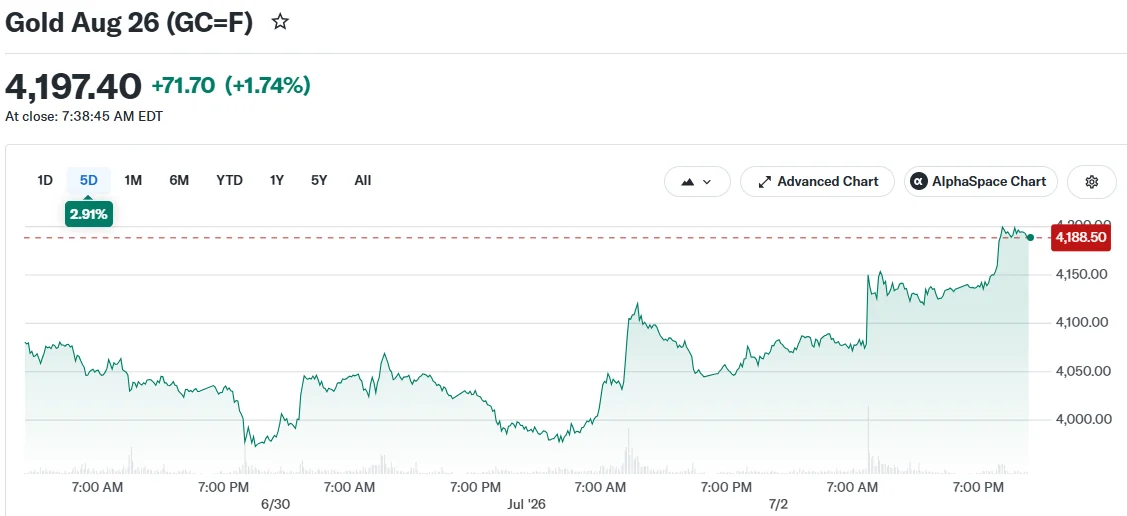
The upward momentum followed Thursday’s release of U.S. nonfarm payrolls data, which revealed the American economy generated merely 57,000 positions in June. This figure fell considerably short of the anticipated 115,000 and represented a significant decline from May’s downwardly adjusted 129,000 additions.
The disappointing employment figures reduced concerns that the Federal Reserve would maintain its aggressive interest rate hiking campaign. A robust labor market represents one of the central bank’s primary justifications for implementing tighter monetary policy.
Prior to the employment report’s release, financial markets were assigning approximately a 65% probability to a September rate increase. Following the data, that likelihood decreased to 53.5%, based on the CME’s FedWatch tool.

Understanding Gold’s Recent Challenges
Gold has experienced a turbulent year. The precious metal recorded its worst quarterly performance in 13 years during the April-June period, declining approximately 13% throughout those three months.
A strengthening U.S. dollar, elevated inflation concerns, and hawkish messaging from the Federal Reserve have collectively pressured prices downward. The February outbreak of the U.S.-Iran conflict additionally destabilized markets and raised questions about gold’s traditional safe haven credentials.
The yellow metal continues trading roughly 22% beneath its record high exceeding $5,300 established in January 2026.
The U.S. Dollar Index retreated from near 13-month peaks following Thursday’s employment data, providing support for gold and other precious metals.
Broader Precious Metals Complex Advances
Silver demonstrated impressive strength during Friday’s session. Spot silver surged approximately 2.9% to $62.77 per ounce, positioning the metal for a weekly gain of roughly 6.7%.
Spot platinum climbed 2.8% to $1,660.10 per ounce. Palladium registered a 1% increase to $1,280.09.
Both gold and silver delivered exceptional performances in 2025, advancing 66% and 135% respectively. Year-to-date in the current year, gold has declined 3% while silver has fallen 12%.
Analysts at OCBC indicated they maintain a “cautiously constructive” outlook on gold in the wake of the payrolls data.
They explained the weaker employment numbers help diminish the probability of additional aggressive Federal Reserve measures. Nevertheless, they emphasized that with unemployment remaining stable and inflation risks persisting, careful monitoring remains essential.
OCBC noted that a more sustainable gold recovery would necessitate declining real yields, stabilizing investor demand, and a more accommodative Federal Reserve stance.
The financial institution had lowered its gold and silver price projections earlier in the week, pointing to ongoing pressure from U.S. rate expectations and elevated yields.
Trading activity was subdued on Friday in anticipation of a U.S. market holiday.
