


TLDR
- Gold plunged to a six-week low, briefly touching $4,480 per ounce before bouncing back to approximately $4,541
- Surging global bond yields are weighing heavily on gold as investors anticipate rate hikes due to conflict-driven inflation
- Negotiations between Washington and Tehran over reopening the Strait of Hormuz have reached an impasse
- Weekend drone attack near UAE nuclear facility heightened concerns about broader regional conflict
- JPMorgan experts report that fresh investment flows into gold have virtually disappeared
The precious metal is facing mounting headwinds as the escalating US-Iran confrontation amplifies inflation concerns, driving bond yields to new peaks and diminishing gold’s attractiveness as an investment vehicle.
Spot gold prices tumbled to an intraday bottom of $4,480.79 per ounce during Monday’s session before clawing back to approximately $4,541. This represents the lowest level in six weeks, with the metal experiencing a 14% decline since hostilities commenced.
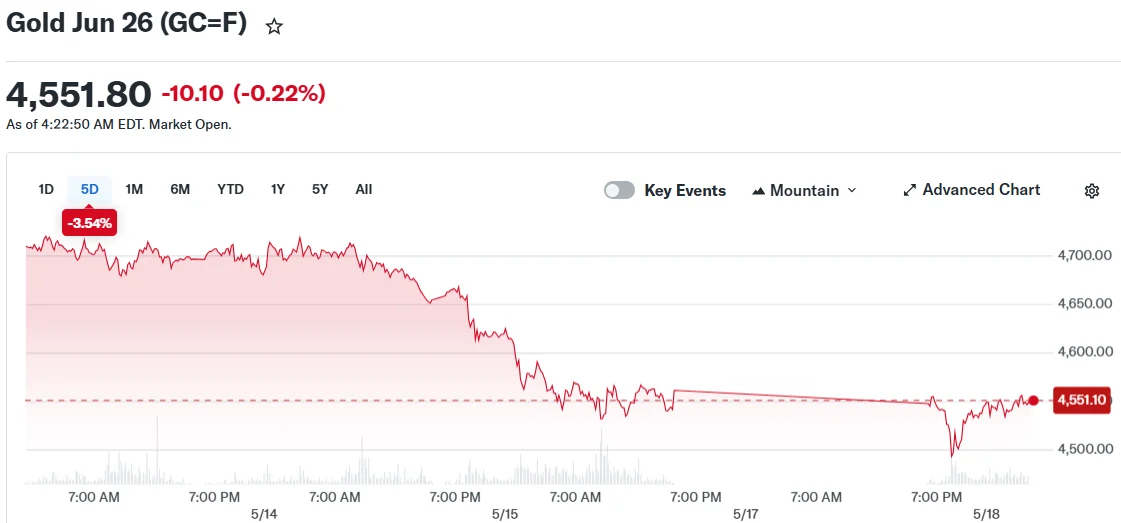
Gold futures contracts similarly declined 0.5% to settle at $4,540.67 per ounce throughout Asian market hours.
Climbing Yields Apply Downward Pressure on Bullion
Global fixed-income markets experienced sharp selloffs on Monday. US 10-year Treasury yields advanced to their highest point in four weeks, while Japanese 10-year government bond yields reached their most elevated level in nearly three decades.

Market participants are incorporating expectations that monetary authorities will implement rate increases to combat energy-induced inflation stemming from the Middle Eastern military conflict.
This scenario presents challenges for gold investors. Higher interest rates increase the opportunity cost associated with holding non-interest-bearing assets like bullion, diminishing their relative appeal compared to yield-generating instruments.
The US dollar strengthened concurrently, compounding downward momentum on precious metal valuations. Silver declined 0.5% to $76.61 per ounce following last week’s 5%-plus retreat. Platinum slipped 0.5% to $1,968.10 per ounce.
Strait of Hormuz Negotiations Remain Gridlocked
The Strait of Hormuz continues to be a central obstacle in peace efforts. This maritime corridor serves as an essential conduit for worldwide energy shipments, and its restricted passage has elevated crude oil quotations.
President Trump intensified his rhetoric toward Iran on Monday, which propelled oil climbing. This development heightened expectations for additional monetary tightening, applying sustained pressure on precious metals.
An unmanned aerial attack targeting the vicinity of the UAE’s Barakah nuclear facility during the weekend was blamed on Iranian forces. The incident amplified worries that the tenuous ceasefire arrangement could completely collapse.
Washington and Jerusalem are allegedly weighing resumed military operations against Tehran as diplomatic channels appear blocked.
Trump’s recent diplomatic engagement with Chinese President Xi Jinping yielded certain commercial accords, though it failed to advance resolution prospects regarding Iran.
Expert Commentary and Consumption Trends
JPMorgan analysts led by Gregory Shearer indicated in a research memorandum that fresh capital inflows into precious metals have essentially “dried to a trickle.” They identified apprehension regarding elevated interest rates as the principal catalyst.
The research team emphasized that conflict de-escalation is essential to restore investor appetite. Purchases by monetary authorities could offer modest near-term stabilization.
Indian gold consumption has likewise softened. Precious metal imports have decelerated owing to more stringent importation protocols and increased tariffs. India additionally imposed tighter restrictions on silver imports during the weekend to bolster its currency, which reached record lows.
Market observers are now focused on the Federal Reserve’s April policy meeting transcripts, scheduled for release this week, seeking insights into the trajectory of US monetary policy.
Gold has predominantly lagged other assets since fighting erupted, as rate-hike anxieties have overshadowed the metal’s conventional safe-haven characteristics.
