


Quick Summary
- Gold dropped more than 1% Friday, approaching 30-day lows
- The precious metal has declined approximately 13% since the US-Iran tensions escalated in late February
- Major central banks such as the Fed, ECB, and BoE hinted at potential interest rate increases
- Tehran’s Supreme Leader declared Iran will maintain authority over the Strait of Hormuz
- Market experts maintain a positive medium-term outlook for gold despite current downward pressure
The precious metal experienced significant losses on Friday, extending its recent downward trajectory. Spot gold decreased by as much as 1.2%, trading near $4,570 per ounce and remaining close to its weakest position in approximately 30 days.
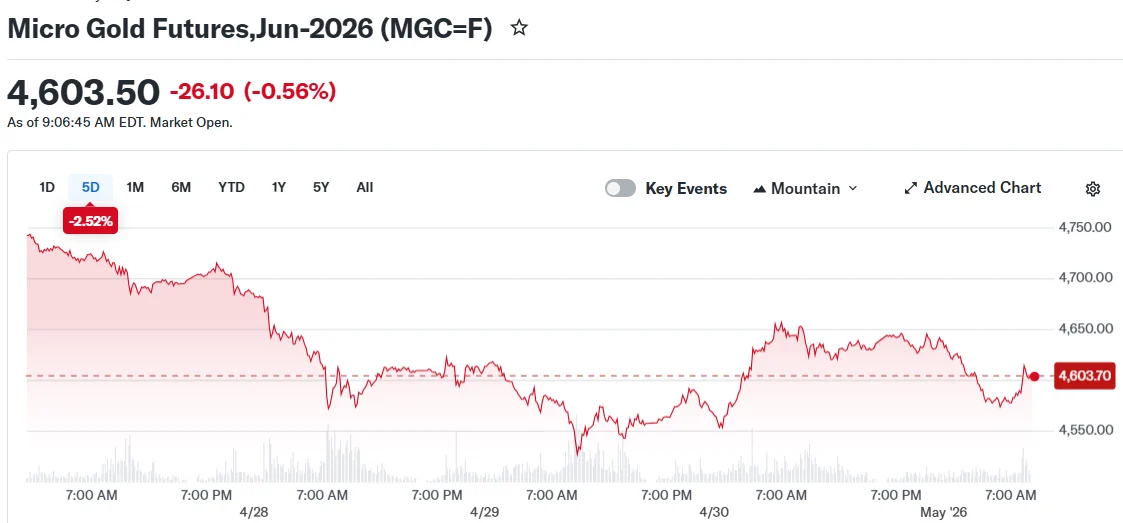
This latest downturn follows gold’s approximately 1% decline throughout April and an almost 12% plunge in March. From the onset of escalating US-Iran hostilities in late February, the yellow metal has surrendered roughly 13% of its market value.
The Middle East crisis has propelled oil prices upward, sparking widespread inflation anxiety among leading global economies. This energy-sector-driven price surge has redirected market participants’ attention toward the greenback and away from precious metals.
The American currency has emerged as the preferred safe-haven instrument since hostilities commenced, displacing gold from its traditional refuge status during periods of international instability.

Major Central Banks Eye Tighter Monetary Policy
Federal Reserve officials expressed serious concerns this week regarding inflation pressures stemming from elevated energy costs. Meanwhile, the European Central Bank, Bank of England, and Bank of Japan have all suggested possible monetary tightening measures in the coming months.
Rising interest rates create headwinds for gold. They increase the opportunity cost associated with maintaining positions in non-interest-bearing assets like the precious metal, enhancing the relative appeal of bonds and cash instruments.
Analysts at Citigroup noted in a recent report that downward pressure on the yellow metal could persist in the immediate term given ongoing Middle Eastern geopolitical uncertainties.
The precious metal did register gains on Thursday following a sharp appreciation in the Japanese yen, widely attributed to official currency market intervention. A depreciating dollar typically supports gold valuations since the commodity is denominated in American currency.
Tehran Maintains Stance on Strategic Waterway
President Donald Trump confirmed he would continue enforcing a naval blockade against Iran and received military briefings on additional strategic options. Diplomatic efforts between Washington and Tehran have yielded no breakthrough thus far.
Supreme Leader Mojtaba Khamenei released a declaration Thursday affirming Iran’s commitment to maintaining authority over the Strait of Hormuz. He further emphasized Tehran’s determination to safeguard its nuclear program and missile capabilities.
Khamenei asserted that Iranian oversight of the strategic waterway would ensure regional stability and deliver economic advantages to Persian Gulf states. His remarks came after reports emerged that Trump had dismissed an Iranian overture to restore access to the shipping lane.
Tehran has effectively maintained a blockade of the Strait of Hormuz since tensions erupted in late February. This narrow passage serves as a vital conduit for international petroleum transport.
Market activity on Friday registered below typical levels, with trading holidays throughout much of Asia contributing to subdued participation.
Silver advanced approximately 1.4% to reach $74.10 per ounce. Platinum and palladium also recorded modest gains.
Notwithstanding current headwinds, the majority of market analysts maintain constructive views on gold’s prospects. Recent World Gold Council statistics revealed that central banks expanded their gold reserves during the first quarter at the most aggressive pace in more than twelve months.
Greg Shearer, JPMorgan’s chief precious metals analyst, highlighted that consumer purchasing in China has provided price support, while institutional accumulation by central banks continues unabated.
