



Key Takeaways
- Precious metal declined by as much as 2.2%, sliding under the $4,650 threshold per ounce Monday
- Diplomatic efforts between Washington and Tehran in Pakistan concluded unsuccessfully this weekend
- President Trump initiated a naval blockade of the critical Strait of Hormuz beginning at 10 a.m. Eastern Time
- March CPI data showed a 3.3% annual increase, predominantly fueled by surging energy costs
- Federal Reserve rate reduction expectations delayed by a minimum of one year, adding downward pressure on bullion
The precious metal market experienced significant turbulence Monday following the breakdown of diplomatic discussions between the United States and Iran, coupled with Washington’s declaration of a naval blockade targeting the strategically vital Strait of Hormuz.
Spot pricing for the yellow metal plummeted by as much as 2.2%, momentarily breaking through the $4,650 per ounce barrier. The metal subsequently regained some lost ground, settling at $4,729.02 per ounce during early afternoon trading hours in Singapore.
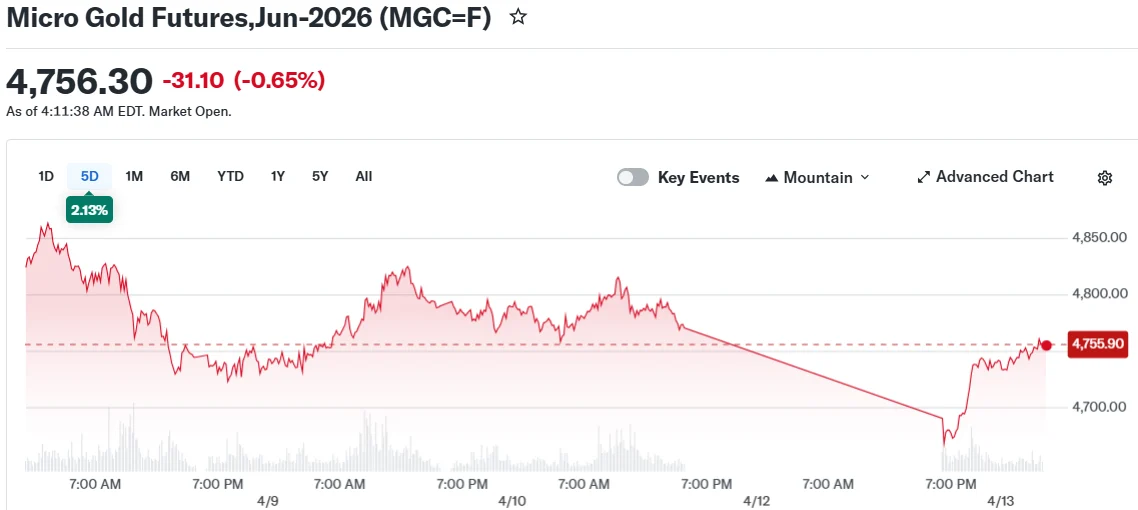
Futures contracts for gold similarly retreated, dropping 0.9% to reach $4,743.20 per ounce.
Diplomatic discussions conducted over the weekend in Pakistan between American and Iranian representatives failed to produce any meaningful breakthrough. The negotiations stalled over contentious issues including Tehran’s nuclear program, sovereignty over the Strait of Hormuz, and Iran’s support for regional militia organizations.

Following the unsuccessful talks, President Donald Trump authorized a naval blockade of the strategic waterway, scheduled to commence at 10 a.m. Eastern Time Monday. The president further announced that American forces would intercept any commercial vessels that had compensated Iran for transit privileges through the critical shipping channel.
Prior to the outbreak of hostilities, approximately 20% of global crude oil and liquefied natural gas shipments transited through the Strait of Hormuz.
Inflation Pressures Compound Gold’s Decline
Energy commodity prices, including oil and natural gas, jumped sharply in response to the blockade announcement. This development elevated inflation forecasts, diminishing the likelihood of imminent monetary policy easing by the Federal Reserve.
Gold generates no yield, making it more appealing during periods of reduced interest rates. Elevated borrowing cost expectations diminish its investment appeal.
Consumer price index figures published Friday compounded the bearish sentiment. Annual inflation accelerated to 3.3% in March, a substantial jump from February’s 2.4% reading. Gasoline price increases accounted for approximately three-quarters of the monthly advance, based on Bureau of Labor Statistics data.
CME FedWatch indicators reveal that market participants have postponed anticipated rate reduction timing by no less than twelve months.
The dollar index appreciated roughly 0.4% Monday, creating additional headwinds for the precious metal. Because gold trades in dollars internationally, dollar strength increases purchase costs for foreign buyers.
Silver declined nearly 2% to $74.39 per ounce. Platinum remained relatively stable, while palladium posted modest gains.
Precious Metal Performance During Regional Conflict
The yellow metal has retreated approximately 10% since Middle Eastern hostilities erupted in late February. During the conflict’s initial phase, a liquidity crisis forced investors to liquidate gold holdings to offset portfolio losses elsewhere.
In more recent sessions, gold recovered partial losses as economic growth concerns provided underlying support.
Research analysts at ANZ Banking Group suggested the precious metal could retest the recent $4,650 floor but may find support at those price levels. Switzerland’s Union Bancaire Privée reduced gold allocations from approximately 10% to 3% of portfolios, though the private bank indicated it is now incrementally rebuilding bullion positions for clients.
Producer price index data from the United States is scheduled for release later this week.
