


Key Highlights
- GameStop (GME) releases quarterly results Tuesday following a 13% year-to-date gain fueled by Michael Burry’s investment
- Major U.S. stock indices have turned negative for 2026, with the Nasdaq declining approximately 7%
- Middle East conflict drives oil prices beyond $100, with Brent crude hovering near $107 per barrel
- Fed maintains current rates, yet bond markets assign 50% probability to October rate increase
- Nvidia and Micron shares decline following robust earnings as AI sector faces investor scrutiny
GameStop (GME) prepares to unveil its quarterly financial results this Tuesday. Shares have climbed 13% during 2026, receiving a boost after revelations that prominent investor Michael Burry established a stake in the gaming retailer. The company’s previous quarter showed declining revenue figures.
[[EMBED_0]]
Additional companies reporting earnings include pet supply specialist Chewy, payroll processing company Paychex, and residential builder KB Home. Chinese autonomous vehicle firms Pony AI and Weride will also announce their results. Both companies have experienced nearly 30% declines in market value year-to-date.
The University of Michigan’s consumer sentiment index releases Friday, providing crucial insights into consumer confidence amid rising fuel costs and ongoing trade tariff pressures.

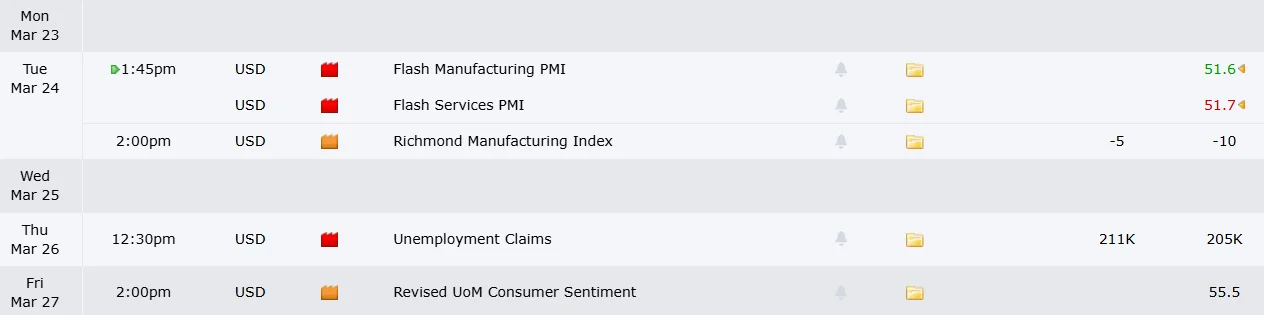
Wednesday delivers the import price index data, following last week’s wholesale inflation figures that revealed an unexpected surge in producer pricing.
Crude Oil Maintains Triple-Digit Territory
The Iranian conflict has now stretched into its fourth week. Shipping activity through the Strait of Hormuz has virtually ceased. Brent crude closed Friday near $107 per barrel, marking a 3% weekly advance. West Texas Intermediate settled around $98.30.
[[EMBED_1]]
Crude prices experienced temporary weakness Thursday following Israeli Prime Minister Benjamin Netanyahu’s statement that Israel would facilitate reopening the Strait of Horveda. However, gains were quickly restored.
QatarEnergy’s chief executive informed Reuters that repairs to the Ras Laffan LNG facility could require several years. President Trump stated Friday, “We can have a dialogue, but I don’t want to do a ceasefire.”
The virtual shutdown of Strait of Hormuz shipping has created turbulence across worldwide energy markets and intensified inflationary concerns.
Fed Policy Unchanged but Commentary Turns Hawkish
The Federal Reserve maintained its current interest rate policy last week, matching analyst expectations. However, Chair Jerome Powell delivered remarks that proved less accommodative than markets anticipated.
Powell indicated that escalating oil prices stemming from the Iran situation could elevate inflation pressures. He characterized the upcoming six weeks of economic data as “very important.”
Bond market participants now assign a 50% likelihood to a rate increase by October, per Bloomberg data. This represents a dramatic shift from earlier in 2026, when rate reductions appeared probable.
The central bank’s internal forecasts continue to project one rate reduction this year and another in 2027. Nevertheless, the messaging has distinctly pivoted toward an extended holding pattern.
Nvidia finished the week down approximately 4%, despite CEO Jensen Huang’s announcement projecting $1 trillion in revenues from the company’s Grace Blackwell and Vera Rubin chip platforms. Micron similarly declined roughly 5% following disclosure of a $5 billion capital expenditure expansion.
Jefferies technology analyst Jeffrey Favuzza observed this marks the second consecutive earnings season where impressive results triggered share price declines. Bank of America analyst Neha Khoda characterized the AI sector as entering its “show me” phase, where investors now demand evidence of tangible profitability.
Thursday brings initial jobless claims data, providing fresh perspective on U.S. employment conditions.
