



Key Highlights
- Ethereum climbed 2.87% to reach $1,680 in a late-day surge on June 11, 2026.
- Exchange supply of ETH fell to an unprecedented low of 14.5 million ETH, according to CryptoQuant.
- More than 6 million ETH have been withdrawn from exchanges over the last 2.5 years.
- Daily active addresses across the Ethereum network have surpassed 1.3 million, exceeding prior bull cycle peaks.
- Market analyst Ali Charts identified $700 as a possible long-term price floor based on the Ethereum Delta Price indicator.
Ethereum began trading on June 11 during the Asian session at $1,628 before mounting a comeback that lifted the price to $1,680 by session close.
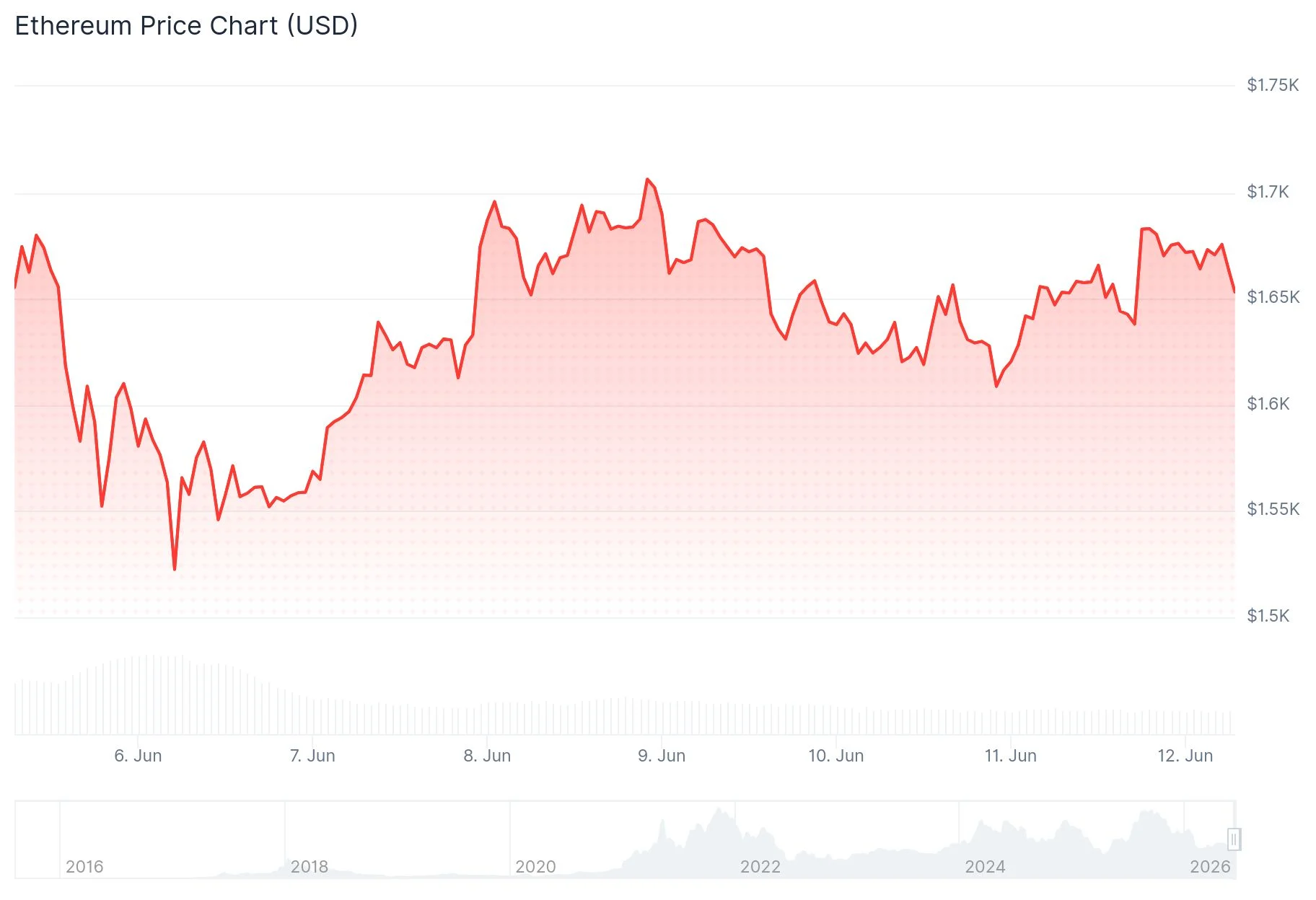
Data from CoinMarketCap indicates ETH registered a 2.87% increase across the 24-hour trading window. The session began with volatility, as the price dropped beneath $1,620 before discovering support.
Following that low, buying pressure emerged and drove the price progressively upward. ETH broke through $1,640, then surpassed $1,660, before a robust late-session push briefly approached $1,690. The digital asset closed around $1,680, near the session’s peak.
This price movement coincided with Ethereum exchange holdings declining to their lowest level on record. Data from CryptoQuant reveals only 14.5 million ETH currently remains on exchanges, a sharp decrease from approximately 20 million ETH throughout much of 2024.

The reduction started around July 2025 and has maintained a consistent trajectory. CryptoQuant observed that “exchange reserves continue to decline at a fast pace.”
Exchange Balances Reach Historic Lows
Withdrawals have been documented across leading platforms such as Binance and Coinbase. Market participants have transferred ETH into staking protocols, private custody solutions, and institutional treasuries.
BitMine currently holds more than 5.5 million ETH following a $250 million funding round in 2025. SharpLink similarly maintains 868,699 ETH in its treasury holdings.
Back in October 2023, exchange reserves stood at 21 million ETH. Since that time, over 6 million ETH have been removed from exchanges. During periods of market turbulence, exchanges usually experience inflows — yet that pattern hasn’t materialized in this case.
Cryptocurrency analyst Leon Waidmann, who serves as head of research at Lisk, observed: “Whoever is buying here isn’t selling back.”
On-Chain Activity Reaches Unprecedented Levels
Beyond pricing trends, the Ethereum blockchain itself is experiencing unprecedented utilization. Daily active addresses have been consistently exceeding 1 million and recently climbed above 1.3 million.
By contrast, active addresses reached 720,000 in 2018 and 800,000 during the 2021 bull market peak. Today’s figures substantially exceed both historical benchmarks.
Waidmann characterized this as a “powerful resurgence in network activity, climbing to record levels.”
Market analyst Ali Charts shared on X that Ethereum is “entering what I believe could be one of the best long-term accumulation zones.” Ali Charts also referenced the Ethereum Delta Price indicator, which successfully identified the previous two market bottoms. According to this framework, a potential bottom around $700 has been highlighted — a threshold the metric designates as a significant accumulation opportunity.
As of publication time, ETH was changing hands near $1,680.
