


Key Points
- Dogecoin lacks a maximum supply limit, continuously minting approximately 5 billion DOGE annually
- 21Shares launched a Dogecoin ETF on Nasdaq during January 2026
- Tesla now officially processes DOGE payments for qualifying merchandise
- Significant supply concentration exists among major wallet addresses and custody providers
- DOGE functions effectively for affordable transactions yet offers limited mechanisms for value accrual
Since its 2013 inception, Dogecoin has maintained remarkable staying power in the cryptocurrency landscape. Originally conceived as satire, it has evolved into a digital asset with substantial market liquidity, comprehensive exchange integration, and brand awareness that rivals far more serious blockchain ventures.
Yet widespread recognition doesn’t automatically translate into sound investment fundamentals.
Dogecoin operates through a proof-of-work consensus model utilizing Scrypt hashing algorithms, with blocks generated approximately every minute. Each block delivers a consistent 10,000 DOGE mining reward. Critically, unlike Bitcoin’s hard cap, there’s no ceiling on total supply. Official project documentation explicitly states that exactly 5 billion coins enter circulation every year without exception.
Given the current circulating supply hovering around 150 billion DOGE, this translates to annual inflation ranging between 3.3% and 3.5%. While this percentage gradually decreases over time as the base expands, the absolute issuance remains constant indefinitely.

Perpetual Supply Expansion
This unending coin creation presents the primary obstacle for investors holding long positions. Continuous supply injection means demand must perpetually increase merely to maintain price equilibrium. DOGE advocates contend that predictable issuance promotes actual usage rather than speculative accumulation. Skeptics counter that it fundamentally limits appreciation potential over extended timeframes.
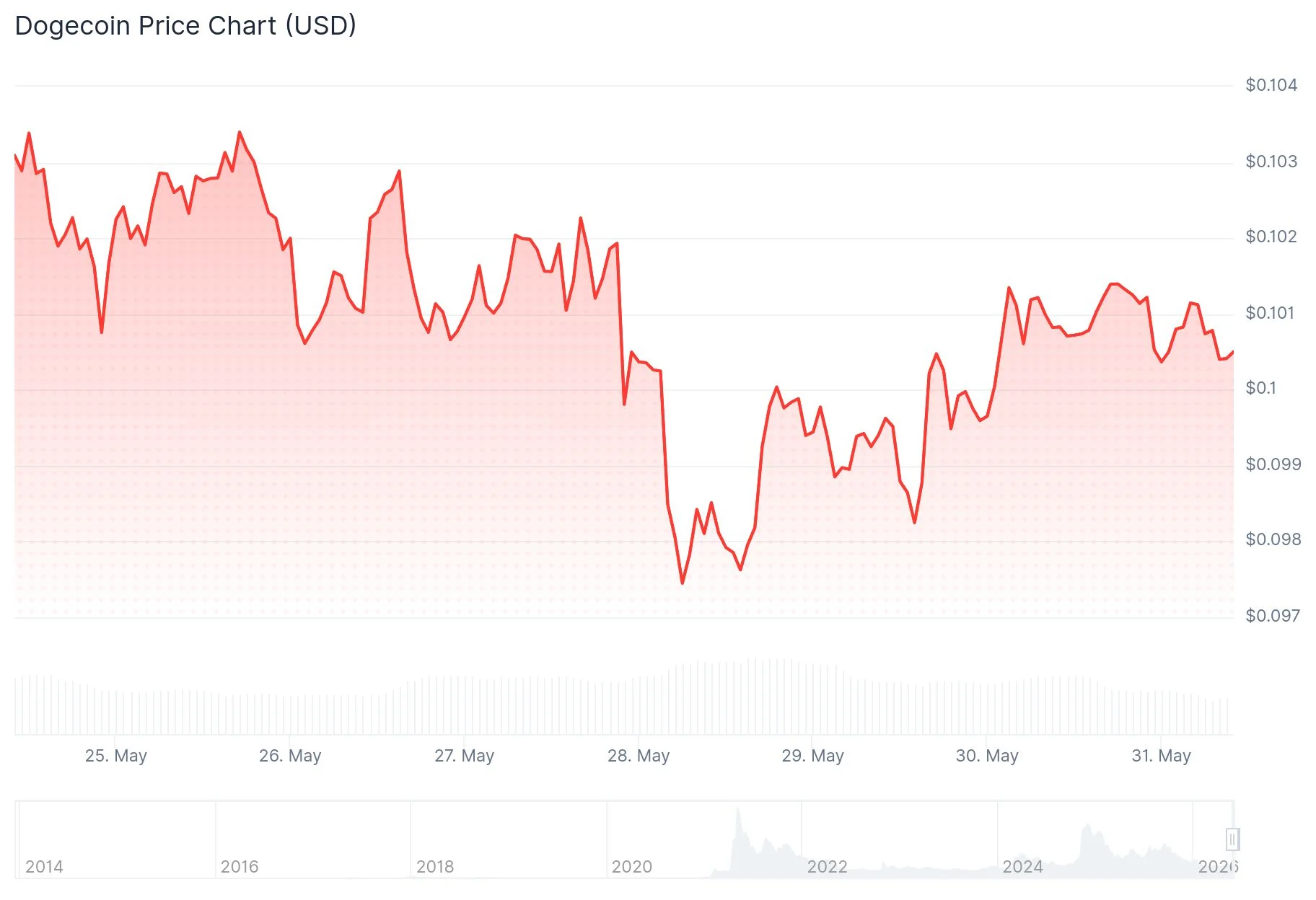
CoinGecko currently reports Dogecoin’s market capitalization at approximately $15.5 billion.
On the utility front, Dogecoin excels at affordability. Standard network fees sit at just 0.01 DOGE per kilobyte, enabling economical transfers that reinforce its payment-focused positioning. The Dogecoin Foundation has actively developed infrastructure including GigaWallet and Libdogecoin specifically designed to streamline merchant adoption processes.
Tesla’s official payment documentation explicitly confirms Dogecoin acceptance for select product purchases. While this represents genuine commercial integration, it hasn’t triggered widespread mainstream adoption yet.
Growing Traditional Finance Access
During January 2026, the 21Shares Dogecoin ETF commenced trading on Nasdaq, validated through Nasdaq’s official circulars and corresponding SEC documentation. This development provides conventional investors with regulated DOGE exposure accessible through typical brokerage platforms, eliminating direct cryptocurrency custody requirements.
While this doesn’t alter Dogecoin’s core economic model, it significantly expands the potential investor base.
Ownership distribution patterns raise legitimate concerns. BitInfoCharts data reveals substantial supply concentration within large addresses. Although some represent exchange cold storage, the centralization creates conditions for amplified volatility during major movements.
DOGE lacks sophisticated protocol layers that generate transaction fees and create deflationary pressure on token supply like competing ecosystems implement. Its valuation depends primarily on payment utility, cultural momentum, and speculative trading activity.
The January 2026 Nasdaq listing of the 21Shares ETF represents the latest significant milestone impacting traditional investor access to Dogecoin exposure.
