



TLDR
- U.S. military strikes on Iranian facilities near the Strait of Hormuz sent Bitcoin tumbling below $73,000
- Crypto markets experienced $958 million in liquidations over 24 hours, with 93% coming from long positions
- Ethereum slipped under $2,000, while Solana, XRP, and Dogecoin each declined between 3–4%
- Equity futures retreated, with Nasdaq 100 contracts sliding 0.8%
- Snowflake stock soared more than 30% in extended trading following impressive quarterly results and a major AWS partnership
Geopolitical turmoil erupted Thursday as U.S. military operations against Iranian targets sparked widespread selling across cryptocurrency and equity markets, erasing close to $1 billion in leveraged trades and pressuring futures contracts.
Bitcoin Suffers Major Decline
During Asian market hours, Bitcoin plummeted to an intraday low of $72,912, marking its first breach of the $73,000 level in several months. The leading cryptocurrency was changing hands at $72,978, representing a 3.4% decline over 24 hours and a 6.3% loss across the previous week.
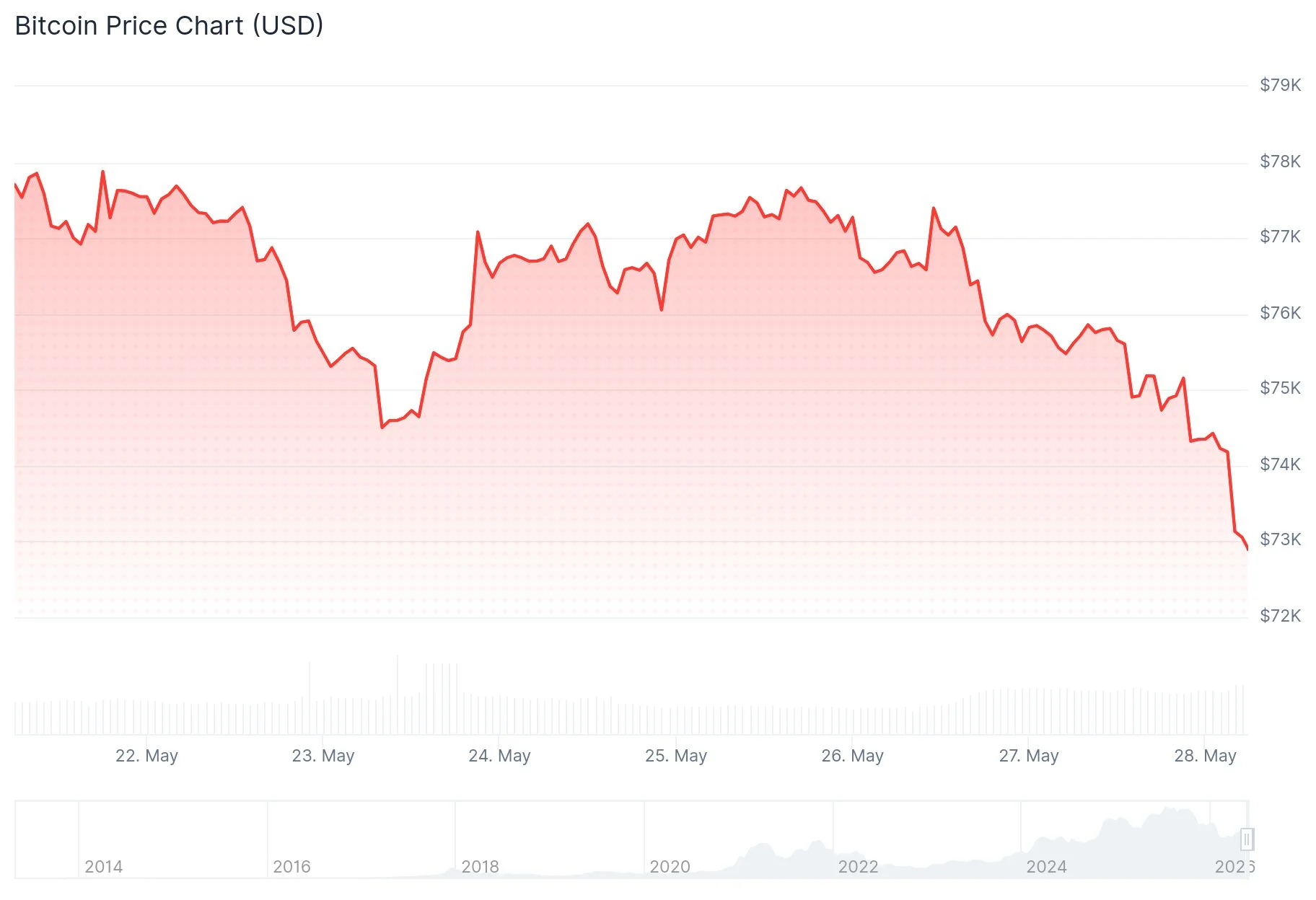
Ethereum experienced a steeper 4.2% decline to $1,976, breaking through the psychologically important $2,000 threshold. Solana retreated 3.5%, XRP declined 3.6%, and Dogecoin shed 3.2%.
Among major cryptocurrencies, Hyperliquid stood alone in maintaining positive weekly momentum. Despite falling 4.5% during the session, it preserved a 2.4% gain over the seven-day period. Tron similarly maintained modest weekly gains despite the broader market downturn.

The market turbulence unleashed a cascade of forced liquidations. According to CoinGlass analytics, $958.8 million worth of positions were liquidated across 167,706 traders within a 24-hour window. Long positions comprised $897 million of the total, while short positions accounted for merely $61 million.

Bitcoin liquidations dominated at $386 million. Ethereum ranked second with $246 million. The single largest liquidation involved a $15.34 million Bitcoin position on the Hyperliquid exchange.
The overwhelming 93% concentration in long positions reveals that traders had positioned themselves for upward price movement precisely when the market reversed sharply downward.
Catalysts Behind the Market Retreat
U.S. Central Command executed precision strikes targeting an Iranian military installation positioned near the strategically vital Strait of Hormuz. American forces simultaneously intercepted four Iranian attack drones launched toward a commercial vessel, characterizing the response as defensive in nature.
The U.S. Treasury Department levied fresh sanctions against Iran’s Persian Gulf Strait Authority, alleging systematic extortion of vessels transiting the waterway. Iranian forces reportedly launched retaliatory strikes against the American military installation from which the original attacks originated.
Kuwaiti authorities confirmed responding to incoming missile and drone threats, with the nation’s armed forces acknowledging explosions attributed to air defense system activations.
President Trump emphasized that no single country would exercise control over the strategic passage. “The strait’s going to be open to everybody,” he declared during a cabinet session.
Equity futures contracts declined uniformly. Dow futures retreated 0.2%, S&P 500 futures lost 0.4%, and Nasdaq 100 futures dropped 0.8%. Crude oil prices advanced as the military action heightened concerns regarding shipping disruptions through the critical strait.
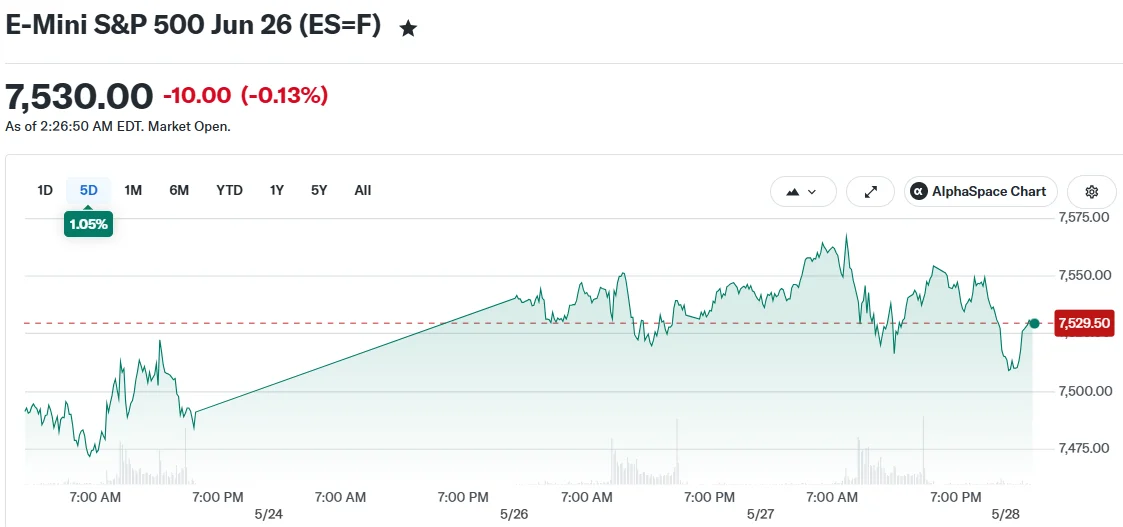
The MSCI All Country World Index retreated 0.4% from its recent record peak, while Asian equity benchmarks tumbled 1.7%.
Corporate Earnings Provide Bright Spots
Amid the geopolitical uncertainty, select corporate developments offered encouraging signals. Following the regular trading session, Snowflake unveiled robust quarterly performance and disclosed a $6 billion strategic partnership with Amazon Web Services. The cloud data platform’s shares rocketed over 30% in after-hours trading.
Salesforce surpassed analyst projections, though management’s conservative outlook sparked questions about artificial intelligence’s influence on enterprise software expenditures. Marvell and HP likewise released their quarterly earnings reports.
Market participants will closely monitor Thursday’s release of the Personal Consumption Expenditures index, the Federal Reserve’s preferred inflation gauge, for indications of building price pressures.
