


Key Takeaways
- A 15-9 vote in the Senate Banking Committee moved the Clarity Act forward, with bipartisan support from two Democrats
- The legislation must now secure 60 votes on the Senate floor for swift passage
- A critical window from June through early August represents the best opportunity for approval before congressional recess
- Missing this timeframe could delay the bill until a potential post-election lame-duck session
- Analysts at NYDIG caution that Democratic control of the Senate following midterm elections could derail the legislation entirely
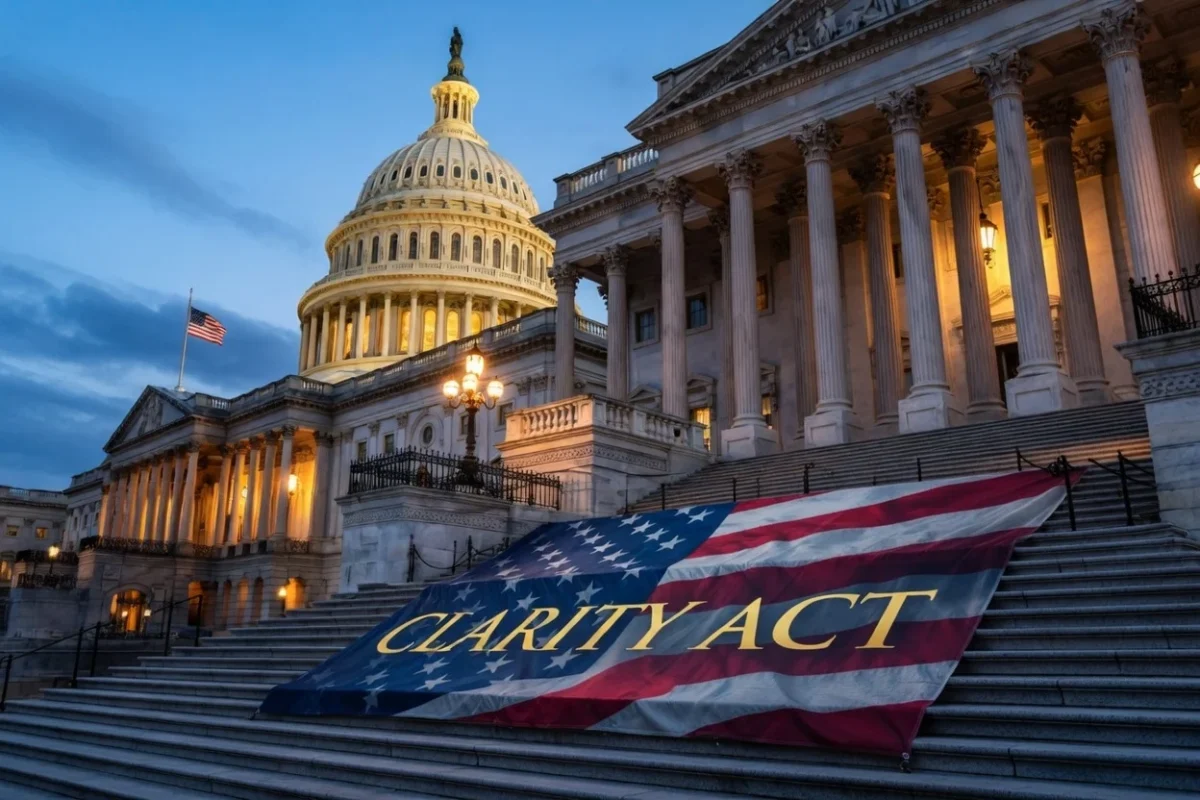
On Thursday, the Digital Asset Market Clarity Act cleared its first major hurdle when the U.S. Senate Banking Committee approved it with a 15-9 vote. The measure gained bipartisan momentum as two Democratic members crossed party lines to join Republican colleagues in supporting the legislation.
This legislation aims to establish a comprehensive regulatory framework for how federal agencies would supervise the [[LINK_START_0]]cryptocurrency industry.[[LINK_END_0]] Policy experts consider it among the most significant digital asset proposals under consideration this legislative session.
To advance through the full Senate without procedural delays, the bill requires support from 60 senators. With Republicans controlling 53 seats, a minimum of seven Democratic votes will be necessary for passage.
The committee saw affirmative votes from Democratic Senators Ruben Gallego and Angela Alsobrooks. Additional Democratic senators have indicated potential support contingent upon specific modifications to the bill’s language.

Democratic Priorities for Amendment
Several Democratic lawmakers are advocating for enhanced provisions addressing criminal activity prevention and sanctions enforcement. A separate group is championing an ethics clause that would prevent high-ranking government officials from personally benefiting from cryptocurrency business relationships.
According to Senate sources, negotiators are nearing consensus on the ethics component, though no finalized language has been released publicly. Any compromise reached will require endorsement from the White House before proceeding.
Thursday’s committee session left two proposed amendments unaddressed. Senator Elizabeth Warren characterized one as having received backing from law enforcement agencies. The second amendment concerns the bill’s treatment of staking rewards and yield generation.
The next procedural step involves reconciling text from the Senate Banking Committee with parallel work from the Senate Agriculture Committee. Cody Carbone from the Digital Chamber noted that Agriculture Committee negotiations remain in progress.
A Narrow Window of Opportunity
According to Greg Cipolaro, who leads research at NYDIG, the practical timeframe for passage extends from June through the first week of August. This aligns with earlier statements from a White House cryptocurrency policy advisor who suggested July 4 as an ambitious target date.
Congressional schedules call for a recess period spanning late July through early September. Following the break, political attention turns toward November’s midterm elections, making it improbable that Senate leadership would advance a divisive floor vote during that period.
Should the legislation fail to pass before the summer recess, the next viable opportunity would arrive during a lame-duck session after the election — but only under the condition that Republicans maintain Senate control.
Current electoral forecasts indicate a competitive battle for Senate majority, with various models showing Republicans holding a marginal advantage while other analysts rate several crucial races as too close to call.
Cipolaro cautioned that Democratic Senate control would likely prevent the current bill from advancing when the new Congress convenes in January.
Should the bill successfully pass, Cipolaro explained it would provide institutional investors with the regulatory certainty necessary to increase their cryptocurrency market participation. The legislation would also formally designate Bitcoin as a commodity under Commodity Futures Trading Commission oversight.
Failure to pass the bill would leave the cryptocurrency sector operating within what Cipolaro described as “permanent jurisdictional ambiguity.”
