


Key Points
- Brent crude declined to approximately $74 while WTI dropped to around $70.77, with both benchmarks heading toward 7% weekly declines
- Vessel movement through the Strait of Hormuz reached peak levels not seen since the Iranian crisis erupted
- The majority of increased shipping activity involves departing tankers that were stuck, rather than incoming vessels
- A commercial ship was attacked by Iran near Hormuz, leading the IMO to halt its crew evacuation initiative
- Seismic activity in Venezuela threatens oil production through electrical grid disruptions, introducing minor upward price pressure
Crude oil markets experienced a nearly 2% decline on Friday, marking the conclusion of a third consecutive week of downward price momentum. Brent crude and West Texas Intermediate benchmarks were both heading toward approximately 7% losses for the trading week.
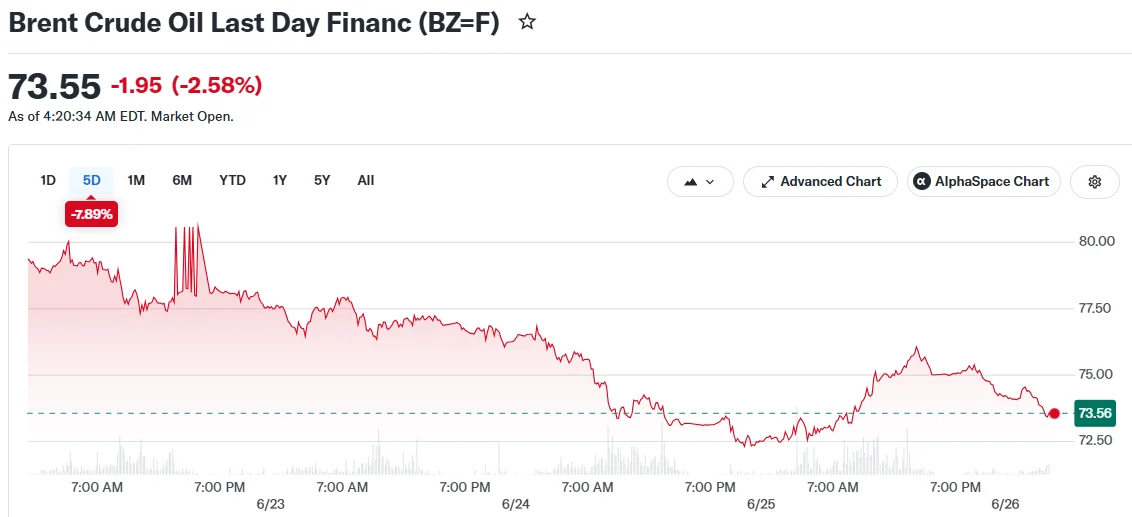
During current trading sessions, Brent crude was exchanging at approximately $74 per barrel. WTI was trading in the vicinity of $70.77. The commodity has now surrendered the majority of appreciation gained during the Iranian conflict, after previously soaring beyond $120 per barrel when tensions peaked.
Shipping Activity in Hormuz Increases, Though Experts Express Skepticism
The primary catalyst behind falling prices is enhanced vessel movement through the Strait of Hormuz. Petroleum shipments navigating the strategic waterway jumped to their strongest levels since hostilities commenced earlier this year.
Nevertheless, energy analysts from ING issued warnings that the situation requires deeper examination. Their research revealed that virtually all shipping activity consists of outbound movement — specifically vessels that became trapped in the strait beginning in March and are now departing.

The volume of tankers entering the Persian Gulf to collect new crude shipments continues to lag significantly. ING analysts projected that once the backlog of stranded ships clears completely, traffic flows may experience sharp reductions.
Reuters additionally highlighted that current vessel traffic represents merely a small portion of pre-conflict activity. Prior to the escalation, roughly 125 vessels traversed the passage daily on average.
Iranian Attack and Questions Over Diplomatic Agreement
A commercial shipping vessel sustained damage near Oman during the early part of the week. American intelligence confirmed Iranian forces executed the strike on the ship. The incident temporarily lifted prices more than 2% before markets continued their bearish trajectory.
The International Maritime Organization halted its initiative designed to assist in evacuating trapped vessels and maritime personnel following the assault. This development introduced renewed skepticism regarding the stability and longevity of the tentative US-Iran diplomatic framework.
That agreement, finalized last week, facilitated the strait’s partial reopening and served as the principal factor behind oil prices retreating from their elevated levels above $90 per barrel earlier in the month.
Venezuelan Seismic Events Introduce Production Concerns
Catastrophic earthquakes struck Venezuela during the previous week. Although the nation’s oil infrastructure was not situated within the primary impact zone, electrical system failures triggered by seismic activity are anticipated to hamper production capacity.
Market analysts identified this development as a possible supply constraint, although it has proven insufficient to counter the prevailing downward price trajectory.
Trader focus continues centering on developments surrounding Hormuz and advancement of US-Iran diplomatic discussions. Until greater clarity emerges on these critical issues, market participants seem hesitant to drive prices upward.
